ZOSOS to replace SOE: Govt to follow Jamaica’s crime initiative for hotspots
 15 January 2026

Senior Reporter
kay-marie.fletch[email protected]
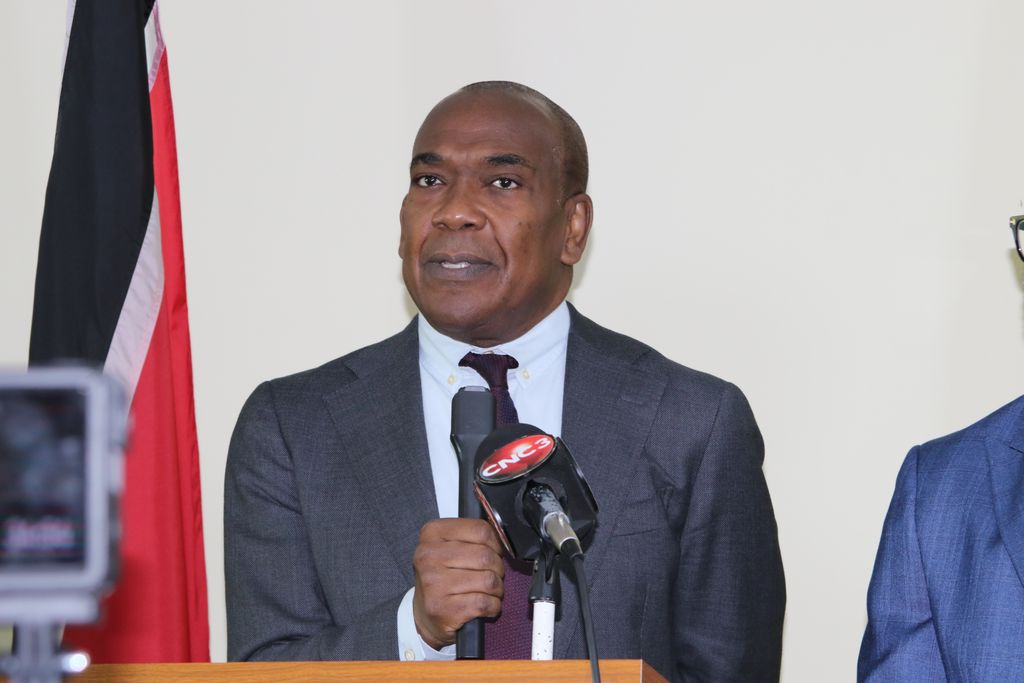
As the State of Emergency (SoE) comes to an end in the coming weeks, the Government’s next move will target hotspots. Attorney General (AG) John Jeremie yesterday revealed the Government’s plan to implement Zones of Special Operations (ZOSO), which by law will empower law enforcement when it comes to combatting crime in hotspot areas. A similar legal framework exists in Jamaica.
During a media briefing at the headquarters of the United National Congress (UNC) in Chaguanas yesterday, Jeremie said the first SoE was declared to respond to the existential threat to the State by disrupting the lines of communication which existed between incarcerated gang leaders and their partners outside the prison system.
It is one of three bills to be brought to the Parliament when it convenes tomorrow.
This time around, he explained, this bill is aimed at targeting the present risks that exist.
Jeremie said, “The legislation which is before the House is intended to ensure that there is a measure of proportionality between our responses and the threats which we now face, so that instead of a national State of Emergency, we propose to concentrate on hotspots.”
Without identifying which areas the Government considers “hotspots,” Jeremie said there will be judicial oversight when it comes to who exactly can declare somewhere a zone of operation.
However, the proposed security law to be debated in Parliament will give Prime Minister Kamla Persad-Bissessar the power to declare high-crime communities “Special Zones.”
Defending the new proposed ZOSO, Jeremie added that the national SoE provided many benefits, such as a decrease in homicides and violent crimes, and the Government intends to lock in those advantages going forward as well.
Defending the proposed zones of operations, Jeremie said the national SoE had delivered significant benefits, including reductions in homicides and violent crime, and that the Government intends to preserve those gains going forward.
This isn’t the first time Trinidad and Tobago has implemented special operations for certain areas.
But, according to the AG, the Government has tightened up the legislation this time around.
The Government declared a state of emergency on July 18, 2025. Since then, there have been over 160 murders, and over 100 people have been detained under the emergency act.
Asked what will become of these detainees with this new bill, the minister chose not to say.
He said, “There are logistics which are being worked out by the Minister of Homeland Security and the police as we speak, and I would not like to speak to that today (Wednesday).”
But one lawyer representing a prison officer detained under the SoE said everyone not charged should be released.
The lawyer said, “I don’t see that the proposed legislation will affect my client unless he resides in an area that is declared a hotspot. The SoE will soon come to an end, and I expect him and any other detainee not charged to be released. I am concerned, however, that this proposed plan has some potential for discrimination. There are innocent people who live in communities that will be deemed “hotspot” areas.”
Former police commissioner Gary Griffith is also agreeing with the AG’s move for a zones of operations, as he believes it will give the authorities the power to infiltrate hotspots without disturbing law-abiding citizens. He said it was a recommendation he made months ago.
Griffith said, “I made this recommendation months ago, several months ago, even before the last election. I made that recommendation because when you have a national State of Emergency, it affects the economy, it affects business, it affects trade, it affects investment, it affects tourism, and many times persons become affected that have nothing to do with the situation of violent crime.
“So what you have is that Zones of Special Operations where you can give excess powers to the law enforcement agencies without having to put it ... spread it right across the country that can affect the country in many different ways. It is very clinical.
“So you have to do a lot of data analysis, verify where the hotspots are, and verify if it is that you can now allow the law enforcement agencies to have those extra powers to be able to arrest persons, possibly arrest persons without having the proper evidence that may be required to have them incarcerated indefinitely, being able to enter property without a warrant.”
Griffith added, “All of those things can be done in specific areas, hotspot areas. So I welcome this. I think it is an excellent direction that the Attorney General is going, and I think this could be the next step towards us trying to diminish the negativity that can take place from the State of Emergency while still giving the law enforcement agencies that extra edge.”
Regional security expert Garvin Heerah, who also agrees with mirroring Jamaica by having zones of operations, said it shouldn’t be a standalone solution.
According to Heerah, intelligence and social intervention are also needed.
He said, “In my professional assessment, yes, it is a viable option, but only if it is intelligence-led, legally grounded, time-bound, and supported by social stabilisation measures, not used as a blunt-force substitute for long-term reform. Jamaica’s ZOSO framework worked not simply because of restricted movement, but because it combined law enforcement dominance, intelligence fusion, targeted operations, and parallel social intervention. The lesson for Trinidad and Tobago is clear: geography alone does not suppress crime; control, intelligence, and continuity do. Any ZOSO-style adaptation here must therefore be selective, data-driven, and anchored in clear exit criteria to avoid operational fatigue and public resentment.”
Heerah added, “Crime reduction is not achieved through slogans or temporary crackdowns. It requires seriousness of purpose, strategic discipline, and sustained investment in both systems and people. Trinidad and Tobago must now move from episodic responses to structured, strategic crime governance, because national security is not an event; it is a continuous obligation.”
Related News
Prime Minister signals cooperation with new THA executive

Ousted leader pleads not guilty in first US court appearance

Machado calls for transition as Maduro faces justice