Senior Reporter
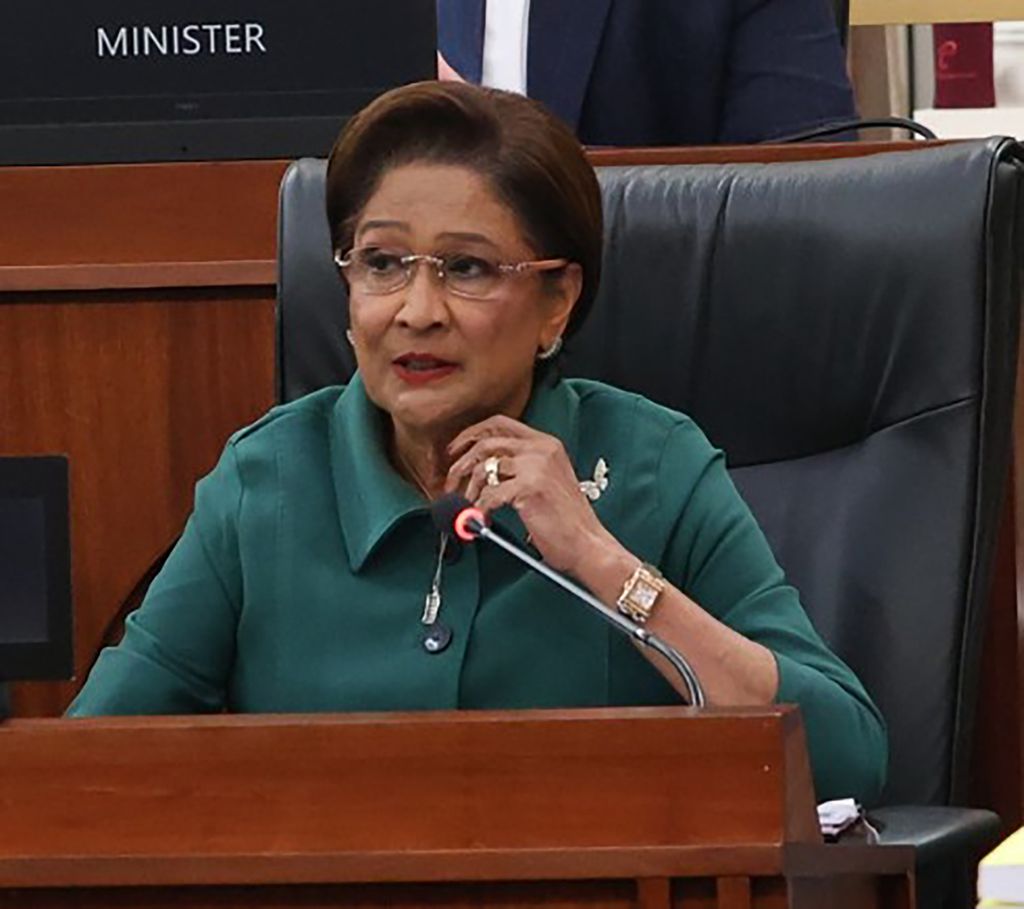
With a division of 27 Government MPs for and 11 Opposition MPs against, the Law Reform Zones of Special Operations, Special Security and Community Development Measures Act, 2026, was passed in the Lower House of Parliament.
The intended law would give Prime Minister Kamla Persad-Bissessar the power to declare specified zones to be heavily policed on the advice of the Commissioner of Police and Chief of Defence Staff.
Persad-Bissessar would be able to designate special zones in areas where there are “reasonable grounds” to believe criminality, gang violence, or threats to public order are widespread.
The aim, Attorney General John Jeremie said during his contribution to the bill on Friday night, is to restore the rule of law.
“We do the difficult things precisely because they are difficult and hard and because they need to be done. It is not going to be easy to fix this country, to turn this country around from a decade of cozying up to the criminal elements in every institution of the State.”
He added that the bill does not seek to marginalise any member of society, as that was not and is not the intention of the Government.
However, former prime minister Stuart Young said the bill should be sent to a Joint Select Committee as he foresees dangers in it. He said the Jamaican model, which the bill follows, had reports of abuse of powers by law enforcement, with that country’s government having to make 17 amendments from when it was first implemented in 2017.
Echoing the sentiments of his Opposition colleague, Laventille West MP Kareem Marcelle, Young said the People’s National Movement considered bringing similar legislation to Parliament while in government, but that was rejected, and he was key to that. “We felt that it was not proportional, and I personally was one of the main advocates against it, and the reason is a simple one. I do not believe that we should suspend persons’ constitutional rights when we have sufficient laws on the books.”
Marcelle accused the Government of playing “Christopher Columbus” with the rejected legislation. He said there was an adjustment from 60 days to 180 days for the zones to be implemented.
“I can say, without a shadow of a doubt, Madam Deputy Speaker, that it was nonsense then and it is nonsense now. It was dangerous then, and it is dangerous now.”
He read from a US State Department Human Rights 2021 report on the law in Jamaica, which spoke of an increase in fatal police killings. He noted that the report noted that in 2020, there were 115 fatal shootings and 123 the following year, with many delays in prosecuting the matters.
Homeland Security Minister Roger Alexander criticised the Opposition, saying that when he was a police officer, they failed to arm law enforcement with the needed legislation to tackle crime. He highlighted that the first joint police and army patrols began in the Port-of-Spain Division, where Marcelle and Keith Scotland are Members of Parliament. He said a similar piece of legislation worked in Jamaica, Belize, and Ecuador in reducing serious crimes.
Defence Minister Wayne Sturge denied that the bill would be used as a tool to racially victimise citizens. He said many citizens already live in a self-imposed curfew and rubbished the Opposition’s claims that the law was unfair.