
Andrea Perez-Sobers
Senior Reporter
Negotiations are often framed as a contest of leverage: who holds it; who pushes harder and who ultimately walks away with the better deal.
Yet for many women navigating corporate boardrooms, salary discussions and leadership conversations, the rules of that contest can shift in subtle but persistent ways.
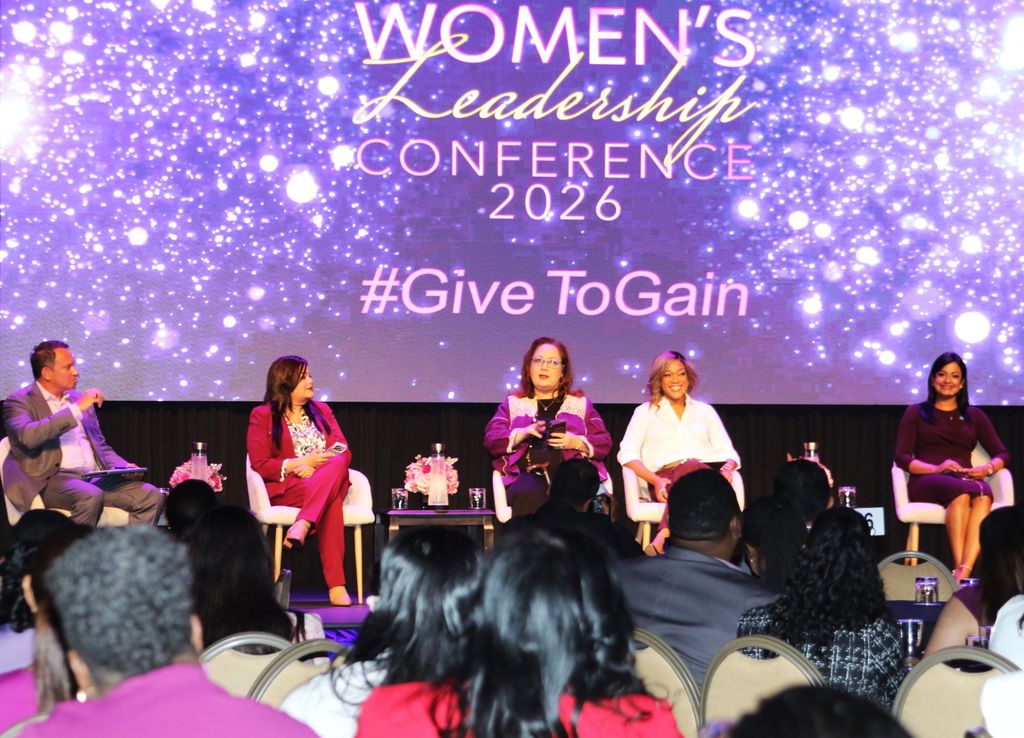
Those realities were the focus of a panel discussion at the American Chamber of Commerce of Trinidad and Tobago ‘Women in Leadership Conference’ last Friday, where executives, academics and HR leaders examined how gender dynamics still shape the way negotiations unfold in the workplace.
The session, titled “Re-defining the power of gender dynamics,” explored the barriers women encounter when advocating for themselves, the strategies that help them move forward and the cultural shifts organisations must make if they are serious about expanding female leadership.
Power versus influence at the table
For Roslan Schofield, general manager of Non-Operated Ventures and Risk Management and LNG director at Shell TT Ltd, negotiation is often misunderstood.
Too many people associate it with confrontation or the need for one side to dominate the other. In practice, the strongest outcomes usually emerge when both parties recognise the pressures and expectations on each side of the table.
“The most effective negotiations aren’t loud or combative,” he said. “They’re the ones where someone has done the work to understand what matters to both sides and frames the conversation around a shared outcome.”
From that perspective, negotiations become less about authority and more about influence. Titles and hierarchy may establish power, but influence is built through preparation, credibility and relationships.
When negotiators take time to understand the constraints and motivations facing the other side, discussions tend to move more quickly toward workable solutions. The focus shifts from winning to aligning interests.
That distinction becomes important in professional environments where different negotiation styles can be interpreted in very different ways.
Bias that still shapes the room
For Professor Rose-Marie Belle Antoine, principal of the University of the West Indies, St. Augustine, and Pro Vice-Chancellor, the question of negotiation cannot be separated from deeper power structures.
As the first woman to lead the campus, she highlighted the ongoing imbalance in how assertiveness is perceived.
“I think it’s pretty clear that the bias still exists,” she said, noting that women asking for better pay, authority or working conditions are still sometimes labelled aggressive or difficult. Men displaying similar behaviour are often rewarded for decisiveness.
That difference may appear small, but it can shape how women approach negotiations throughout their careers. Many learn to temper their demands or soften their tone to avoid negative reactions.
The result is a negotiation dynamic where women often arrive at the table aware that their behaviour may be judged differently.
Antoine highlighted that the issue extends beyond company policies and into cultural expectations. Women have historically been encouraged to prioritise cooperation and consensus, while men are frequently rewarded for competitiveness and assertiveness.
Those norms continue to influence professional interactions, particularly when individuals advocate for promotions, pay increases, or expanded authority.
Negotiation, she noted, ideally begins from a platform of equality. In practice, that starting point is not always guaranteed.
When preparation meets hesitation
From a human resources perspective, the negotiation gap often appears during recruitment and compensation discussions.
Stacey Dhanessar, director of HR Strategic Enablement for the Caribbean at Scotiabank T&T Ltd, described a recurring pattern during interviews.
Many women arrive exceptionally prepared. They understand the organisation, research the role, and present clear evidence of their capabilities.
Yet when the conversation shifts to salary expectations or negotiating terms, hesitation often appears.
Candidates who clearly meet the requirements sometimes struggle to state exactly what they believe their skills are worth.
For HR leaders, that moment reveals how deeply cultural expectations can influence behaviour. Even highly qualified professionals may pause when the discussion turns to self-advocacy.
Dhanessar emphasised that organisations also bear responsibility for creating clearer frameworks. Transparent pay structures, defined promotion pathways, and open communication around expectations help employees approach negotiations with greater confidence.
When people understand what is realistically on the table, discussions become more grounded and less intimidating.
A moment that changed the trajectory
Personal experiences often shape how leaders approach negotiation later in their careers.
For Simone Martin-Sulgan, vice-president and general manager of Flow T&T, one early professional moment forced a clear decision about ambition and self-advocacy.
While working in a previous role, she decided to pursue a master’s degree at the Arthur Lok Jack Global School of Business. The programme required leaving the office slightly earlier twice a week in order to travel from Port of Spain to evening classes at the University of the West Indies.
The request appeared manageable. She was willing to fund the programme herself and continued maintaining long work hours. Her supervisor refused the request, indicating that the qualification was unnecessary for her role.
The conversation crystallised something important. If the organisation could not accommodate her development, remaining there would limit her future.
Martin-Sulgan eventually left the company, a decision that reshaped how she approaches leadership.
Advocating for oneself, she explained, is not always about persuading others. Sometimes it involves recognising when an environment no longer aligns with personal goals.
In later leadership roles, she has carried that lesson forward, often advocating for employees who may not yet feel comfortable negotiating on their own behalf.
The long road to advancement
Negotiation does not always unfold in a single conversation.
For Vanita Balroop-Kublalsingh, finance director and company secretary at Rosco Procom, one of the most important negotiations of her career stretched across two years.
While serving on a leadership team, she examined the typical trajectory of executives within the organisation. Most reached director-level positions after about eight years.
As she approached that mark, she initiated a direct discussion with the chief executive about the next step.
She outlined her ambition clearly: becoming a director.
The executive acknowledged her readiness, but the promotion process moved slowly. Months turned into years.
During that period, self-doubt crept in, raising questions about whether her expectations were realistic.
Balroop-Kublalsingh explained that maintaining confidence required returning to evidence — the teams she built, the crises she managed and the results she delivered.
Those reminders helped counter the internal narratives that can arise when progress appears delayed.
The experience reinforced another point raised during the panel: individual determination cannot fully compensate for unclear organisational systems.
Companies that outline transparent promotion pathways and competencies help employees understand how advancement occurs. Without that clarity, professionals may hesitate to advocate for themselves or misinterpret delays as personal failure.
Rethinking the negotiation culture
Schofield emphasised that preparation and context are far more valuable than aggressive tactics. Understanding company policies, decision-making structures, and organisational priorities allows negotiators to shape conversations more strategically.
When both sides focus on a shared outcome, retaining talent, building stronger teams or aligning compensation with performance negotiations become less adversarial and more constructive.
For women navigating corporate environments, that shift carries particular importance. Negotiation no longer requires adopting a narrow definition of assertiveness.
Instead, it allows professionals to rely on a broader set of strengths: analytical preparation, emotional intelligence, relationship-building and strategic influence.
The size of the audience underscored how strongly the topic resonates. Nearly 700 women attended the conference, filling the room with professionals at different stages of their careers. For many, the discussion echoed experiences already familiar in workplaces across the region.
Related News

Opposition accuses Government of ‘attack on democracy’ after Private Members’ Day �...
Trump fires Homeland Security Secretary Kristi Noem

War in the Middle East widens as Trump says strikes on Iran could last several weeks