Watch out for Trump! Caribbean leaders warned to tread carefully after US ousts Venezuela President
 05 January 2026

Senior Reporter
dareece.po[email protected]
Trinidad and Tobago, along with other Caribbean nations, is being warned of the dangers posed following the United States’ removal of Venezuelan President Nicolás Maduro—an operation Washington has framed as the execution of an arrest warrant linked to alleged narcotics trafficking.
The warning follows Maduro’s arraignment in a New York City court yesterday, where he and his wife, Cilia Flores, pleaded not guilty to drug and weapons charges. Their court appearance came days after their dramatic removal from Caracas on Saturday, in a United States-led operation that has sent shockwaves across the Caribbean and raised questions about the legality and consequences of such unilateral action.
As regional governments weigh the implications, analysts are warning the move could destabilise the Caribbean and set a troubling precedent under international law.
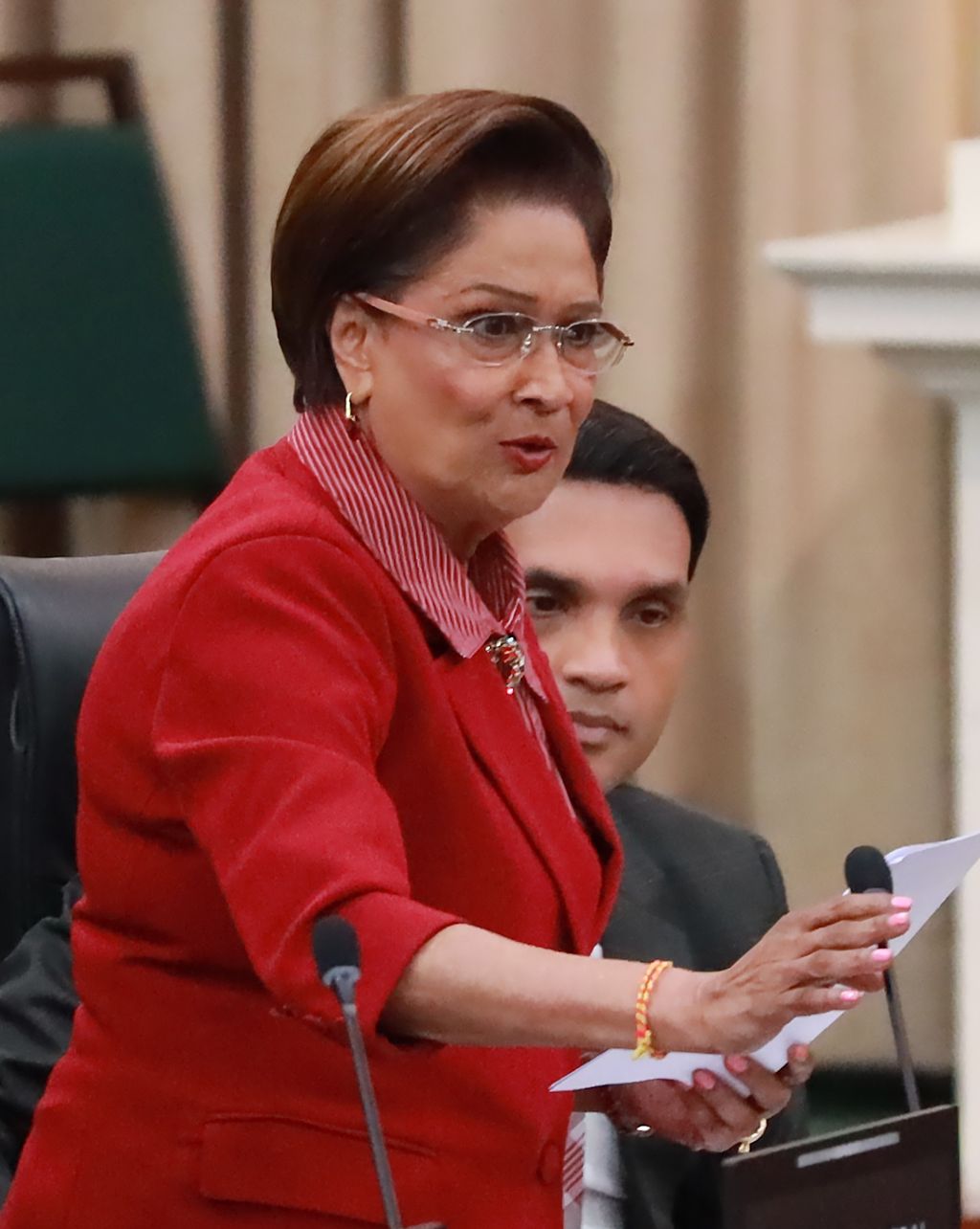
José Luis Granados Ceja, a journalist and political analyst, cautioned that Caribbean leaders must navigate the fallout and that Prime Minister Kamla Persad-Bissessar must choose her allies carefully.
“One of the strategies of the United States has been to divide Caribbean states from each other, really going after Caricom. She’s unfortunately played into this game, more recently talking about how there are people in the region with narco-trafficking ties, kind of a not-so-subtle commentary on other leaders in the region, trying to position herself and her government as being an ally of the United States.
“But as we just finished saying, that is not a safe strategy. And we’ve already seen the lives of Trinidadians lost in this extrajudicial execution campaign that the US carried out in the Caribbean.
“And so, I think that the wise decision is to proceed very cautiously. Just because you are on the side of Donald Trump today does not mean that that will be the case in the future.”
Granados Ceja urged Caricom to unite against what he described as the “imperialist monster in our hemisphere” and to publicly reaffirm its commitment to international law and multilateral institutions.
Lecturer and programme coordinator in international relations and global studies at the University of the West Indies,, Dr Michał Pawiński, said the removal of a sitting head of state violates established global norms and represents a dangerous precedent.
He warned that escalating tensions could lead to instability inside Venezuela, with knock-on effects across the Caribbean, including T&T.
“It has ramifications, economic ramifications, especially considering, in the case of Trinidad, the upcoming Carnival season and this type of instability where the airspace might be closed again for one or another reason.”
Dr Pawiński said it remains unclear whether T&T could face retaliation, despite previous warnings by Venezuelan officials that neighbouring states would be held responsible if the US attacked Venezuela.
“Nobody is sure exactly how the new president will be operating with respect to the relationship between Trinidad and Venezuela and the United States. Definitely ensuring the neutrality of Trinidad will bring more security for the country. This potentially might mean hosting or not hosting military services, military aircraft or ships in Trinidad.
“Because in case of conflict, any kind of conflict, military targets are legitimate targets under international law. So, it might increase the risk profile of Trinidad if there are military assets of the United States in Trinidad. Interesting stuff there.”
He added that Maduro’s arrest signals consequences for states perceived as acting against US policy.
“And I think this situation of Maduro is definitely exemplifying what the potential consequences are and the capabilities of the United States to execute those threats or statements that they are making. So definitely it is something to take those statements seriously.”
Meanwhile, international relations and security studies fellow Dr Joshua P Walcott said T&T’s cautious posture reflects uncertainty over how Venezuela’s political transition will unfold.
“There’s a large Venezuelan diaspora in Trinidad and Tobago, as you know, as Trinidadian citizens can see for themselves. And their reaction to the events that are unfolding is unpredictable, ultimately.
“Does the Maduro regime, from the apparatus itself, have eyes on our officials through the diaspora? We don’t know. Probably, yes. Do we have (Venezuelan) opposition supporters in Trinidad and Tobago? Of course we do, right? And we have to be very careful about their reaction to the events that are unfolding. So our Prime Minister’s actions to take security measures are indeed obviously linked to that sort of calculus regarding.”
The unprecedented arrest of President Maduro has triggered sharp regional concern, with Caribbean leaders questioning the legality of the action and its implications for sovereignty, stability and security.
In Dominica, Prime Minister Roosevelt Skerrit called for restraint, warning that political upheaval in Venezuela carries real consequences for ordinary citizens and neighbouring states linked by trade, energy and migration.
“Dominica reiterates its call for the rule of law to be observed and for ongoing diplomatic efforts to ensure Venezuela’s stability, good governance, democracy and peace,” he said during a media conference.
In St Vincent and the Grenadines, Opposition Leader Dr Ralph Gonsalves criticised Caricom’s muted response following the US action, arguing the regional bloc failed to confront what he described as a clear breach of international law by the United States.
He said Caricom’s statement also fell short of warning Caribbean citizens about the potential consequences of a destabilised Venezuela, particularly if US forces were deployed on the ground.
“It’s one thing to remove the President; it’s another thing to install an entirely different government and that is when you’re going to have mayhem in this Caribbean. A lot of people are going to get killed, a lot of people are going to run out of Venezuela, good and bad people ... And it’s just a short step from Venezuela to Trinidad, to Grenada, to St Vincent—either people transiting or coming directly. And you only need a handful of bad men and bad women to come to any of these islands to create mayhem slowly at first and then with greater rapidity and descent into chaos.”
On Saturday, Caricom issued a statement reaffirming its commitment to the principles of international law and multilateralism, while calling for peaceful dialogue through diplomatic channels to ensure Venezuela’s stability.
Related News
Trump says the US ‘hit’ a facility along shore where he says alleged drug boats ‘loa...
New year, new bundles of joy across T&T
PM, ministers defend doubling fines for several traffic offences from January 1