
US Secretary of State Marco Rubio has announced that the Trump administration has appointed an envoy to the position of United States special coordinator for Tibetan issues.
The role, which was created by the US Congress in 2002, will be filled by Riley Barnes, who is currently also serving as the assistant secretary of state for democracy, human rights, and labour.
- list 1 of 4US sanctions officials from Marshall Islands and Palau, citing China fears
- list 2 of 4US and Taiwan sign ‘pivotal’ deal to cut tariffs
- list 3 of 4Photos: Lunar New Year celebrations welcome Year of the Fire Horse
- list 4 of 4India-China in new spat over Arunachal Pradesh: What’s it all about?
end of list
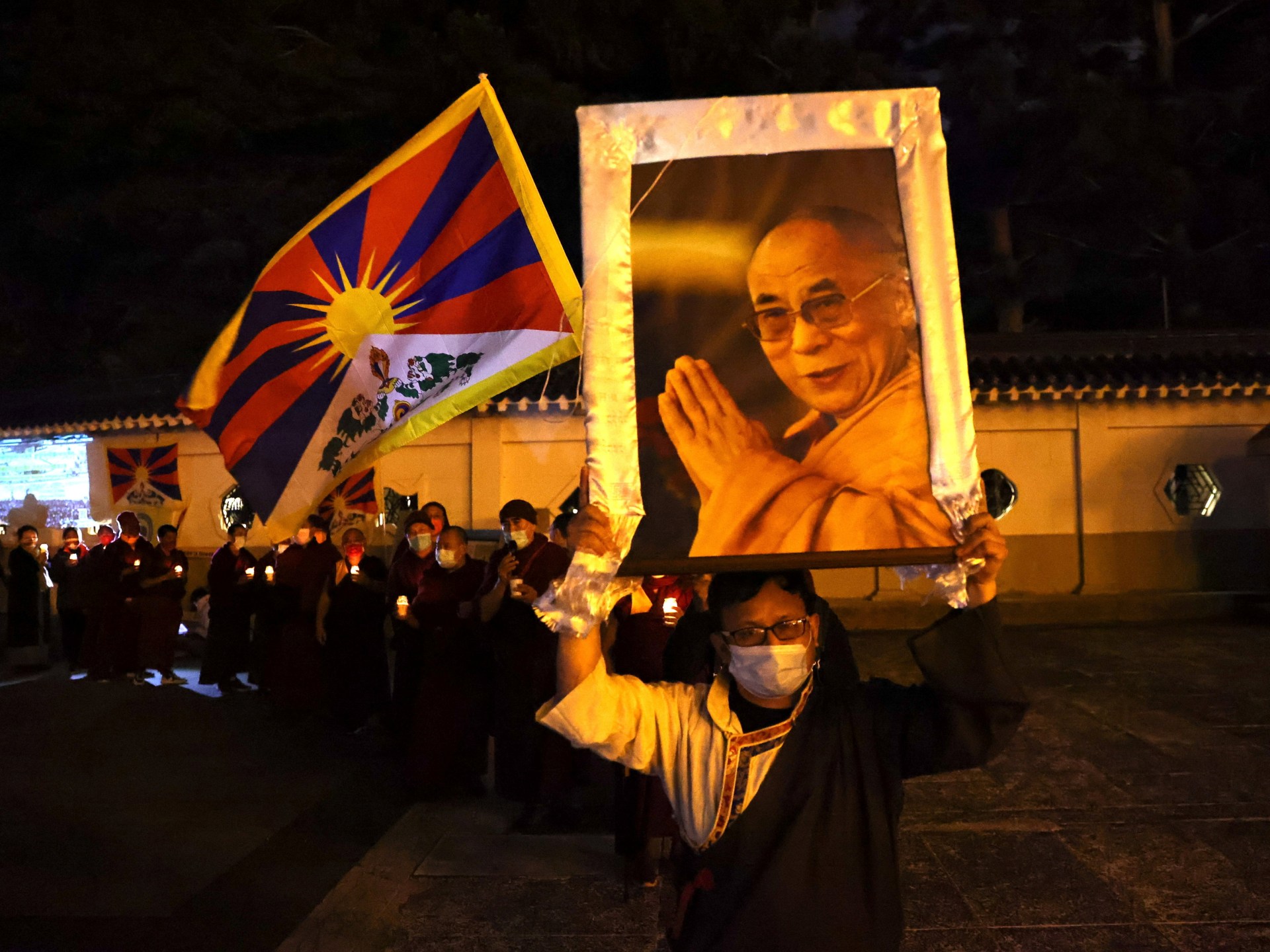
Rubio announced Barnes’s appointment in a statement on the occasion of Losar, the Tibetan New Year, on Tuesday.
“On this first day of the Year of the Fire Horse, we celebrate the fortitude and resilience of Tibetans around the world,” Rubio said in a statement.
“The United States remains committed to supporting the unalienable rights of Tibetans and their distinct linguistic, cultural, and religious heritage,” he added.
The new appointment comes as the administration of US President Donald Trump has stepped back from speaking out on a range of human rights issues globally, and as the US has either intervened directly or threatened other countries, including Venezuela, Iran, Cuba, and Denmark’s Greenland.
The Chinese Ministry of Foreign Affairs did not immediately respond to Rubio’s announcement, which comes during the Chinese New Year holiday, but Beijing has criticised similar appointments in the past.
“The setting up of the so-called coordinator for Tibetan issues is entirely out of political manipulation to interfere in China’s internal affairs and destabilise Tibet. China firmly opposes that,” Zhao Lijian, a spokesman at the Chinese Foreign Ministry, said after a similar appointment was made by the US State Department in 2020, during Trump’s first presidency .
Advertisement
“Tibet affairs are China’s internal affairs that allow no foreign interference,” Lijian had said.
China has governed the remote region of Tibet since 1951, after its military marched in and took control in what it called a “peaceful liberation”.
Exiled Tibetan leaders have long condemned China’s policies in Tibet, accusing Beijing of separating families in the Himalayan region, banning their language, and suppressing Tibetan culture.
China has denied any wrongdoing and says its intervention in Tibet ended “backward feudal serfdom”.
More than 80 percent of the Tibetan population is ethnic Tibetan, while Han Chinese make up the remainder. Most Tibetans are also Buddhists, and while China’s constitution allows for freedom of religion, the governing Communist Party adheres strictly to atheism.
Also on Tuesday, the head of the Washington-based Radio Free Asia announced that the US-government-funded news outlet has resumed broadcasting into China, after shutting down its news operations in October due to cuts from the Trump administration.
Radio Free Asia President and CEO Bay Fang wrote on social media that the resumed broadcast to audiences in China in “Mandarin, Tibetan, and Uyghur” languages was “due to private contracting with transmission services” and congressional funding approved by Trump.
Related News
In Ukraine’s west, Hungarian minority rights collide with wartime politics

Hamas: Trump’s ‘Board of Peace’ must stop Israel’s killing in Gaza
Photos: Kim Jong Un unveils homes for families of fallen soldiers