
Senior Political Reporter
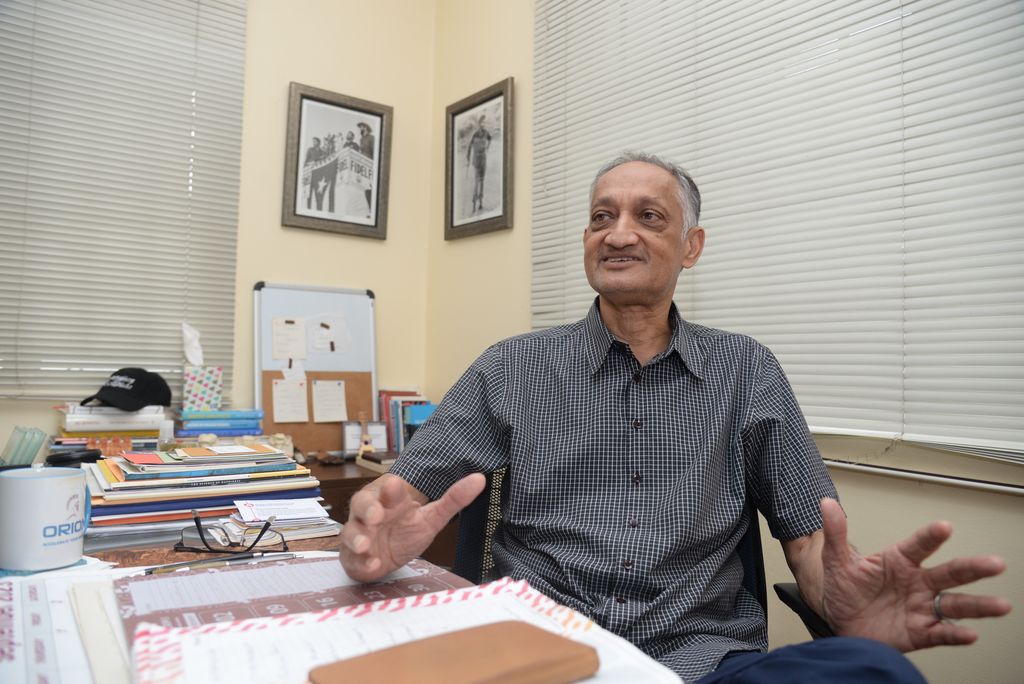
As a matter of constitutional principle, the burden rests on the State to justify why it must continue a State of Emergency (SoE), since an SoE is not intended to become the normal framework of governance, Independent Senator Anthony Vieira says.
Vieira did so in a statement last Saturday, hours before the Government announced its intention to extend the SoE.
Vieira said, “A State of Emergency is an exceptional constitutional mechanism; it’s not intended to become the normal framework of governance. In any constitutional democracy founded on the rule of law, the starting point is that citizens enjoy their rights and freedoms. Suspension or limitation of those rights is the exception and therefore requires continuing justification.
“To be clear, I’m not necessarily advocating for the termination of the SoE. The Government, the Police Service and the national security agencies may possess intelligence and operational information that’s not available to the public or to Parliamentarians. But if the Government seeks to continue the SoE, it should place before the country a clear, evidence-based case demonstrating why the extraordinary measures remain necessary, proportionate and effective.
“In a democratic society governed by the rule of law, restrictions on constitutional rights and freedoms should not rest on assumption alone; they should be justified by facts, data, and measurable outcomes.”
Vieira added, “My position has always been guided by what is necessary, appropriate, and in the people’s best interests. Where exceptional measures are required to protect public safety, they should be supported. Equally, where exceptional powers are continued, the public is entitled to a full and persuasive explanation as to why they remain necessary.
“The more severe the intrusion into liberty, the stronger the evidence required. If freedom of assembly, protest, movement, expression or privacy are being restricted, then the Government should be prepared to show empirical evidence that the restrictions are producing meaningful benefits.”
Saying emergency powers should never become permanent, he said, “One of the oldest constitutional concerns is that emergency powers have a tendency to become normalised. The danger isn’t necessarily bad faith, but a tendency on the part of governments becoming accustomed to powers that make administration easier.”
Vieira encouraged the Government to more fully articulate its case so that Parliament and the public can make an informed assessment of the way forward.
“In my respectful opinion, each extension of an emergency should require a more compelling justification than the previous one. At the beginning of an emergency, Government may rely heavily on intelligence assessments and urgent circumstances—Government is given the benefit of the doubt and a certain latitude may be allowed,” he added.
“However, a year later, Parliament and citizens should expect real and up-to-date data; ascertainable outcomes; independent assessments; and clear benchmarks. The longer the SoE continues, the less persuasive generalised assertions become.”
Vieira said rights are tested during difficult times.
“Few people object to freedom of speech when everyone agrees, and few people object to freedom of assembly when there’s no controversy. The true test comes when governments face pressure, fear, disorder or criticism. Rights are designed precisely for those moments,” he said.
“That doesn’t mean public safety is unimportant. Rather, it means that it is incumbent on the Government to continually justify why limitations on liberty remain necessary.”
Vieira said if Government is renewing the SoE, Parliament is entitled to ask:
a) ↓How many murders occurred before and after the emergency?
b) How many shootings?
c) How many kidnappings?
d) How many gang-related offences?
e) How many firearms were recovered?
f) How many prosecutions resulted?
g) How many convictions resulted?
h) ↓How many criminal enterprises were disrupted?
i) ↓What intelligence demonstrates that the threat remains exceptional?
j) Which powers have actually been used?
k) How often, and with what outcomes?