Venezuela’s new leader faces competing pressures from the U.S. and a government loyal to Maduro
 15 January 2026
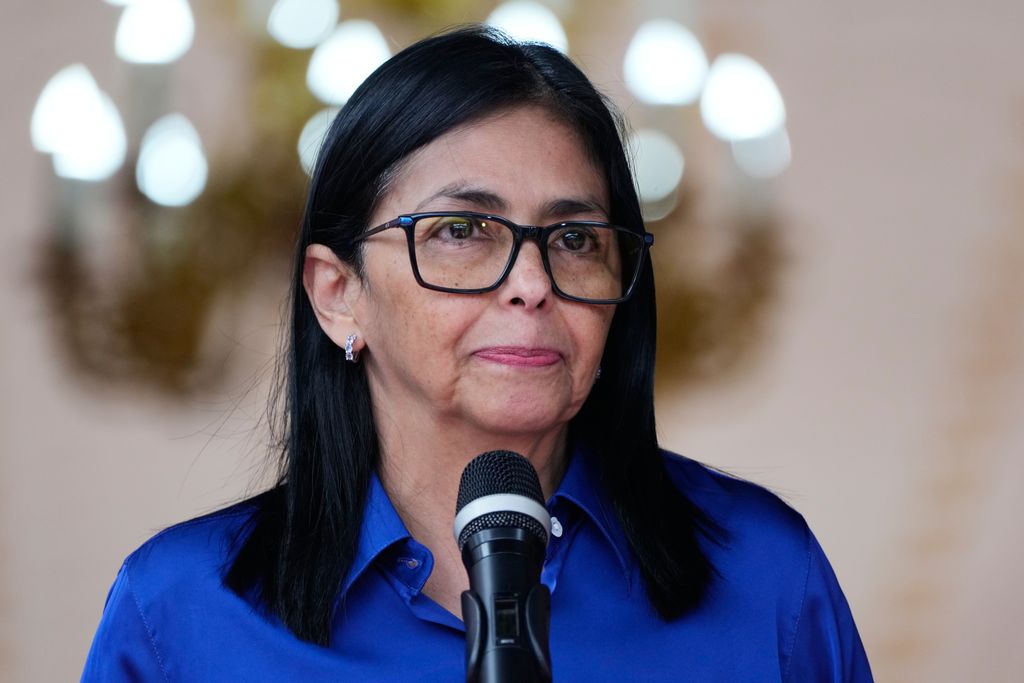

Venezuela’s acting President Delcy Rodríguez is set Thursday to deliver her first state of the union speech, addressing an anxious country as she navigates competing pressures from the United States – which toppled her predecessor less than two weeks ago – and a government loyal to former President Nicolás Maduro.
The speech comes one day after Rodríguez said her government would continue releasing prisoners detained under Maduro in what she described as “a new political moment” since his ouster by the United States earlier this month.
In her address to the National Assembly, which is controlled by the country’s ruling party, Rodríguez is expected to explain her vision for her government, including potential changes to the state-owned oil industry that U.S. President Donald Trump has promised to reinvigorate since Maduro’s seizure.
On Thursday, Trump was set to meet at the White House with Venezuelan opposition leader María Corina Machado, whose political party is widely considered to have won 2024 elections rejected by Maduro. But in endorsing Rodríguez, who served as Maduro’s vice president since 2018, Trump has sidelined Machado.
After acknowledging a Tuesday call with Trump, Rodríguez said on state television that her government would use “every dollar” earned from oil sales to overhaul the nation’s public health care system. Hospitals and other health care facilities across the country have long been crumbling, and patients are asked to provide practically all supplies needed for their care, from syringes to surgical screws.
The acting president must walk a tightrope, balancing pressures from both Washington and top Venezuelan officials who hold sway over Venezuela’s security forces and strongly oppose the U.S. Her recent public speeches reflect those tensions — vacillating from conciliatory calls for cooperation with the U.S., to defiant rants echoing the anti-imperialist rhetoric of her toppled predecessor.
American authorities have long railed against a government they describe as a “dictatorship,” while Venezuela’s government has built a powerful populist ethos sharply opposed to U.S. meddling in its affairs.
For the foreseeable future, Rodríguez’s government has been effectively relieved of having to hold elections. That’s because when Venezuela’s high court granted Rodríguez presidential powers on an acting basis, it cited a provision of the constitution that allows the vice president to take over for a renewable period of 90 days.
Trump enlisted Rodríguez to help secure U.S. control over Venezuela’s oil sales despite sanctioning her for human rights violations during his first term. To ensure she does his bidding, Trump threatened Rodríguez earlier this month with a “situation probably worse than Maduro.”
Maduro, who is being held in a Brooklyn jail, has pleaded not guilty to drug-trafficking charges.
Before Rodríguez’s speech on Thursday, a group of government supporters was allowed into the presidential palace, where they chanted for Maduro, who the government insists remains the country’s president.
“Maduro! Resist! The people are rising!” they shouted. —CARACAS, Venezuela (AP)
_______
Story by REGINA GARCIA CANO | Associated Press
Related News

Manchester United coach Amorim out one day after provocative comments about club structure

Smooth voting in Tobago despite heated campaign

TTPS maintains heightened security amid Venezuela situation