
Senior Reporter
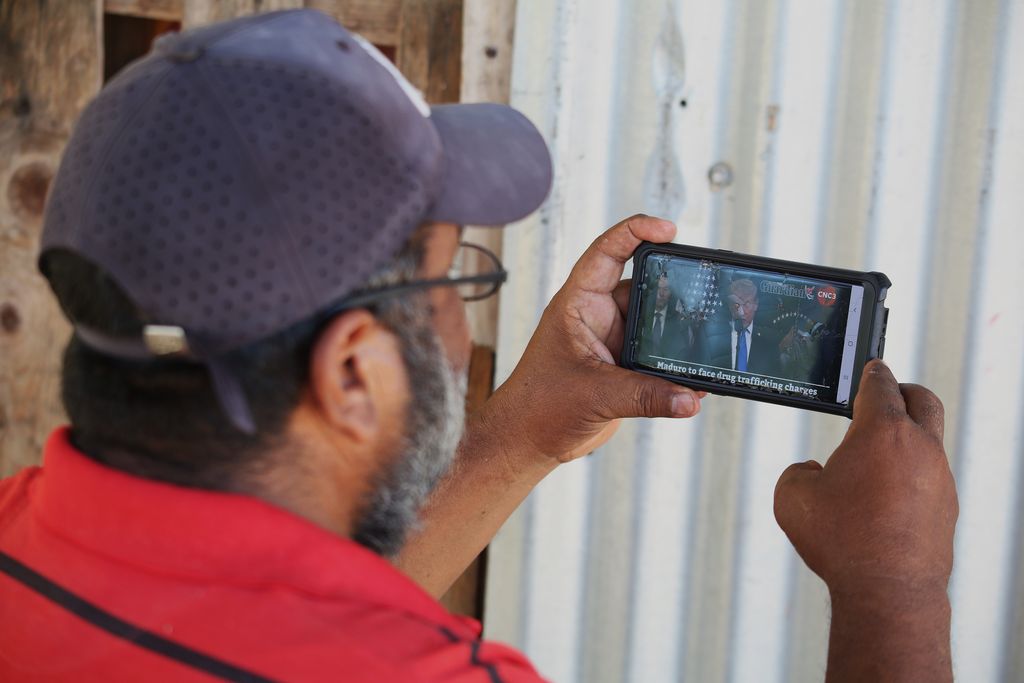
Even as Venezuela’s detained president, Nicolás Maduro, appeared before a US federal court to face charges including narco-terrorism and conspiracy to import cocaine, Joel Cedeno was unconvinced that his country had turned a corner after more than two decades under the United Socialist Party of Venezuela (PSUV).
Maduro was arrested on Saturday in Caracas during a US-led operation and flown to New York to answer federal charges.
Venezuela’s vice-president, Delcy Rodríguez, was later sworn in as interim president.
The developments have drawn mixed reactions internationally, with supporters welcoming the move and critics questioning Washington’s motives.
For Cedeno, a fisherman who crossed the Serpent’s Mouth countless times over four decades, the news brought little sense of relief.
Sitting beneath a shack along Icacos Beach, now home to dozens of displaced Warao families surviving on T&T’s fishing industry, the 61-year-old said his thoughts remained fixed on his family in Tucupita.
Although Maduro is no longer at the helm, Cedeno said, the conditions that forced him to leave Venezuela have not eased.
“People here are happy,” Cedeno said, speaking in limited English.
He explained that many Venezuelans living in Icacos returned home briefly in December for Christmas, but few newcomers have travelled since Maduro’s arrest.
Cedeno has lived in T&T for seven years and now holds immigrant status. His wife and one son remain in Venezuela, while he lives locally with a daughter and another son.
A second daughter resides in the US. Before the economic collapse, he said, his family owned land, raised cattle and produced milk and cheese, earning a stable living.
Despite Maduro’s removal, Cedeno expressed little optimism about what lies ahead. He said Interior, Justice and Peace Minister Diosdado Cabello Rondón remains a powerful and destabilising force.
“Delcy is not plenty of problems, but Diosdado is. Delcy and Maduro are together. Same problem,” he said.
Cedeno said many Venezuelans would rather see Opposition leader María Corina Machado take the reins than endure continued PSUV control or prolonged foreign intervention.
While some opposition voices have criticised the US action, arguing it is driven by Venezuela’s vast oil reserves, Cedeno said such concerns cannot be dismissed. Venezuela, he noted, is also rich in gold and other natural resources.
Cedeno’s daughter, Joeliandrys, speaking by telephone, said Venezuelans abroad are hesitant to return because daily life remains unchanged.
“Everybody wants Maduro’s Cabinet gone. Everybody in Trinidad will still stay because Venezuela has not changed yet,” she said. “Everybody says that they want Trump to take Diosdado and Delcy. They feel they just want Maduro and not them, but Trump needs to be smart and take all of them.”
She acknowledged that Maduro retains support within the military, which continues to shape the balance of power.
“So for Trump to take Venezuela, he has to sweeten them, make them feel comfortable. He can’t reach Venezuela just so. He has to deal with the military,” she said.
“People are happy because they take Maduro because he was the head, but we will be happy when they take Diosdado and Delcy both. Maduro is just a puppet; he has no education. They are smart, they know what they do.”
Relatives in Tucupita, she said, report that food prices have surged, deepening fear and uncertainty.
“My mommy says everything has become more expensive, like the food costs much more money,” she said. “People are afraid. They can’t celebrate that yet in Venezuela because they are still in power. The army had Maduro there, and the army is there.”
She added that comments by Cabello about dealing with returning migrants have only heightened anxiety among those considering going home.
Along the Cedros coastline, that uncertainty was reflected in the stillness of the sea.
Under a blazing sun, only a handful of fishing boats ventured out, despite beaches crowded with idle vessels.
In Icacos, just four boats were offshore. In Cedros, many migrants were collected by contractors for a day’s work inland.
Local fisherman Carlos Panchorie said he and others have continued fishing despite reports of US attacks on vessels in the wider region.
He said they had seen no warships and encountered only routine Coast Guard patrols near offshore installations.
According to Panchorie, the greater threat to livelihoods now is the weather.
“The water is too warm,” he said, explaining that rising sea temperatures have driven fish such as carite away, leaving both local fishermen and migrant families with fewer options, and little certainty about what tomorrow will bring.”