
Job growth in the United States rebounded in March despite the looming economic uncertainty pegged to tariffs and ongoing war on Iran.
Friday’s monthly job report from the US Bureau of Labour Statistics showed that the unemployment rate in March tumbled. Non-farm payrolls grew by 178,000 jobs, following a drop in February that was revised even further downward to 133,000 in lost jobs. The unemployment rate is currently at 4.3 percent.
- list 1 of 3Oil price surges, Asian stocks fall as Trump vows to continue Iran attacks
- list 2 of 3Trump fires Pam Bondi as US attorney general, elevates Todd Blanche
- list 3 of 3US Homeland Security shutdown to stretch on, despite Senate passing funding
end of list
The biggest gains in March were in the healthcare sector, which added 76,000 jobs — higher than the 29,000 average monthly increase in the sector over the last year.
The gains, however, came after a large-scale nursing strike ended on February 24. That protest had taken more than 30,000 healthcare workers off of payrolls, helping to account for the rebound in March.
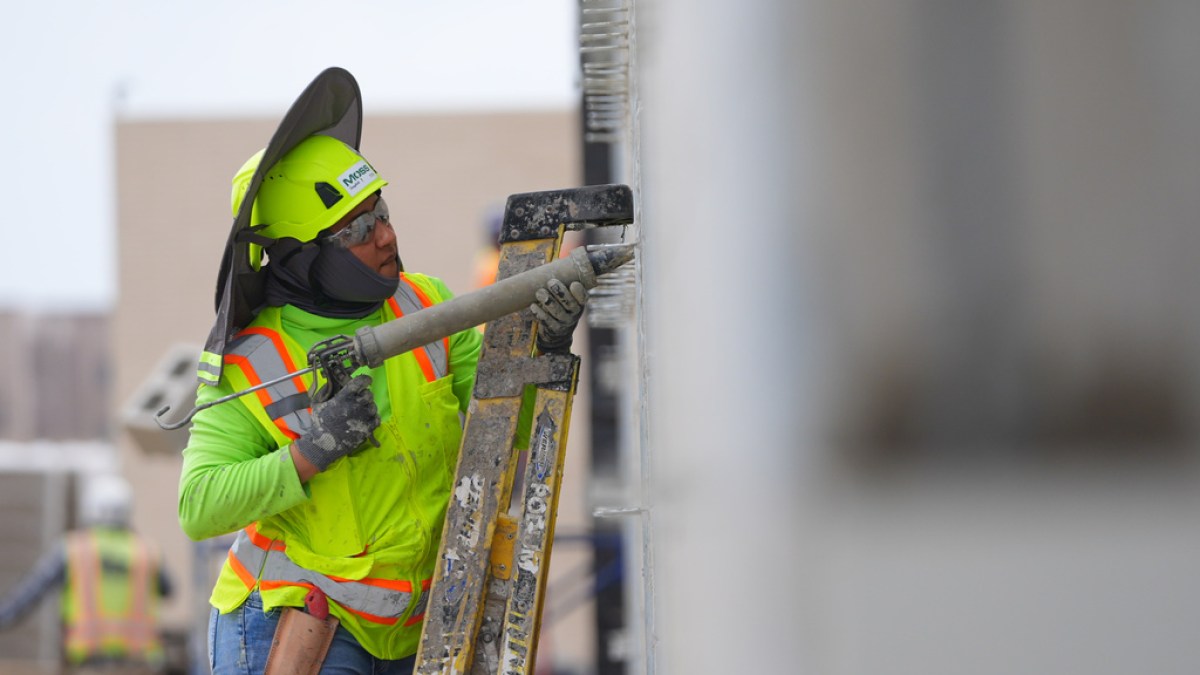
The construction sector had the second largest jump in employment, with 26,000 jobs added in March. Transportation and warehousing also grew with 21,000 jobs over the previous month, though the sector has lost 139,000 jobs overall since February 2025.
The federal government — the single largest employer in the US — continues to shrink, as President Donald Trump continues his push to address “waste, fraud and abuse”. It cut 18,000 federal employee positions in March, marking a 355,000 job decline from this time last year.
The White House, however, praised this month’s jobs report as evidence that Trump’s policies were stimulating the domestic economy.
“The March jobs report blew out expectations with strong construction job growth and a surge in manufacturing job creation as trillions of dollars in investments begin to materialize,” White House deputy press secretary Kush Desai wrote in a post on the social media platform X.
Advertisement
In his statement, Desai brushed aside concerns about the economic instability during the Iran war, dubbed Operation Epic Fury, which has sent prices for fuel and fertiliser surging higher.
“America remains on a solid economic trajectory thanks to President Trump’s proven agenda of tax cuts, deregulation, tariffs, and energy dominance,” he said.
“Americans can rest assured that after the short-term disruptions of Operation Epic Fury are behind us, America’s economic resurgence is set to only accelerate.”
However, experts say that the impact of the US conflict with Iran is not yet reflected in the country’s job numbers.
Economists at the banking firm JPMorgan cautioned that “negative payroll readings in any given month will become more common”, adding that “even with job growth sufficient to stabilize the unemployment rate, there could be negative payroll readings at least a third of the time”.
Angela Hanks, the chief of policy programmes at the think tank The Century Foundation, echoed that assessment in a statement to Al Jazeera.
”The topline rate does not yet reflect the war’s impact on the job market,” she said. “Wage growth has stalled, and oil prices are skyrocketing, resulting in higher prices for consumers and threatening to weaken the job market.”
US consumers are feeling the pinch in other areas. The University of Michigan’s consumer sentiment survey, which tracks economic optimism, dropped by 6 percent in March to hit its lowest level since December 2025.
Restricted traffic in the Strait of Hormuz, as a result of the conflict, has also been reflected in the uptick in gas prices.
The average price for a gallon of petrol is $4.09 ($1.08 per litre), up from $3.10 ($0.82 per litre) this time a month ago, according to the American Automobile Association (AAA), which tracks petrol prices nationwide.
Related News

Norway to add more than $11bn to defence budget over 10 years

How long will Artemis II take to reach the moon, and what happens next?

Italians vote in high-stakes justice referendum in key test for Meloni