
Senior Reporter
Some trade unions have endorsed the National Union of Government and Federated Workers’ (NUGFW) agreement with the State for a 10 per cent wage increase, 60 per cent of which will be paid in non-cash benefits.
The agreement, which covers the 2014-2019 bargaining period, will benefit approximately 20,000 workers and cost the State $2.6 billion in backpay, while adding $252 million annually to the wage bill. Of that sum, about $1 billion represents cash payments, with the remaining $1.56 billion to be paid in non-cash benefits.
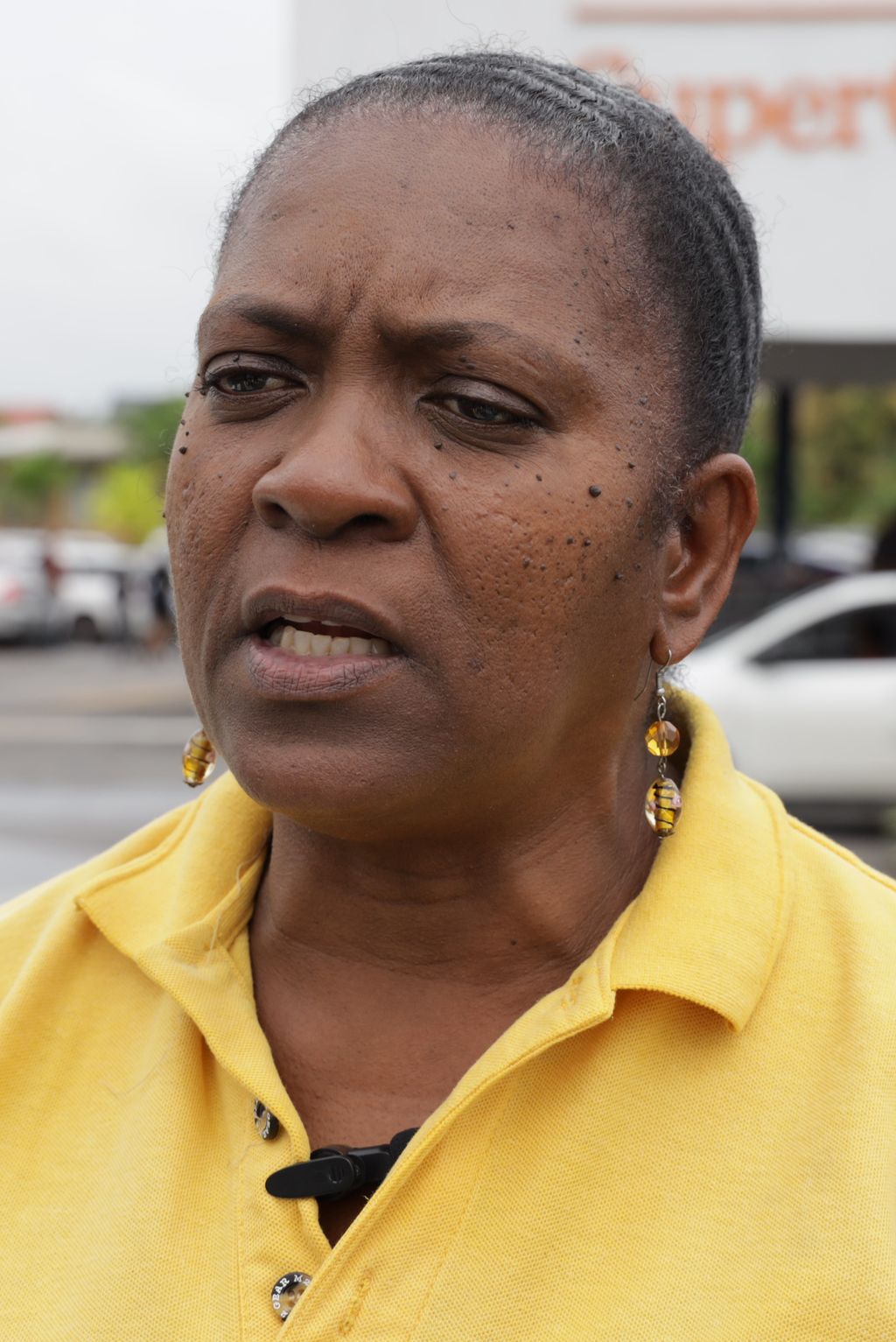
Contractors and General Workers’ Union (CGWU)president general Ermine De Bique-Meade said her union had no issue with NUGFW workers receiving a 10 per cent increase split between cash and financial instruments, noting that such an approach can benefit workers. She added that non-cash payments for arrears may encourage greater financial discipline, as lump sum cash payments are often quickly spent.
However, she said a similar proposal by her union was rejected by Chief Personnel Officer Dr Daryl Dindial when it was put forward two years ago.
“As president general of the Contractors and General Workers’ Union, I indicated to the CPO that if the Government could not pay the full amount in cash, we would recommend a percentage in cash and a percentage in financial instruments,” she said.
De Bique-Meade maintained that a longstanding disparity remains between daily-paid workers at the San Fernando and Port-of-Spain city corporations and those represented by the NUGFW. She said this gap stems from job evaluations conducted between 2000 and 2005 for NUGFW-represented workers, whose wages have since outpaced those at municipal corporations, including the San Fernando City Corporation.
She said the CGWU had argued that since no job evaluation was conducted for San Fernando City Corporation workers, it was unfair for them to lag. As a result, the union pushed for NUGFW rates to be used as the market benchmark in negotiations.
“When we presented those arguments, it was agreed that they would use the rates NUGFW was receiving as the market benchmark. Therefore, what we agreed and signed for was that NUGFW rates would guide the process, with the 0-0-2 per cent applied to daily-paid workers at the San Fernando City Corporation.”
She said daily-paid workers at the Port-of-Spain City Corporation face a similar situation. With NUGFW rates now increased, De Bique-Meade said the union will argue in upcoming negotiations for the 2020–2022 period that those rates must continue to be used as the benchmark, with updated salaries applied before any percentage increase is added.
The Transport and Industrial Workers Union (TIWU) has also backed the agreement, noting that non-cash payments for arrears can be beneficial depending on the circumstances.
TIWU president Shawn Roberts said the size of the bargaining unit may have influenced the outcome, given the country’s financial constraints. He noted that options such as bonds or housing could form part of such arrangements, but said this is not currently under consideration in negotiations involving the Public Transport Service Corporation and the National Maintenance Training and Security Company. TIWU is seeking a 25 per cent increase for NMTS workers and a 30 per cent increase for PTSC workers for the 2014–2020 period.
Meanwhile, the Joint Trade Union Movement is expected to meet today to discuss the agreement at the leadership level.
Guardian Media reached out to Dindial and is awaiting a response.