Uncertainties ahead, as 2026 Atlantic Hurricane Season starts in El Niño year
 02 June 2026

The executive director of the Caribbean Regional Fisheries Mechanism (CRFM), Dr. Marc Williams is questioning how the Caribbean fisheries and aquaculture will fare off during the 2026 Atlantic Hurricane Season, which began on Monday.
The Belize-based CRFM said that the answer will depend on how well the region is prepared and responds in the aftermath of adverse weather, noting that this year, the region must also consider the potential impacts of El Niño on its fisheries, both in the short term and the long term.
El Niño is a global climate phenomenon that emerges from variation in winds and sea surface temperatures and over the tropical Pacific Ocean.
“Every year, our fisheries and aquaculture sector faces damage to vessels, fish farms, landing sites, equipment, and marine ecosystems. These challenges directly affect food security, livelihoods, national economies, and the well-being of our people,” said Williams.
The CRFM senior official noted the sector’s vulnerabilities, adding that the Caribbean fisheries and aquaculture sector continues to demonstrate remarkable resilience, innovation, and determination.
But he stressed that “preparedness saves lives, protects livelihoods, and reduces recovery costs” and must be a permanent pillar of the region’s fisheries and aquaculture development strategies.
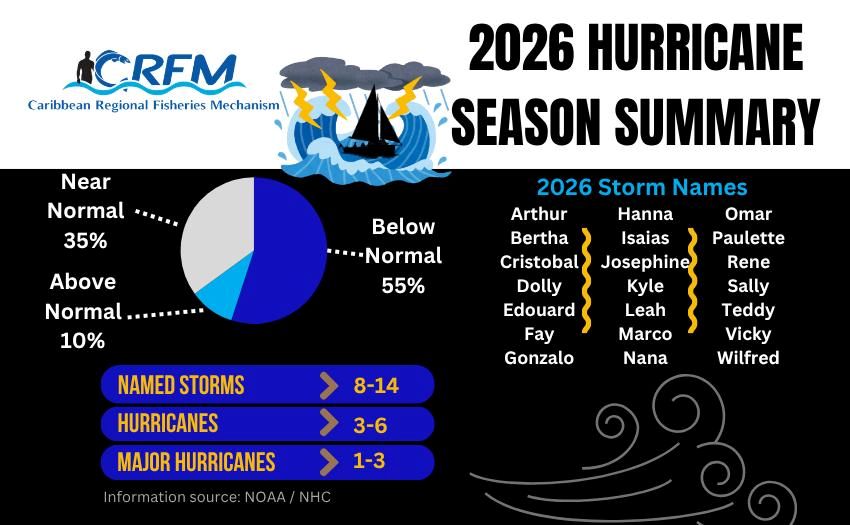
CRFM said that although a positive consequence of El Niño could be the suppression of hurricane activity, its impacts on our climate and weather could furthermore erode the health of Caribbean coral reefs as well as impact fish catches.
The US-based National Oceanic and Atmospheric Administration (NOAA) said El Niño also comes with warmer average sea surface temperatures, which may stress corals. It is a double-edged sword, as El Niño conditions tend to support less tropical storms and hurricanes, while warmer ocean temperatures and low winds support a more active year.
“Although El Niño’s impact in the Atlantic Basin can often suppress hurricane development, there is still uncertainty in how each season will unfold. That is why it’s essential to review your hurricane preparedness plan now. It only takes one storm to make for a very bad season,’ said NOAA’s National Weather Service Director Ken Graham.
Williams said there is need for strengthening early warning systems; improve climate-smart practices; enhance fisheries safety and marine forecasting as well as invest in resilient infrastructure across the value chain and equip people with the tools, knowledge, technology, and support systems.
“As we enter another hurricane season, let us remain vigilant, united, and prepared,” Williams said. —BELMOPAN, Belize (CMC)