


Senior Political Reporter
Trinidad and Tobago stands steadfast with the US amid differing United Nations Security Council views on the recent US military action concerning Venezuela and its deposed leader Nicolás Maduro and his wife.
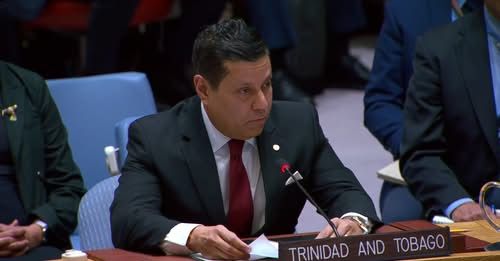
T&T’s Permanent Representative to the United Nations, Dr Neal Parsan, told attendees at the UN Security Council (UNSC) yesterday that the country remains steadfast in its support for, and commitment to, US-led cooperative efforts to dismantle criminal networks across the Americas.
Parsan did so when he spoke at yesterday’s emergency UNSC meeting. This was convened regarding the US’s military action last Saturday, capturing Maduro and his wife, Cilia Flores.
The meeting, under the council’s agenda item, “Threats to International Peace and Security,” was requested by Colombia, supported by China and Russia. It was chaired by council chairman, Somalia’s President Hassan Sheikh Mohamud.
It took place at the UN’s New York headquarters while the Maduros were appearing at a Manhattan court.
President Mohamud listed countries which had been invited to participate under the council’s rules on procedures: Argentina, Brazil, Chile, Cuba, Eritrea, Iran, Mexico, Nicaragua, Paraguay, South Africa, Spain, T&T, Uganda and Venezuela. T&T was the only Caribbean state involved.
Among the 27 countries represented, there was vociferous condemnation of the US actions, including from Colombia, Russia, China, Cuba, Brazil, South Africa, Venezuela, Mexico, Pakistan, Iran, Eritrea (121 Non-Aligned States), Uganda, Liberia, Nicaragua, and South Africa.
There were calls for the release of Maduro and Flores, for de-escalation of force, and for dialogue and diplomacy to be used. Some stressed that Latin America and the Caribbean is a zone of peace and that this was threatened. Cuba noted 32 Cubans killed in the US attack.
The UK, Latvia, France, Paraguay, Chile, and Spain–which didn’t recognise Maduro’s leadership–called for peaceful democratic solutions for Venezuelans and said that counter-narcotics efforts and accountability must be pursued through lawful, multilateral means. Argentina and Panama called for the release of their citizens held in Venezuela.
US and Venezuela spar
US Ambassador to the UN Mike Waltz defined America’s operation as a surgical law-enforcement operation facilitated by its military against “two indicted fugitives ... narco terrorists.” He said it wasn’t an act of war and the US wasn’t occupying a country. He said “overwhelming evidence” of crimes will be presented in court. He said US President Donald Trump had given Maduro multiple offers and tried to de-escalate, but Maduro refused.
Waltz questioned what kind of organisation the UN is if it conferred legitimacy on a “narco-trafficker.” Waltz said the US wouldn’t allow the Western Hemisphere to be used as a base for “our adversaries, competitors and rivals.”
Venezuela’s UN Ambassador Samuel Moncada strongly slamming the US’s action, said the “kidnapping” of the Maduros breached the immunities of heads of state, and the situation set a precedent for all states in the UN. He said the credibility of international law and the UN’s authority is at stake.
He requested the release and safe return to Venezuela of the Maduros and for the US use of force to be condemned. Moncada said Venezuelan institutions are functioning normally, constitutional order has been preserved and the state has control over its territory. He said Executive Vice President Delcy Rodriguez, now the Acting President, would guarantee continuity, stabilisation and internal peace.
T&T steadfast in support of US
T&T’s Parsan stated, “My delegation addresses this council as a Caribbean nation, a neighbour of Venezuela and a long-standing advocate for peace, for co-existence and the rule of law.”
He said, “The Government of T&T has taken note of the military operations undertaken by the United States in Venezuela. We remain committed to co-operative efforts led by the United States to disrupt and dismantle networks that enable transnational crime across the Americas whose activities have had debilitating effects on the security and stability of the region.
“Trinidad and Tobago remains steadfast in its support of the United States of America’s initiatives that strengthen regional security, reinforce the rule of law and safeguard the well-being of our societies–the Americas.
“The Government of T&T, while valuing its long-standing and robust partnership with the United States, remains equally committed to maintaining a constructive and respectful relationship with the Bolivarian Republic of Venezuela and continues to uphold peaceful relations with the people of Venezuela.”
UN Secretary General: International law wasn’t respected
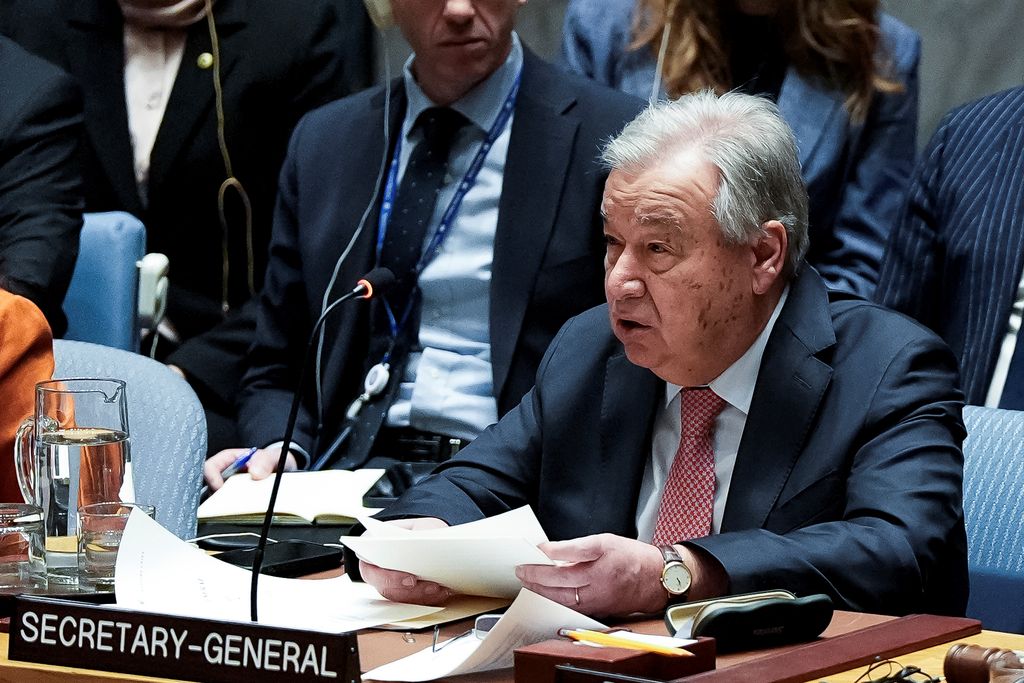
United Nations Under Secretary Rosemary DiCarlo read an address by UN Secretary General Antonio Guterres, who was unable to attend the meeting.
Guterres said, “I remain deeply concerned that rules of international law have not been respected with regard to the 3 January military action. The UN Charter enshrines the prohibition of the threat or use of force against the territorial integrity or political independence of any state.
“The maintenance of international peace and security depends on the continued commitment of all member states to adhere to all the provisions of the Charter. Venezuela has experienced decades of internal instability and social and economic turmoil. Democracy has been undermined. Millions of its people have fled the country. The situation is critical, but it is still possible to prevent a wider and more destructive conflagration.”
Citing Venezuela’s immediate future, Guterres said he was deeply concerned about the possible intensification of instability in the country, the potential impact on the region, and the precedent it may set for how relations between and among states are conducted.
Guterres called on all Venezuelan actors to engage in inclusive, democratic dialogue in which all sectors can determine their future.
“I also urge Venezuela’s neighbours and the international community more broadly to act in a spirit of solidarity and in adherence to the principles, laws and rules erected to promote peaceful coexistence.”
Guterres welcomed all efforts aimed at assisting Venezuelans in finding a peaceful way forward.
Special envoy to report in 2 weeks
Director of the UN Sustainable Development Solutions Network Jeffrey Sachs said the issue before the council wasn’t the character of the Venezuelan Government or to judge Maduro.
He said it was about whether any member state–by force, coercion or economic strangulation–has the right to determine Venezuela’s political future or to exercise control over its affairs, and council members had to defend international law, specifically the UN charter. Sachs noted US actions on various countries.
Sachs said the UNSC should immediately affirm that the US immediately cease and desist from all explicit/implicit threats or use of force against Venezuela and terminate its naval quarantine around Venezuela and all related coercive military measures. The US should also immediately withdraw military forces from within/along Venezuela’s perimeter, including intelligence, naval, air and others.
Sachs recommended the Secretary-General immediately appoint a special envoy to engage the relevant Venezuelan and international stakeholders and report to the USC within 14 days with recommendations consistent with the Charter, and the UNSC should remain urgently informed of the matter.
Related News
Firearms licence fees to increase from January 1
UN Warns of “Dangerous Precedent” as U.S. Military Operation Captures Venezuela’s Ma...
HDC launches billion-dollar mismanagement probe