
Senior Reporter
The Government has come out in full support of the United States attack on Iran yesterday, which, according to Israel and US President Donald Trump, left Iran’s Supreme Leader dead.
In a statement issued after 8 pm last evening from the Ministry of Foreign and Caricom Affairs, it said, “The Ministry of Foreign and Caricom Affairs wishes to express its support for the continued actions of the United States of America aimed at preventing oppressive regimes from acquiring nuclear weapons capabilities that would jeopardise international peace and security. The proliferation of such weapons is a grave threat to the global community.”
That statement came four hours after one was first posted on Facebook around 4 pm by the ministry, and then retracted. That post was left up for at least an hour.
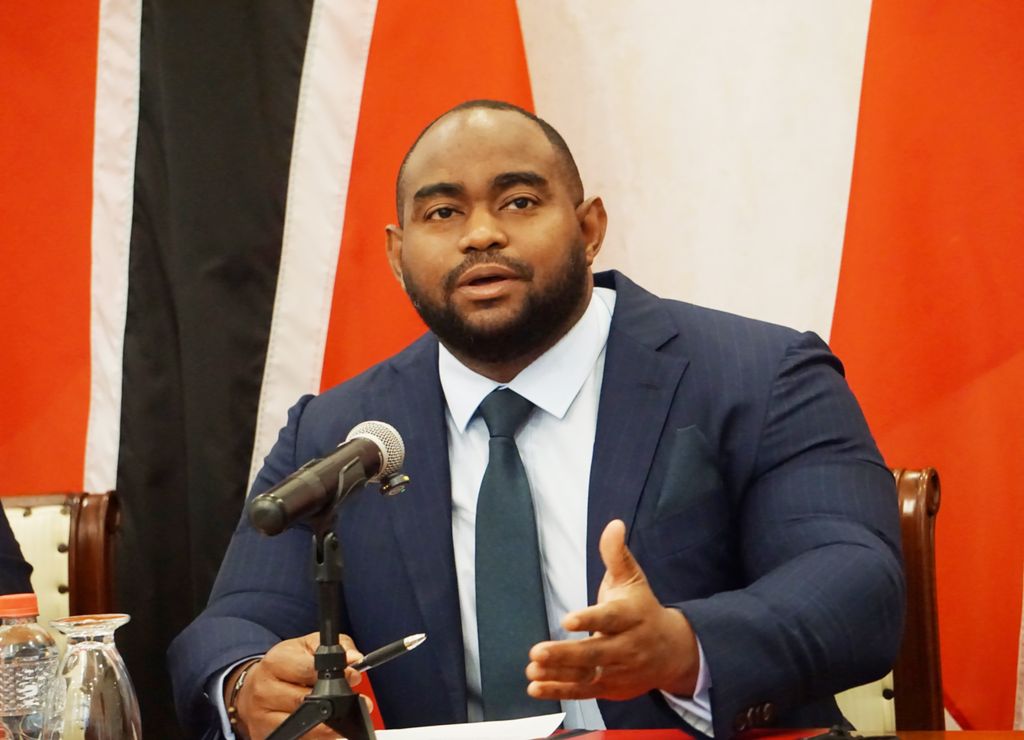
In a WhatsApp response to Guardian Media, Minister of Foreign Affairs Sean Sobers said the release was retracted because the Government was “still assessing the situation”, adding that another statement would be issued.
The second statement saw the removal of the term “allies” and also expressed sympathy for the loss of life.
“The ministry expresses sympathy for all loss of life due to events occurring in the Middle East and reaffirms our support for the peaceful existence for all persons.”
It added that the ministry stands in solidarity with “our brothers and sisters in the Gulf, including those in the United Arab Emirates, Kingdom of Saudi Arabia, Kingdom of Bahrain and State of Qatar who have come under attack.”
But in response to the retracted statement, former foreign affairs minister Dr Amery Browne described the comments as another shameful action by the Government.
“Every time we think we’ve seen the worst possible output and representation of the nation from this UNC Government, they then proceed to take our nation to a new level of shame. Our Foreign Policy has been reduced to purile subservience, with hasty official public releases that are definitely not the product of intelligent minds.”
He added that the attacks came without any United Nations Security Council authorisation, labelling it a “new low” for a ministry and a Government that has made it abundantly clear that they have no regard whatsoever for International Law, for the UN Charter, for Caricom, and for the views of the population that they were elected to serve.
“All over the world, our diplomats and officials are bowing their heads in shame at the demolition of standards that we are witnessing on a daily basis. Today was a terrible day for those who place value on Trinidad and Tobago’s international reputation and prestige as a nation.”
He criticised “the sad reality” that our tax dollars are paying the salaries of the Cabinet, adding that “it is clear that this Government is impoverished with regard to integrity, prudence, diplomacy, and competence.”
Meanwhile, Sobers, in a telephone interview with Guardian Media, said the attack against Iran and the subsequent retaliation did not cause any injury to nationals in neighbouring countries across the Gulf region, including those in the United Arab Emirates, Saudi Arabia and Qatar, among other countries.
“So, so far, there are no reported fatalities or injuries by any of our nationals. All of them are adhering to the countries within which they live. The instructions that are being given and they are essentially hunkered down, and they are quite well. We’ve had no negative reports from our nationals, and we’re quite pleased about that,” Sobers said.
Nationals were also advised to register with the Government’s Registration System for Nationals Abroad, ensure travel documents are valid and identify the nearest emergency shelter should conditions worsen. The ministry further encouraged citizens to formulate contingency plans for departure where personal safety may be at risk.
Sobers explained that the ministry had access to all the WhatsApp group chats for Trinis in Qatar, with the High Commission in both London and India also having access to the group chats for direct communication to address any concerns.
The United States and Israel launched a major attack on Iran yesterday, triggering retaliatory missile and drone strikes by Iran towards Israel and US military bases across the region. According to Iranian state media, citing the Red Crescent, at least 201 people were killed, and more than 700 were injured as exchanges of fire continued into the night.
Iranian Foreign Minister Abbas Araghchi described the attack as “unprovoked, illegal and absolutely illegitimate.” US President Donald Trump posted on social media that Ali Khamenei was killed, which has yet to be independently confirmed. He posted on Truth Social: “Khamenei, one of the most evil people in history, is dead,” adding that it is the “single greatest chance for the Iranian people to take back their country.”
Economist Dr Vanus James said the conflict can be positive and negative for the country, with more negatives than positives.
“That will be a cost increase, primarily a cost-increasing effect. Although there is a little bit of a silver lining in the sense that Heritage Petroleum produces some barrels of oil, which we will export, and so you will get some gains from that. But the much larger factor would be that you import most of your oil products, and therefore that cost is going to go up.”
He added that if this conflict increases oil and gas prices above US$78 a barrel, then the Heritage and Stabilisation Fund would benefit. He said it should be closely monitored.
“In addition to that, of course, the shipping costs or movement of products into the country, that could be affected”, James said.
Meanwhile, political analyst Derek Ramsamooj said it was too early to say what, if any, political impact would be felt locally from the conflict.