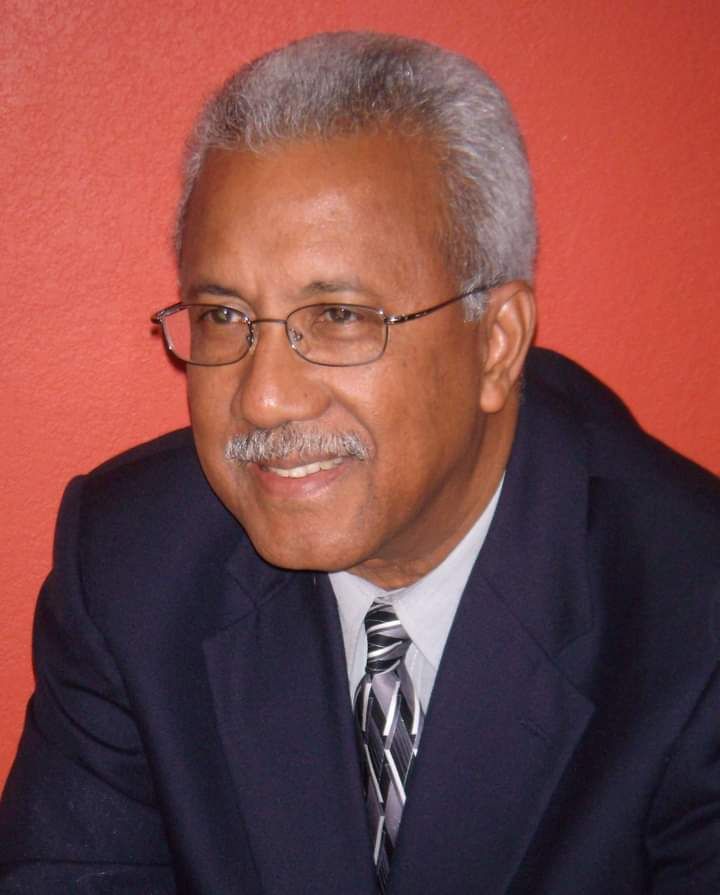

Defence Minister Wayne Sturge is denying reports that this country was complicit in the extraction of ousted Venezuelan president Nicolas Maduro by allowing a United States aircraft to use the country’s airport in the extraction.
Responding to questions during a media briefing at the United National Congress headquarters yesterday, Sturge said Trinidad and Tobago had no advance notice of the US strike.
“The President of the US himself stated quite clearly that not even members of his own inner circle knew what was going on. John Jeremie (Attorney General) is not in that inner circle, neither is the Prime Minister, and neither am I,” Sturge said.
“I have never spoken to Mr Rubio or Mr Trump. So, if they didn’t tell people in their own circle, how are they going to tell me? How would I know?”
Sturge said the Trinidad Express article that made the claim spoke of an open-source document that detailed the US aircraft leaving Trinidad, but did not say where it went.
He said if the open source was as credible as the article suggested, it should be able to determine where the aircraft went.
Last week, during another Government media conference, Attorney General Jeremie chose not to answer when asked if any assets of the US, be it man or machine, were deployed from this country in Maduro’s capture or the fatal air strikes leading up to his extraction.
Asked pointedly yesterday if the US used this country as a launching pad, Sturge said: “I do not have any such information. I do not know, and if I was to hazard a guess, I would say it was not, and the Prime Minister also made the statement clear.”
Sturge admitted there is continuous training between the US and local military, but opted not to say if there are any planned training exercises ongoing or set to happen soon.
In a telephone interview with Guardian Media yesterday, international relations expert, Professor Anthony Bryan, said there was no reason to doubt Sturge.
“Such things could happen, the Government need not be informed. It is up to Civil Aviation to track those aircraft and deny them permission if they wish. So, I don’t see any mystery there.”
Last year, the Government approved the use of local airports by US military aircraft to conduct what it described as “logistical activities.”
In a media release, the Ministry of Foreign and Caricom Affairs announced that approval was in keeping with established bilateral cooperation.
“The Ministry has granted approvals for United States military aircraft to transit Trinidad and Tobago’s airports in the coming weeks. The United States has advised that these movements are logistical in nature, facilitating supply replenishment and routine personnel rotations.”
The Government also allowed the US to set up a military radar to detect air traffic in Tobago. Both the Government and the US Southern Command claimed the radar is for blocking illegal drug transactions.
This, however, was refuted in a New York Times report, which pointed out a significant technical contradiction. The article claimed the radar is designed for air surveillance and defence, and not for tracking “go-fast” boats that are typically used by drug traffickers.
Related News
Bizarre death: Elderly woman found partially nude under bed in Chaguanas home; daughter ca...
ZOSOs pass in Lower House amid Opposition warnings
ZOSOS to replace SOE: Govt to follow Jamaica’s crime initiative for hotspots