
Senior Reporter
geisha.kow[email protected]
The Government’s proposed sale of several State-owned assets has triggered sharp criticism from Opposition members, who warn that the country risks losing valuable national holdings, while economist Dr Ronald Ramkissoon argues that divestment could benefit citizens if the process is transparent, properly structured and aimed at creating long-term value.
The issue has come into focus following Prime Minister Kamla Persad-Bissessar’s announcement that the Government plans to divest several State-owned assets, including National Quarries Ltd, Hilton Trinidad, the Magdalena Grand Beach and Golf Resort, and the La Brea Industrial Development Company Ltd (Labidco).
Speaking at the sod-turning ceremony for a new $500 million Marriott resort at Rocky Point, Tobago, on Tuesday, Persad-Bissessar said the State had a poor track record of operating commercial enterprises, arguing that greater private sector involvement was needed to drive economic growth.
However, Opposition MP and former tourism minister Randall Mitchell condemned the move, accusing the Government of seeking to dispose of valuable national assets without adequately explaining why they should be sold rather than restructured and improved.
“It is clear to me that the Prime Minister has accepted that she is in her last term as leader of the UNC and Prime Minister of Trinidad and Tobago and has decided, as a last grasp, to have a fire sale of some of our prized national assets,” Mitchell said.
He argued that the assets belong to the people of T&T and not any government administration, questioning who would ultimately benefit from their sale and calling for full disclosure of valuations, prospective buyers and protections against conflicts of interest.
Former prime minister and former energy minister Stuart Young echoed those concerns, suggesting that any asset-sale programme should be examined against the backdrop of what he described as declining transparency in government.
“Kamla Persad-Bissessar seems to make government decisions and policies on the fly and according to whatever pops into her head,” Young said.
Young further questioned whether potential purchasers may have already been identified.
“Does the kakistocracy already have friends, financiers and family lined up to take these state assets for fire sale prices?” he asked.
He also argued that the issue should be viewed in the context of changes to procurement legislation, claiming that the Government was operating with “zero transparency and accountability and to the constant detriment of future generations of Trinbagonians.”
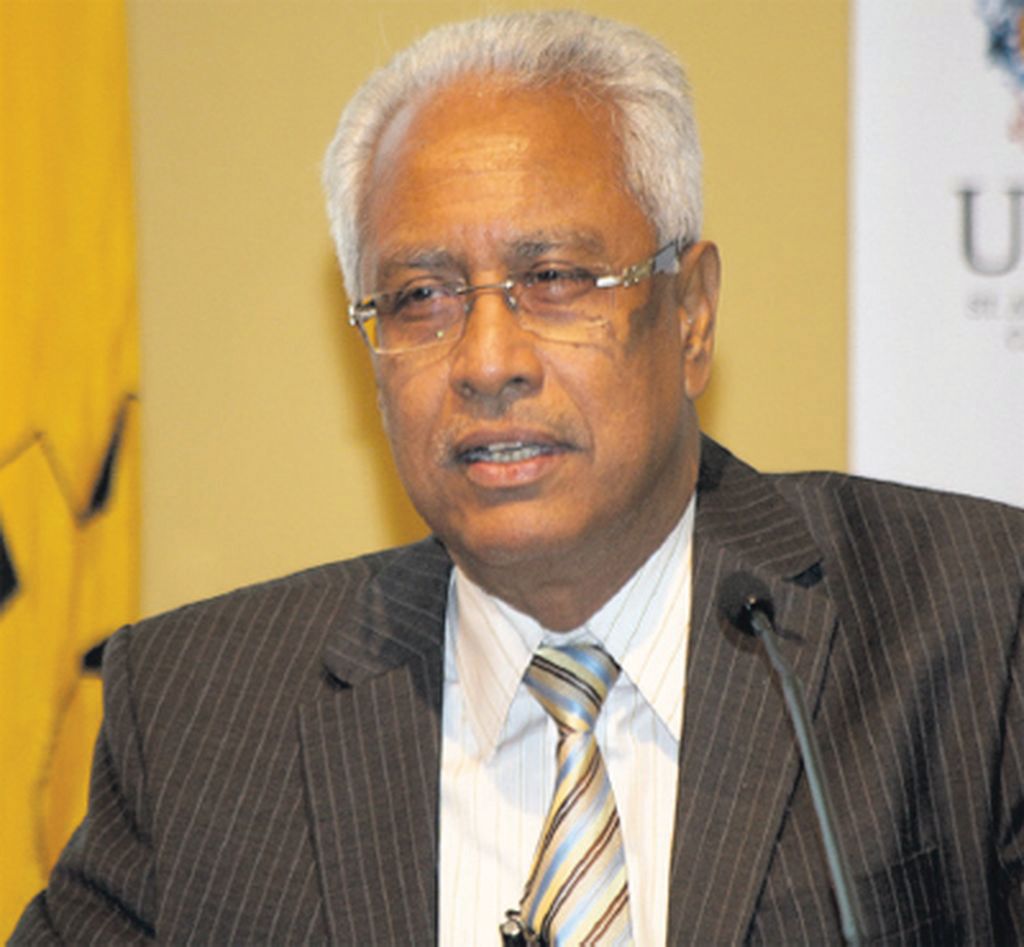
While opposition figures have focused on concerns about governance and transparency, Ramkissoon said divestment itself should not automatically be viewed negatively.
He noted that several of the entities reportedly being considered for sale have struggled financially for years, making them difficult investments unless significant restructuring takes place beforehand.
“Those mentioned are indeed loss-making, several of them, and it is more difficult to convince the public investors that they are likely to be making returns on those investments any time soon unless some work is done to bring those companies to a profitable balance,” Ramkissoon said.
At the same time, he argued that citizens should be given opportunities to own equity in national assets, describing wider share ownership as an important tool for building wealth.
“Divestment and the encouragement of citizens to hold equity in companies is indeed a positive way to go because we need to appreciate the importance of owning assets in any economy,” he said.
Ramkissoon pointed to proposals in the previous budget for a real estate investment trust involving hotel assets, saying such approaches could broaden ownership while maintaining public participation in valuable enterprises.
He expressed confidence that the Hilton could attract investor interest but was less certain about the Magdalena Grand, which has faced operational and financial challenges for years.
“Hilton is definitely good. I’m not so sure about Magdalena. And by themselves, especially Magdalena, because as we know, that is an entity that has been struggling for years now. And I don’t know that on its own, depending on how that offer is packaged,” he said.
According to Ramkissoon, investors must be convinced that any asset being offered can generate sustainable returns.
He also questioned why discussions appear centred on struggling entities rather than profitable State enterprises that could be easier to market to investors.
Ultimately, he said the success of any divestment programme would depend on transparency, pricing and whether the assets are packaged in a way that gives citizens confidence that they are investing in viable businesses rather than inheriting long-standing financial problems.
“Whether or not investors are going to be motivated or inclined to buy these entities on the stock exchange is a somewhat different kind of question, because it depends on whether these institutions are done in a particular way that is attractive to the public,” Ramkissoon added.
WHAT IS DIVESTMENT?
Divestment is the sale of all or part of the Government’s ownership stake in a State-owned enterprise to private investors or the public. It can involve transferring full ownership or selling a portion of the State’s shares while retaining some government ownership.
According to the Ministry of Finance, divestment is one of several strategies used to rationalise the State Enterprise Sector, alongside restructuring, mergers and liquidation. The Government’s policy framework identifies improving economic efficiency and resource allocation as key objectives of this process.
Divestment can take different forms, including the sale of shares to private investors or through a public share offering on the stock exchange. Depending on the arrangement, citizens may have an opportunity to purchase shares and acquire an ownership stake in the enterprise.
The extent of the divestment determines whether the Government retains partial ownership or transfers its entire stake. The Ministry of Finance is responsible for developing and reviewing divestment policy and proposals, as well as facilitating the implementation of approved plans.