
Stories by
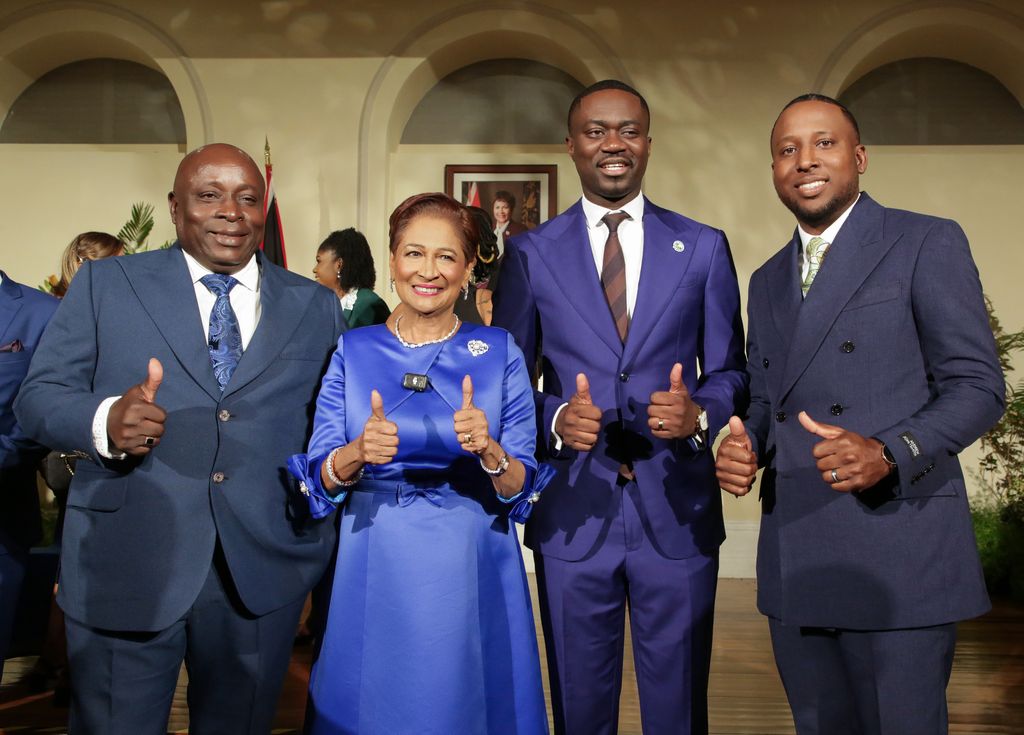
A proposed security law to be debated in Parliament tomorrow will give Prime Minister Kamla Persad-Bissessar the power to declare high-crime communities “Special Zones,” subject to search without a warrant and curfews lasting up to 72 hours.
The bill is listed on the House of Representatives’ order paper as “The Law Reform (Zones of Special Operations) (Special Security and Community Development Measures) Bill, 2026.”
According to the bill’s explanatory notes, it allows the Prime Minister to declare Special Zones in T&T, where “there are reasonable grounds to believe that there is rampant criminality—murder, gang warfare, or high or escalating levels of violence—or a threat to the rule of law and public order.
It is geared to provide for “special measures for upholding and preserving the rule of law, public order, citizen security and public safety within certain geographically defined areas” of both islands.
The bill is among three being presented in the House, which resumes at 1.30 pm tomorrow after the Christmas break. The other bills are the Motor Vehicles and Road Traffic (Amendment) Bill, 2026, and the Tobago House of Assembly (Amendment) Bill, 2026.
Attorney General John Jeremie alluded to the bills at yesterday’s United National Congress media briefing but gave no details.
Yesterday, Government officials said the three bills will be taken through all stages—from launch to passage—at tomorrow’s sitting.
According to the explanatory notes on the Special Zones bill, it seeks to curb T&T’s crime through security force occupation of vulnerable communities.
The bill is said to be geared to “uphold the rule of law while protecting the fundamental rights and freedoms of persons who reside, raise families, work or conduct lawful business in a zone.”
Jamaica established Zones of Special Operations under a 2017 law to tackle high crime in specific areas through enhanced security and community development, and they are regularly extended by Parliament.
The bill being presented by the Government tomorrow has 28 clauses. It proposes to empower the Prime Minister—the National Security Council chairman—to declare an area as a special zone.
The Prime Minister or the minister responsible for national security will be required to make a statement to Parliament within 14 days of the date such an order is made.
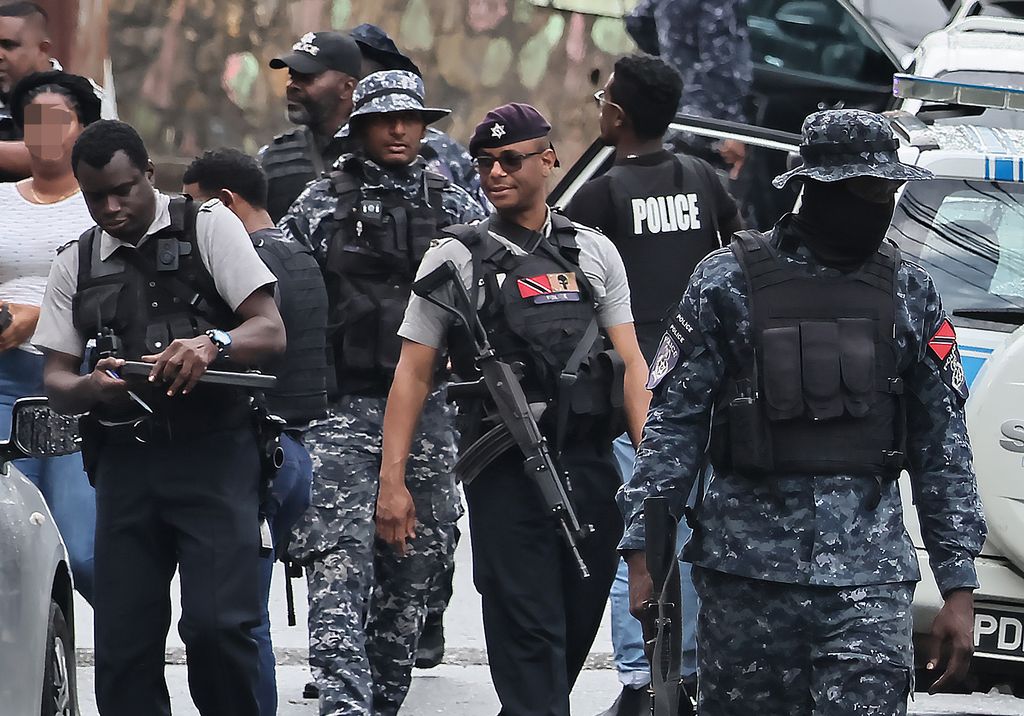
Where a zone has been declared, the Prime Minister shall designate a member of the T&T Defence Force (not below the rank of major) nominated by the Chief of Defence Staff (CDS) and a member of the T&T Police Service (not below the rank of superintendent) nominated by the Commissioner of Police to be jointly in charge of operations within the zone.
Joint Command (JC) members will also be “trained in human rights, use of force and community development initiatives.” A Joint Force (JF) will also operate.
Notice of an area being declared a Special Zone will be published and displayed in conspicuous locations to ensure it is brought to the attention of people within the zone and people seeking entry there.
Law enforcement activities will be conducted to rid a zone of all illegal activities, firearms, weapons, ammunition and other contraband.
According to explanatory notes, the command’s powers include establishing a cordon around/within a zone and imposing a curfew in a zone.
Explanatory notes also stated that the CoP and CDS may impose a curfew in the zone between specified hours, requiring people to remain within their premises during those hours, unless otherwise authorised in writing by the JF member in charge of enforcing the curfew.
It’s proposed that a cordon shall operate for a period not exceeding 24 hours. Also, a curfew can operate for a period not exceeding 72 hours. The curfew will be published.
The bill empowers JF members to search a person, vehicle or place without a warrant within a zone if they reasonably suspect an offence has been/is being/is about to be committed.
Powers will be exercisable regarding people from the zone who fled the area and are outside of its boundaries.
An order shall not exceed 180 days.
The Prime Minister, after consultation with the CoP and CDS, may amend, vary or add to the geographical limits or the period of time of a zone—subject to affirmative resolution of Parliament.
During an operation, a person may not be detained/arrested in a zone unless proper grounds can be determined by the person in charge. Normal criminal law procedures shall be applicable: notification of the reason for arrest and being brought before a magistrate to determine whether the arrest is justified.
The bill requires a special three-fifths majority vote for passage in the House and Senate. The Government, with 26 seats plus two Tobago People’s Party MPs, has sufficient to pass the bill in the House. It will require two more votes to pass the bill in the Senate.
A JF member may require a person within a zone whose identity is unknown to disclose their full, correct name, including any alias, and their full, correct address if suspected to be in the course of committing/to have committed/to be about to commit an offence or if they can assist in the investigation of an offence.
A person within a zone requested by a JF member to disclose their identity shall not, “without reasonable excuse,” fail to comply. Giving a false name or address carries a $20,000 fine on summary conviction.
Obstructing, threatening or assaulting a JC or JF member performing a duty will also be an offence carrying—on summary conviction—a $50,000 fine and one year’s imprisonment.
Among the conditions applying to those arrested/detained, they will be allowed visits from a spouse, partner, family member, religious counsellor, registered medical practitioner, and attorney.
Joint Force members will wear body cameras “as far as is possible, having regard to available resources” when conducting operations.
Weapons, including the ballistic signature and ammunition assigned to JF members, will be registered with the T&T Forensic Science Centre prior to the conduct of zone operations.
A ten-member social committee will develop a sustainable social and economic development plan for the zone. It will include the area’s MP and representatives of government agencies.
A review of the law will be conducted by a Joint Parliamentary Committee—the first, no later than three years after the declaration of the first zone.
SPECIAL OPERATIONS PROCEDURES WITHIN ZONES INCLUDE:
Arrest/Detention
• Where the Joint Force is carrying out an operation in a zone, a person shall not be arrested/detained unless the officer in charge is satisfied there are reasonable grounds.
• A person arrested/detained must be told as soon as is reasonably practicable, in a language which he understands, of the reason for his arrest/detention, unless the circumstances are such that the person should know; and immediately, or as soon as is reasonably practicable, be taken before a magistrate who shall determine whether or not there are reasonable grounds for arrest/detention.
• A person shall be remanded in custody not exceeding 48 hours and, at the expiration, be taken before a High Court judge.
• Where a magistrate is not satisfied that the arrest/detention is reasonably required in the interest of justice, he shall order the person to be released immediately.
• Where a person is in custody for 36 hours and no order has been made by a magistrate under section 18(3) of the bill, the officer in charge of the police station shall inform an officer not below the rank of assistant superintendent (“prescribed officer”) of the circumstances of the case and shall record in the station diary the fact that this officer has been so informed.
• The prescribed officer shall, upon receipt of the information, cause such investigations necessary to be made into the circumstances of each case and cause such people to be brought immediately before a magistrate.
• Every complaint made by or concerning a person arrested or detained shall be recorded in the station diary.
• Where a person requests the visit of a registered medical practitioner of his choice, other than one provided by the State, the person shall be responsible for any expenses incurred.
• A person arrested/detained shall be allowed to receive articles of food and clothing or such other article as necessary in the interest of his health or welfare and shall not be allowed to receive any article which may endanger his health/safety, any officer or another person.
• Where it appears to any Joint Force member or any person in charge of the supervision of individuals arrested/detained at a prison/police station. that any individual is ill/requires medical attention, whether or not complaining of illness, they shall, without delay, take necessary steps to get the medical attention.
Police shall not seize:
(a) any tool of a lawful trade or business; or
(b) any article or document that is subject to legal professional privilege.
Police officers shall take necessary steps to ensure that a list is compiled of all vehicles, articles or documents seized, and a receipt of this is included in the list and given to the owner or person in possession of the item as soon as possible.
Search/Seizure
• A female shall be searched by a female police officer.
• Any vehicle, article or document seized shall be secured in such place as an officer designated by the Joint Command may say.
• Attendance, at all stages of the vehicle search, of the owner/occupier of the place/the owner or person in possession of the vehicle or their agent.
• The owner, occupier or person in possession of the place or vehicle must be afforded every opportunity to observe everything done concerning the search.
• If anything seized is perishable, it shall be disposed of in such manner as may be approved by the officer designated.
• Where the officer has reasonable grounds to believe that any seized item will no longer assist in preventing or controlling public disorder or is no longer of evidential value in any criminal proceedings, they shall immediately cause the vehicle, article or document to be returned to the owner/person in possession/agent.
• A person who believes a vehicle, article or document seized ought to be returned may apply to a magistrate for its return.
Related News

Ousted leader pleads not guilty in first US court appearance
Young warns of economic fallout from NGC’s Nutrien shutdown

Trump leaves Venezuela’s opposition sidelined and Maduro’s party in power