
Akash Samaroo
Lead Editor-Politics
akash.sama[email protected]
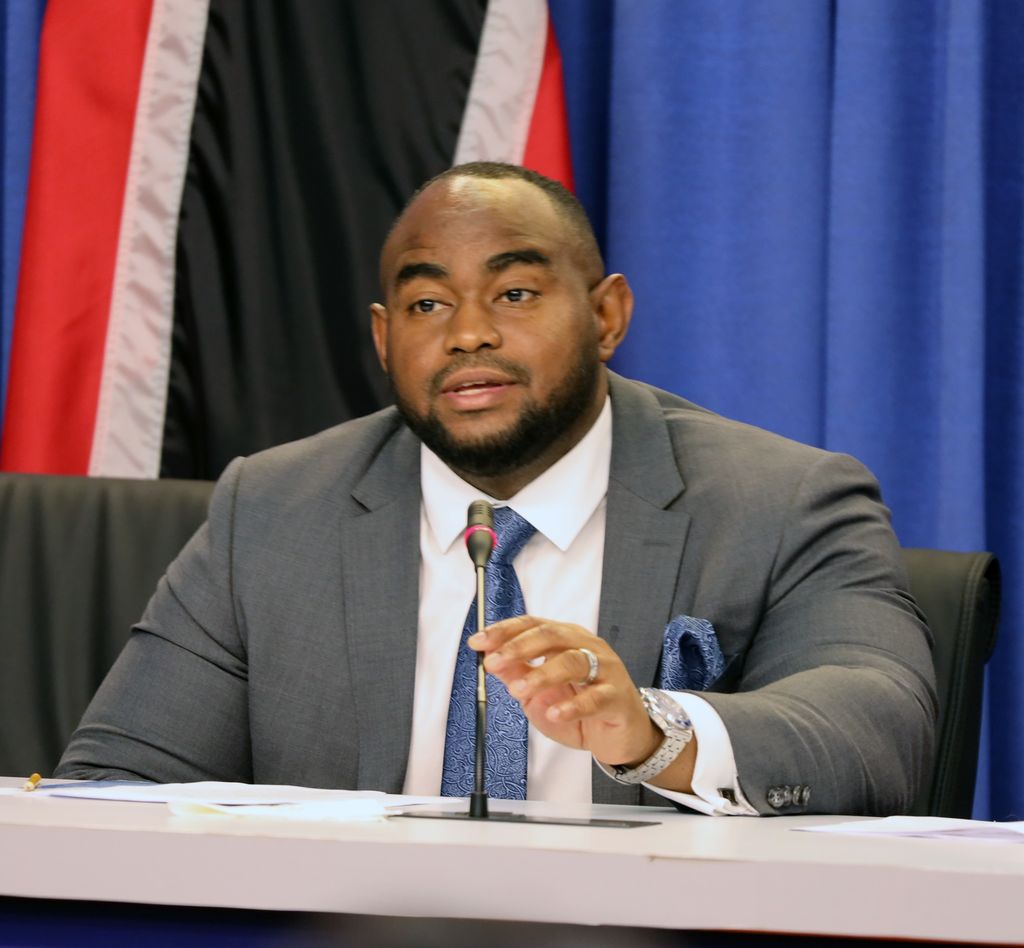
Minister of Foreign and Caricom Affairs Sean Sobers says T&T has secured the support of more than 100 countries, including Caricom states, in its bid for a non-permanent seat on the United Nations Security Council (UNSC).
T&T has formally declared its candidacy for a non-permanent seat on the UNSC for the 2027–2028 term. The election, conducted by secret ballot, is scheduled for June 3, during the 80th session of the United Nations General Assembly.
The seat falls under the Latin American and Caribbean Group (GRULAC) allocation.
On Wednesday evening, just before the Senate adjourned, Opposition Senator Dr Amery Browne called on the Government to update Parliament on the country’s bid. The former foreign affairs minister raised concerns that recent foreign policy positions may have undermined confidence among international partners.
Browne noted that the UNSC has the authority to impose sanctions and act to maintain or restore international peace and security. He questioned the Government’s readiness to exercise that responsibility.
“Can all responsibility on the Security Council be fulfilled while the Ministry of Foreign and Caricom Affairs issues statements within hours supporting the bombing of another sovereign state?” he asked.
He also criticised what he described as support for military actions without sufficient scrutiny and said the Government had failed to reaffirm its commitment to the UN Charter.
Browne warned that a UNSC seat for a small island developing state like Trinidad and Tobago requires an independent voice that represents the best interests of Caricom, rather than acting as a “vassal of another voice.”
“It requires us to carry the voice of Caricom, the values of CELAC and the OAS into spaces where others may not have access—to speak for victims of war, not perpetrators,” he said.
Responding in the Senate, Sobers defended the Government’s foreign policy stance, making no apology for its alignment with the United States and the administration of Donald Trump.
“Adopting a position against narco-terrorism and narco-trafficking and condemning it at multilateral forums such as the United Nations General Assembly—what could be wrong with that?” he said.
Sobers also maintained that Trinidad and Tobago’s candidacy remains strong.
“I wish to advise the Senate that this country’s bid for a non-permanent seat on the UNSC for the period is currently uncontested within the GRULAC region,” he said, adding that the country continues to enjoy broad international backing.
“We have Caricom support on this issue, as well as global support from over 100 UN member states, including regional groupings,” he said.
Sobers added that while the Government maintains a “Trinidad and Tobago first” policy, the country would represent regional interests if elected.
“The areas of national priority that will guide Trinidad and Tobago’s role are consistent with respect for regional and international rule of law, security, protection of vulnerable communities, and addressing emerging threats such as illicit trafficking of small arms, light weapons and artificial intelligence,” he said.
The United Nations Security Council comprises 15 members, including five permanent members with veto power—China, France, Russia, the United Kingdom and the United States—and ten non-permanent members elected for two-year terms.
It is the only UN body with the authority to issue legally binding resolutions, working to maintain international peace through sanctions, peacekeeping operations or authorised military action.