Secretary of State urges Caricom to confront transnational crime with US help
 25 February 2026
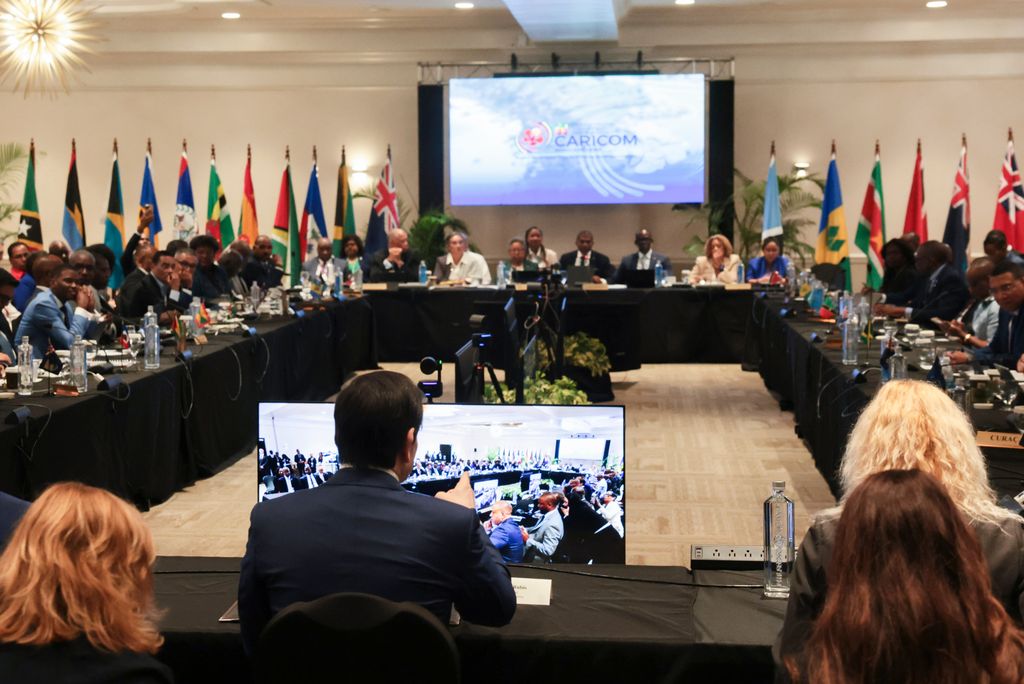

United States Secretary of State Marco Rubio has called for closer security and energy cooperation between Washington and Caribbean nations, warning that transnational criminal networks pose what he described as the most urgent threat to the region.
Rubio delivered the remarks during a closed-door session at the 50th Regular Meeting of the Conference of Caricom Heads of Government, outlining what he framed as a renewed US focus on the Western Hemisphere under President Donald Trump.
“We believe that perhaps the most urgent security threat in the region—that includes us, but obviously all of you—is the threat of these transnational criminal organisations,” he said, noting that some groups possess funding and firepower rivalling that of the states.
He acknowledged that weapons sourced from the US have contributed to the problem and pledged continued efforts to curb arms trafficking. At the same time, he defended Washington’s decision to designate certain groups as terrorist organisations and to sanction individuals accused of supporting them.
“We recognise that it is an interlocked challenge that comes from a broader perspective. Number one, they’re obviously fuelled by narcotrafficking and other illicit means. Oftentimes, those drugs and the proceeds from those drugs—those drugs are destined for the United States, but the proceeds from those drugs, the money they’re ultimately making, is being made in the streets of our country. This is a danger in the countries that they transit, and it’s ultimately a danger to the national security of the United States.
“We’ve also watched with alarm at the level of armament that these groups have. We recognise that many of these groups are buying weaponry from the United States, and that we are committed and continue to work very hard with our law enforcement agencies to shut that down. I hope you have seen, both in the case of Haiti but in other dynamics, that we have not shied away, not just from designating groups for what they are—these are terroristic organisations—but even individuals who are responsible for being supportive of them. We’ve also gone after them, and this is something that we have as a shared dynamic.”
Moreover, he said criminal networks are getting stronger, and so too must US-Caribbean relations.
“I point you only to something not in the Caribbean Basin, but nonetheless indicative of what we’re—the challenges that we’re facing here, and that is the role that these drug cartels have established for themselves in Mexico. I’m not sure if you’ve seen some of the imagery of these groups after their leader was killed, but they’re out there with full military gear, military weaponry, armed transports—very dangerous. And it is something that we need to address collectively and together.”
He told regional leaders that the US wanted to move beyond what he described as “outdated orthodoxy” in hemispheric relations and instead pursue practical partnerships centred on shared challenges and opportunities.
He also highlighted energy cooperation during his address.
Rubio also addressed developments in Venezuela, describing progress under new interim authorities following what he referred to as the capture of former President Nicolás Maduro.
He argued that stability had been restored and said Washington was now shifting its focus toward recovery and democratic legitimacy.
“Ultimately, in order for them to take the next step to truly develop that country and to truly benefit from that country’s riches for the benefit of their people, they will need the legitimacy of democratic- fair, democratic elections,” Rubio said.
He framed a stable and prosperous Venezuela as a potential energy and economic partner for Caribbean states, while emphasising the need to avoid instability and mass migration.
On his talks with Prime Minster Kamla Persad-Bissessar, Rubio said: “In my meeting with Prime Minister Kamla Persad-Bissessar, we talked about making our partnership even stronger to make our people more prosperous and safe. T&T’s ongoing support for US military operations in the South Caribbean Sea is one example of many and is helping us protect both our citizens from the scourge of drug trafficking.” - Dareece Polo in St Kitts
Related News
Robinson-Regis challenges Farley on St Kitts autonomy mission
Christian, Muslim communities begin period of fasting, prayers
Ministers urge public to be vigilant for counterfeit currency