
At least four people have been killed in the latest wave of Russian attacks in Ukraine, according to local officials, on the eve of the fourth anniversary of Europe’s biggest war since World War II.
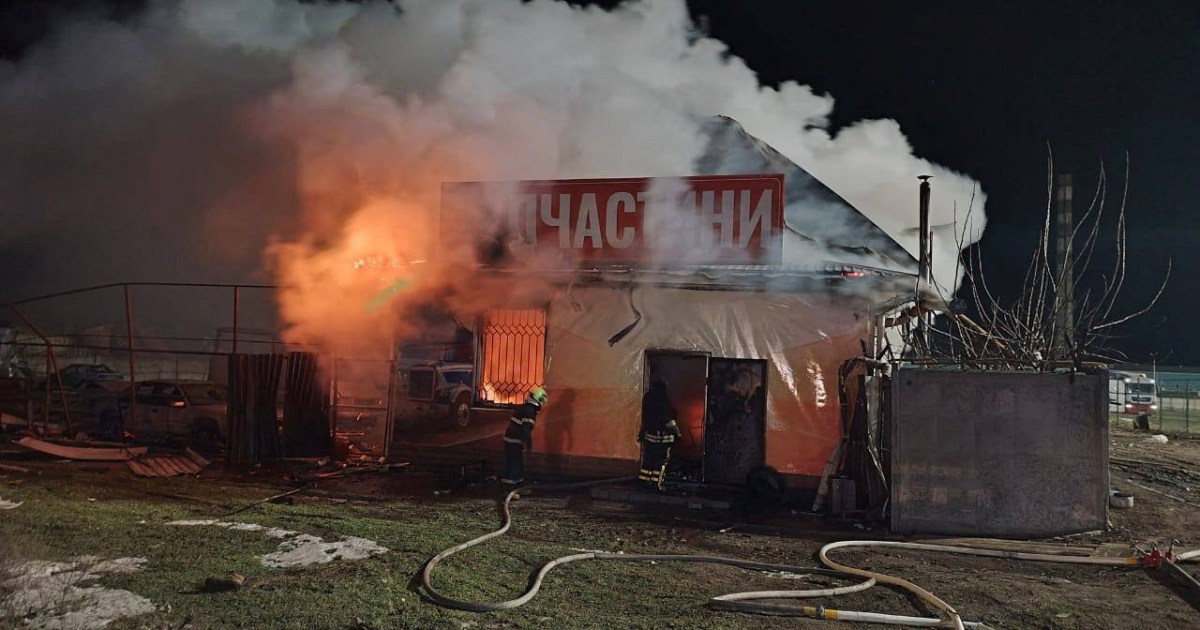
In the south, two people were killed on Monday night when Russian drones hit industrial, energy and civilian infrastructure in the region of Odesa, Governor Oleh Kiper said on the Telegram messaging app.
- list 1 of 4How four years of war in Ukraine have changed Russia
- list 2 of 4Russia-Ukraine war: List of key events, day 1,460
- list 3 of 4The Ukraine war in numbers: People, territory, money
- list 4 of 4At least one killed in widescale Russian attacks on Ukraine’s energy sector
end of list
Kiper stated that the attack also damaged production and warehouse facilities, administrative buildings, car dealership premises and vehicles.
One drone also hit an apartment in a multistorey building without detonating. Psychologists from the state emergency service provided assistance to residents.
Kiper added that the fires that broke out were extinguished by rescuers, with emergency and municipal services working at the scene.
In the southeastern region of Zaporizhia, Russia carried out more than 750 attacks on 44 settlements, killing two people in the city of Zaporizhzhia, according to the region’s governor, Ivan Fedorov.
Further north, a missile hit Kharkiv’s Kholodnogirsky district, Mayor Ihor Terekhov said early on Monday.
He gave no casualty figures immediately as emergency teams worked to assess the damage.
Overnight, Ukraine claimed to have downed 105 Russian drones, while Russia claimed it intercepted 152 Ukrainian drones.
Funding, sanctions as fighting rages
Also on Monday, European Union foreign ministers are meeting in Brussels to discuss a new loan for Kyiv and a 20th package of sanctions on Russia.
Advertisement
The sanctions on Russia will include a ban on maritime services related to exports of Russian crude oil.
The European Commission has also proposed additional financial restrictions to further constrain Russia’s ability to carry out international payments to fund economic activities.
The loan is intended to meet the Ukrainian government’s financial needs until the end of 2027.
The loan of 90 billion euros ($106bn) was initially agreed in December and was approved by the European Parliament.
However, Hungarian Foreign Minister Peter Szijjarto announced on Friday that Budapest would block the loan unless Russian oil exported to Hungary via the Druzhba pipeline resumes.
Ukrainian sources say the flow of oil has been interrupted by Russian bombing since the end of January. Hungary and Slovakia, which also continue to receive Russian oil via the pipeline, accuse the Ukrainian leadership of deliberately preventing the resumption of deliveries.

‘Shocking’ position
Before the Brussels meeting, Poland’s top diplomat Radoslaw Sikorski called the Hungarian position “shocking”.
Estonia’s Foreign Minister Margus Tsahkna said “there is no actually reason to block” the sanctions as the pipeline closure was Russia’s fault, not Ukraine’s.
“If we are not able to put the sanctions on Russia, then Russia will be happy,” he said.
“I am astonished by the Hungarian position. We will discuss this with our Hungarian colleagues,” German Foreign Minister Johann Wadephul said. “I am also confident that, at the end of the day, we will be successful.”
Related News
Lebanese group accuses Israel of abducting its leader in raid
Mapping forced displacements and settler attacks by Israel in the West Bank
Trump threatens an executive order to mandate voter IDs before elections