
Senior Reporter
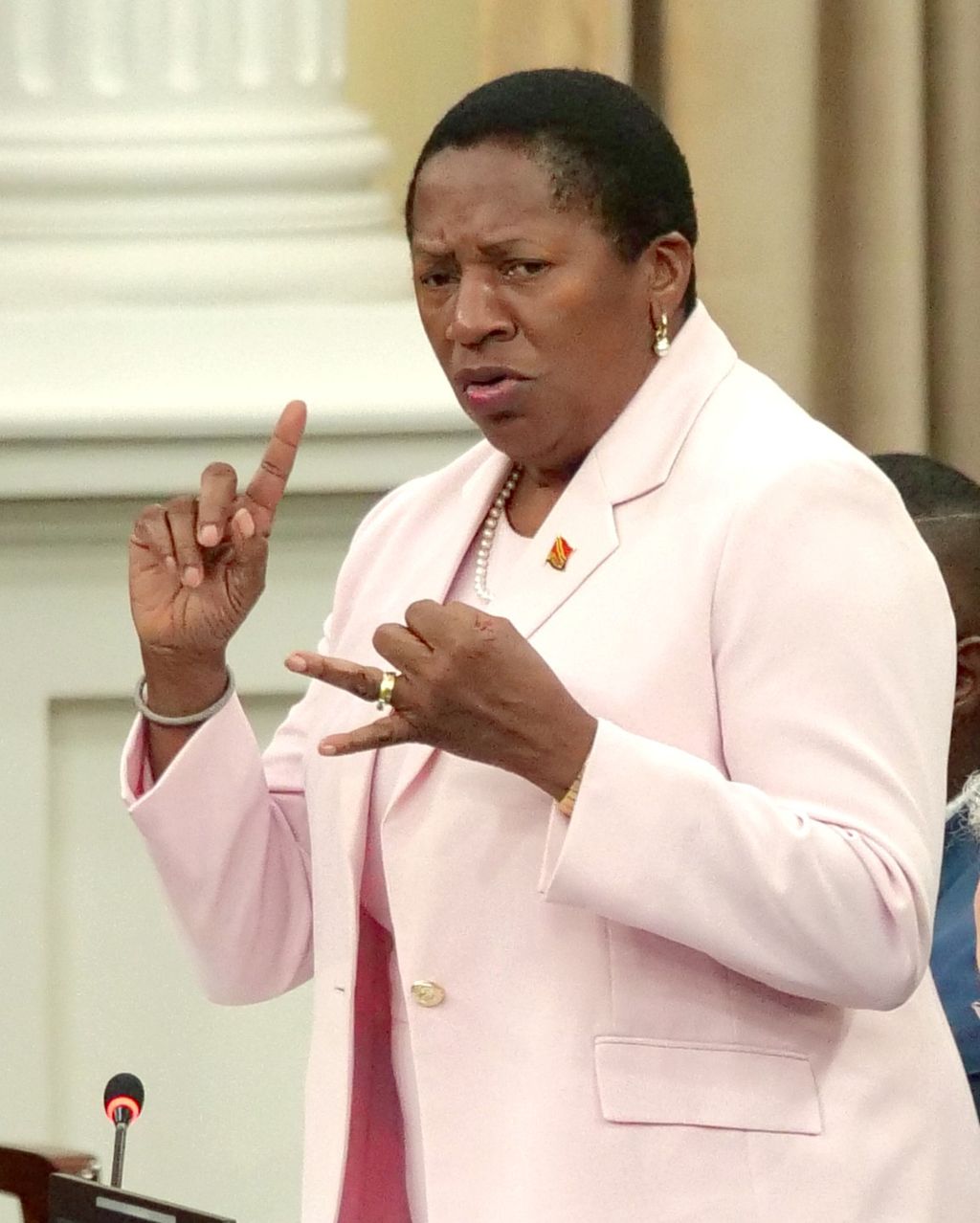
Prime Minister Kamla Persad-Bissessar has dismissed concerns surrounding the US-supplied radar system at the ANR Robinson International Airport, saying only the Opposition People’s National Movement (PNM), drug traffickers and violent gangs are “obsessed” with the issue.
Her comments come amid growing debate over the radar’s continued use and questions about whether US military personnel are still in Trinidad and Tobago.
In a WhatsApp response to Guardian Media yesterday, Persad-Bissessar added, “Law-abiding citizens have no difficulty with an American military presence.”
The issue resurfaced during Thursday’s post-Cabinet media briefing when Defence Minister Wayne Sturge defended the Government’s position on using the radar and refused to disclose the number of US personnel in the country, challenging assertions that citizens had a right to such information.
“I will not disclose the numbers. That would be unwise. I don’t think anywhere that sort of information would be disclosed because that is not in the public interest. Unless you can tell me how the public would be well served by knowing that. Until you could justify that, I wouldn’t be providing that information,” Sturge told journalists.
When pressed on whether citizens had a right to know, Sturge asked, “You have a right to know? You have a right to know? Where you get that right?”
Framing the matter as a practical security arrangement rather than a sovereignty issue, Sturge added: “Ok, it’s your country. The fact that there are military personnel here, does that take away from your sovereignty? Or does it not add to your sovereignty when the enemy would be persons, narco-traffickers, who we have not been able to contain over so many decades?”
Yesterday, however, Opposition Leader Pennelope Beckles insisted that the public “absolutely and definitely has the right to know” about the presence of foreign troops on local soil.
In a statement to Guardian Media, Beckles accused Sturge of adopting what she described as a “contemptuous” and “arrogant dismissal” of legitimate questions about US military involvement in Tobago. She alleged that Government’s handling of the matter reflects authoritarian tendencies and undermines democratic accountability.
Beckles pointed to the November 26, 2025, landing of a US military aircraft in Tobago, which she said occurred without prior public notification. She said it was only after sustained pressure that confirmation emerged of US Marines being deployed “to improve radar surveillance.”
She also cited statements from the Tobago Chief Secretary indicating he was not consulted, describing the episode as a troubling breakdown in communication between central government and the Tobago House of Assembly.
While acknowledging that certain operational details may require discretion, Beckles argued that secrecy and what she termed contradictory explanations erode public trust and compromise national sovereignty. She called on the Prime Minister to “come clean” about the nature, scope and oversight of any US military presence.
Regional security expert Dr Garvin Heerah yesterday called for “strategic balance and institutional maturity,” as debate intensifies over the Government’s continued use of the radar system and its refusal to give information on the possible presence of US military personnel in T&T.
Heerah acknowledged that Sturge retains the legal and constitutional authority to withhold classified operational details.
“Sensitive security information, particularly relating to radar capability, technological specifications, foreign military cooperation, or the presence of foreign personnel, cannot and should not be disclosed recklessly. The protection of state assets, intelligence systems, and strategic partnerships is paramount,” he said.
However, Heerah stressed that this authority exists alongside what he described as a “parallel responsibility” to maintain public confidence.
“In democratic societies, particularly small island developing states with complex geopolitical realities such as Trinidad and Tobago, public confidence in national security governance is equally critical,” he said.
“When information is absent, limited, or perceived as evasive, a vacuum is created. That vacuum will inevitably be filled, often by speculation, misinformation, unauthenticated sources, or sensational narratives.”
Heerah was careful to distinguish transparency from disclosure of classified data.
“Transparency does not mean disclosing classified operational details,” he noted.
Instead, he advocated for a structured strategy from the Ministry of Defence.
Regarding questions of foreign military presence, Heerah said any discussion must be handled within clear parameters. He warned that ambiguity poses the greater threat to sovereignty.
“National sovereignty is not compromised by transparency. It is compromised by ambiguity.
“In the absence of clear official communication, media actors may pursue alternative sources, sometimes irresponsibly. This risks reckless journalism, sensationalism, and the politicisation of legitimate security cooperation. Once public trust is eroded, it becomes far more difficult to restore,” he said.
Criminologist Dr Randy Seepersad offered a more cautious perspective, saying the presence of US personnel could be justified depending on the circumstances.
“US personnel may be present in Trinidad and Tobago for a number of reasons, many of which could be quite legitimate reasons,” Seepersad said.
“Now, of course, I’m not sure what the reasons are, but the thing is, not all reasons can be made public, depending on the reasons. Some of them are suitable to be shared with the public, some of them may not be suitable for sharing with the public.”
He added that without knowing the specific purpose of any US military presence, it is difficult to determine the appropriate level of transparency.
“So, in the absence of knowing the reasons why US military is actually in Trinidad and Tobago, it’s difficult for me to say whether or not there is a need for transparency.”