
Senior Reporter
dareece.po[email protected]
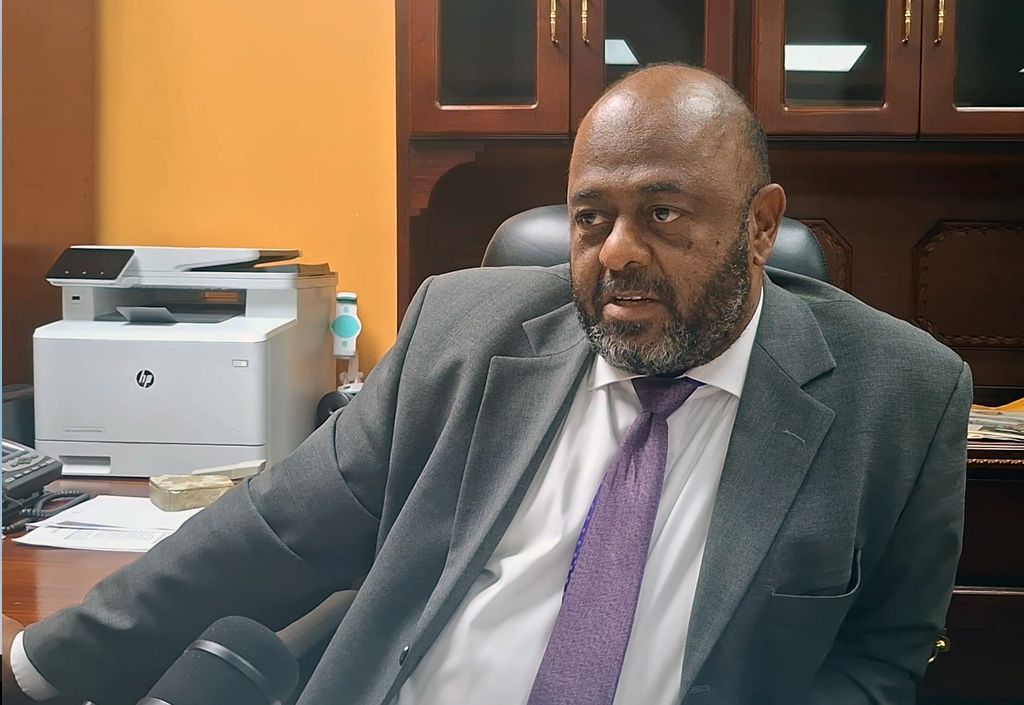
The Opposition is calling for greater clarity on the future of the US-installed radar system in Tobago, after Defence Minister Wayne Sturge said Government is working with the United States to find a replacement because the system is costly.
Sturge made the comments during a television interview on Wednesday, stressing that the radar remains a valuable security tool but cannot, on its own, detect drugs in the Caroni Swamp or elsewhere, referring to the $171 million drug seizure there on December 11 that had been attributed to the system. Instead, Sturge said it works alongside drones, satellites and other technology to monitor activity in the country’s airspace and waters.
However, he suggested the system may not remain in place indefinitely.
“It is costly, so what we are in the process of working out is a replacement—something that is equally as effective,” Sturge said.
The comments have renewed questions about who is paying for the radar, after Prime Minister Kamla Persad-Bissessar said in February it was being operated at a cost of about US$3 million per day.
People’s National Movement chairman Marvin Gonzales yesterday said the public deserves clarity on who is footing the bill. He also dismissed Sturge’s interview as a “desperate PR stunt” designed to shield ministerial incompetence behind a “cloak of national security.”
“We are not asking the minister to disclose operational things that undermine national security. We are asking basic information. And as we continue to ask for clarity, as we continue to ask for transparency, they continue, especially the Ministers of Defence and Homeland Security, they continue to invoke national security considerations in order to skirt (around) and or avoid being accountable to the public.”
Citing a recent ruling by Appeal Court Justice Vasheist Kokaram involving the Strategic Services Agency, in which he said “a well-informed citizenry is a cherished cornerstone of participatory democracy ... While national security is vital, secrecy is the exception and not the rule,” Gonzales argued that transparency should remain the norm in a democracy, even when national security concerns are raised.
“The manner in which Minister Sturge and the Minister of Homeland Security are conducting themselves, is that it is as though secrecy has now become the rule as opposed to exception. And it is their way of hiding and shielding their incompetence.”
However, former police commissioner and national security minister Gary Griffith yesterday backed Government’s push for advanced surveillance technology, while warning that officials should avoid disclosing sensitive operational discoveries. He argued that a “middle ground” is needed to prevent criminal networks from adapting to new state capabilities.
“Minister Sturge, I think he even went too far to actually state that the national security (apparatus) have discovered that criminal elements have been utilising drones and light aircraft to deposit illegal items into Trinidad and Tobago. That shouldn’t have even been stated, because we are aware of a system that they are using,” he said.
“So, I really will plead with the relevant authorities, they need to be very careful. It is important for the Government to state what is being spent from the taxpayers of Trinidad and Tobago, but they do not have to give the details of the value of the item. And that is where you have to be very careful,” he added.
Guardian Media contacted the Prime Minister for comment on the radar’s future and who is funding the system, but she referred all questions to Sturge, who did not respond.
The US Embassy also did not answer direct questions yesterday about whether Washington is paying for the radar, whether there are plans to withdraw it or discontinue funding, and whether the US is assisting the Government in identifying an alternative system.
However, an embassy spokesperson said, “The United States and Trinidad and Tobago maintain a strong security partnership, rooted in mutual respect and shared interests in regional stability and countering transnational threats.
“The radar system installed in Tobago in November 2025 is part of ongoing bilateral cooperation to enhance maritime domain awareness and support efforts to combat illicit trafficking, including narcotics and firearms, in Trinidad and Tobago and the Southern Caribbean.”
Regional security expert Garvin Heerah says the effectiveness of the radar system in Tobago should be assessed within the broader context of T&T’s border surveillance architecture.
In a statement on national security and border protection, Heerah noted that the country occupies a strategic location at the southern edge of the Caribbean, close to the South American mainland and along major trafficking routes used by transnational criminal networks moving narcotics, weapons and illicit funds.
He said modern border security depends on integrating multiple technologies rather than relying on a single system.
He explained that when radar detection is combined with unmanned aerial systems, satellite intelligence and maritime patrol assets, authorities can significantly strengthen maritime domain awareness and early threat detection.
“Therefore, the real value of the radar system in Tobago lies not simply in the installation itself, but in the integration of technologies and the coordination of response agencies.”