
Lead Editor - Newsgathering
ryan.ba[email protected]
If the tensions between Venezuela and the United States were bubbling before with Trinidad and Tobago in the middle, by November, there was hardly a front page that didn’t speak to the developing story.
The month began with the T&T Guardian’s front page screaming, “ARMY ON HIGH ALERT.” November ended with the front-page warning, “AIRSPACE ALERT.”
In between, November went down as a turning point in the US-Venezuela conflict, and one that significantly tested the Government’s resolve in its handling of the impact of that fallout on this country.
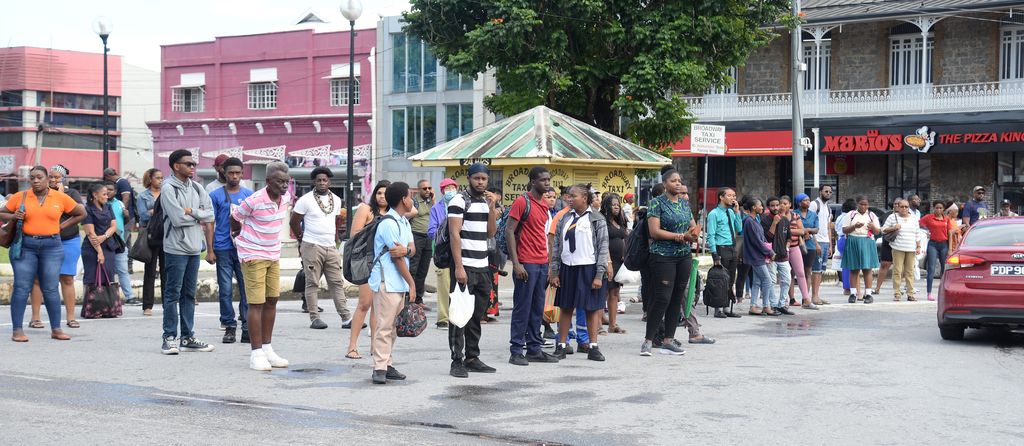
The uncertainty that covered the country sent T&T into confusion on the afternoon of October 31. With reports circulating that the military was ordered to return to base amid reports that a US attack on Venezuela was imminent, a claim which was attributed to President Donald Trump himself, stores shuttered early, businesses in the capital city sent home their workers early, and there was massive traffic jam to exit Port-of-Spain.
In the midst of this tense mood, Prime Minister Kamla Persad-Bissessar told the public there was “nothing to fear at this time.”
In the days that followed, there was a promise from the Government that they would not leave citizens in the dark. There was, however, good reason for the public to be uneasy.
Out in the ocean, the US warship, the USS Gerald R Ford - the largest aircraft carrier and warship ever constructed - was entering Caribbean waters.
At the same time, Venezuelan President Nicolas Maduro was launching his government’s response by ordering the deployment of 200,000 troops and launching military drills.
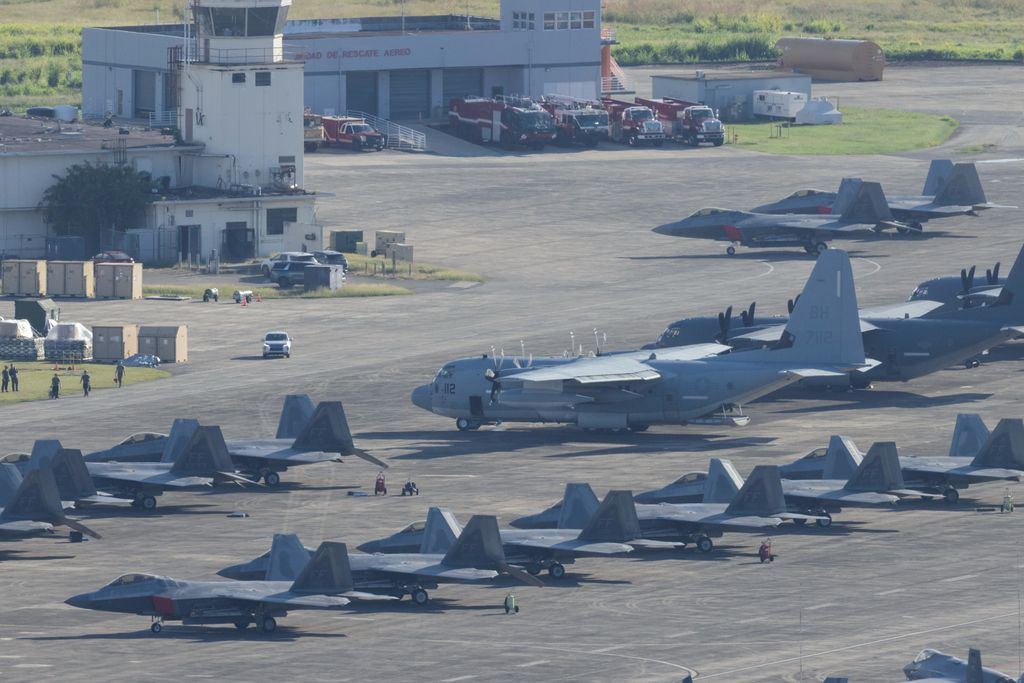
But the signs that T&T was becoming more deeply entrenched in this conflict were in plain sight. The Government welcomed the US Marine Corps 22nd Marine Expeditionary Unit to take part in what it said were local training exercises with the local Defence Force.
At the time, Attorney General John Jeremie told the Financial Times, “We are engaged with our friends in the north in a series of exercises.”
Foreign and Caricom Affairs Minister Sean Sobers also firmly dismissed speculation that the joint training exercises would lead to war between the US and Venezuela, with T&T in the middle.
The questions of T&T’s role in this conflict only grew louder for the Government, and many of those questions were being raised by former prime minister Dr Keith Rowley.
Prime Minister Persad-Bissessar again sought to assure citizens that this country was not hosting the Americans in preparation for a physical confrontation with Venezuela, saying, on November 18, “The US has never requested use of our territory to launch any attacks against the people of Venezuela.”
Yet, such statements were increasingly scrutinised, especially when the top US military chief, General Dan Caine, visited Trinidad for a few hours on November 25. It came as the US designated Venezuela President Maduro as a terrorist. Caine’s visit would be deep-fried in secrecy and doubles. While the top general of the US had the local dish with the prime minister, the US Joint Chiefs of Staff’s website said the talks included “the destabilising effects of illicit narcotics, arms, and human trafficking, and transnational criminal organisation activities.”
Then came the military planes. On the morning of November 26, a US Air Force C-17A Globemaster III landed at Crown Point Airport in Tobago. In addressing the confusion surrounding the arrival and subsequent departure of the aircraft, especially from Tobagonians bewildered by the heightened activity of foreign military aircraft, Persad-Bissessar said, “They are helping us with something to do with the airport. It’s not a military force as such; they are not here on the ground. We are not about to launch any campaign against Venezuela.”
However, Chief Secretary of the Tobago House of Assembly, Farley Augustine, then revealed he was left in the dark about the arrival and mission of the aircraft and US military personnel.
The situation reached a head in November when US President Trump, writing on his Truth Social platform, said that the airspace of Venezuela should be considered closed. Trump addressed his call for an aerial blockade to “airlines, pilots, drug dealers, and human traffickers.”
While the tension felt at the start of November did not translate into the war many thought was looming, by the end of the month the prospect seemed even greater.
November would also mark a major turning point for the carnival industry.
Prime Minister Persad-Bissessar made a major announcement on X (formerly Twitter) that shook one sector of the industry in particular.
“I instructed that all fetes at the Brian Lara Cricket Academy (BLCA) be stopped as the noise has become unbearable for residents. For far too long, the issue of noise pollution and its negative impact on communities have been ignored.”
Persad-Bissessar described noise pollution as a nuisance. The ban was later extend to all stadia under the ambit of the Urban Development Corporation of Trinidad and Tobago (Udecott), including the Jean Pierre Complex and the Hasely Crawford Stadium.
The announcement sowed deep division among the population, with many supporting her stance, while promoters in T&T warned it could be the “death of carnival.”
In a release then, the T&T Promoters’ Association said, “Tourism, entertainment, and culture stakeholders within the TTPA have expressed shock and dismay at the announcement, which takes immediate effect less than 100 days before Carnival 2026.”
The promoters said many of their members had already received approval to use the BLCA and other key venues before they were informed of the Government decision, and also noted there was no consultation with them prior to the move.
On the other hand, the Government received applause from sectors for taking a firm stance against noise pollution.
In a statement, Citizens Against Noise Pollution TT (CANPTT), said, “The economic and health impacts are equally serious. Citizens kept awake until the early morning hours must still report to work, resulting in reduced productivity, heightened stress and increased absenteeism. Noise exposure worsens hypertension, cardiac disease, migraines, anxiety disorders and other chronic conditions, placing additional strain on both the public and private healthcare systems.”
Skyscrapers. Clean cities. A repurposed Sea Lots.
In early November, Persad-Bissessar promised 50,919 jobs as she unveiled an ambitious Revitalisation Blueprint with a wave of infrastructure projects.
Some of the projects announced were the repurposing of the Carrera Island and Port-of-Spain prisons into event halls and resorts.
While the Prime Minister declared “T&T is open for business and everyone is welcome,” her Works Minister, Jearlean John, said aside from jobs, the projects would make the T&T landscape “unrecognisable” in five years.
The Prime Minister called for collaboration among international organisations, private sector firms, and the public service, as she said Government was set to embark on major upgrades to Port-of-Spain, San Fernando, Galeota Point, Invaders Bay, and the prison system.
“In the coming years, you will see cranes piercing the skylines of Port-of-Spain. In San Fernando, you will see dredges carve new horizons along the coast. You will see bulldozers ready to go up to Tamana, Golden Grove, and along the San Fernando to Mayaro to Galeota Highway,” Persad-Bissessar said.
The Prime Minister added that T&T intends to model its growth on nations such as Singapore, Saudi Arabia, the United Arab Emirates, Bahrain, and Kuwait: countries that once depended heavily on energy but successfully diversified their economies.
She stressed, however, that the public service must play a central role in improving the ease of doing business and removing unnecessary bureaucracy through modernised governance and revised administrative systems.
“If we do this the way we’re laying it out today, by 2030 you will not recognise the country, and by 2035, you’ll be in a whole different space,” Minister of Works and Infrastructure Jearlean John added about Government’s major development plans.
Together, the events of November showed how decisions taken in security, culture, and development would intersect, leaving T&T navigating uncertainty at home while managing pressure from forces beyond its borders.
Related News
Local groups protest US action in Venezuela
A Venezuelan family’s Christmas: From the American dream to poverty
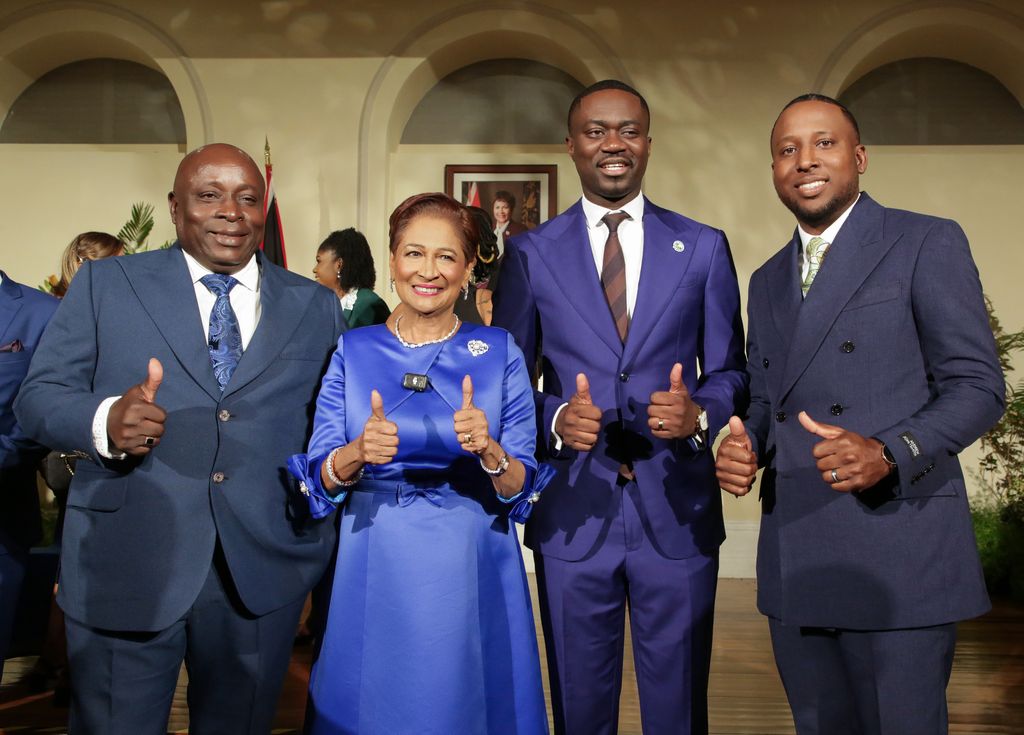
A year called Kamla! PM's historic comeback earns her GML's Newsmaker 2025