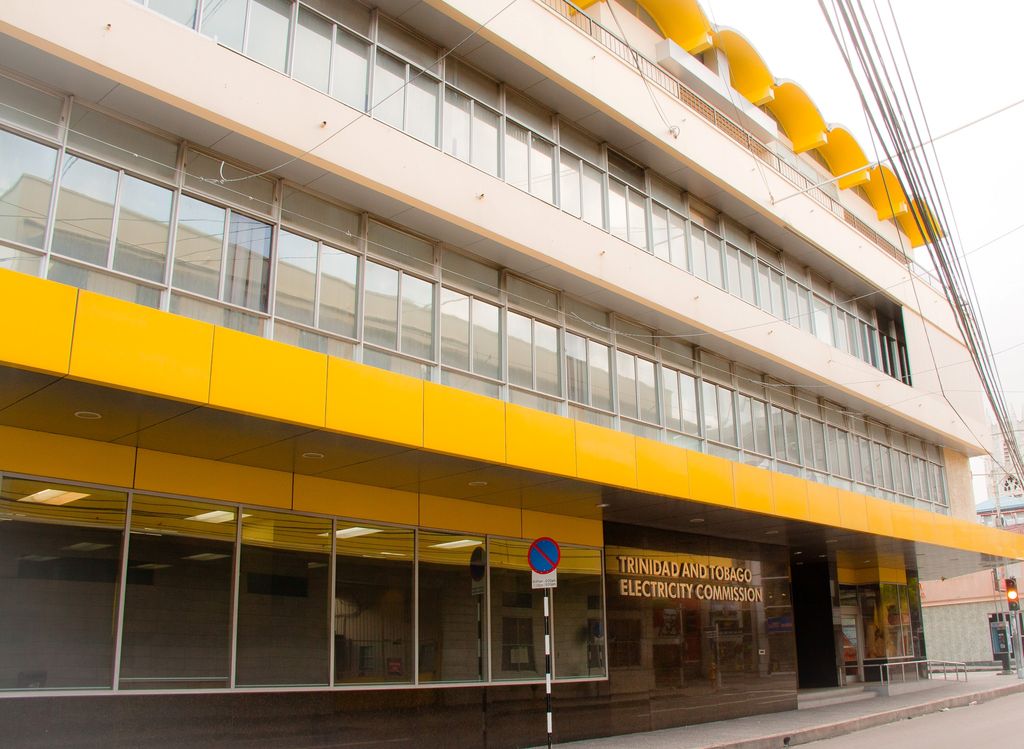

The Trinidad and Tobago Electricity Commission (T&TEC) says it has sought legal advice over the existence of a controversial “protected list” of customers shielded from the normal disconnection process for unpaid electricity bills, as it admitted there is no documented policy, procedure or record explaining how certain individuals and private companies came to be included on the list.
In a statement issued on today, T&TEC confirmed that the list exists but said it is currently unaware of how several individuals and private-sector entities were added because no supporting documentation, board approval or formal criteria can be found.
“T&TEC has sought legal advice on this matter and will be guided by same,” the commission said, noting that any policy direction may ultimately involve the President acting on the advice of Cabinet under the provisions of the Electricity Act.
The disclosure comes after Prime Minister Kamla Persad-Bissessar raised concerns in Parliament about the existence of what she described as a protected list of customers whose electricity supply was not disconnected despite outstanding arrears.
In its statement, T&TEC acknowledged that a protected list had long been maintained within the organisation. According to the commission, the list was originally intended to ensure continuity of service for critical national institutions, including government ministries and departments, state enterprises, public authorities and foreign embassies.
However, the commission said that between 2015 and 2025 the list was expanded to include government ministers, Members of Parliament and certain private companies. It said there is now no published policy explaining that expansion and no documentation detailing how those additions were made.
“Unfortunately, there is no published policy, procedure or criteria pertaining to the protected list,” T&TEC stated. “There is no documentation or record as to how the individuals and private companies who now appear on the list were added to it. There is no Board minute pertaining to same.”
The issue has triggered a political firestorm, with current and former public officials offering sharply differing interpretations of the list’s purpose.
Former public utilities minister Marvin Gonzales has defended the practice, arguing that the list was not designed to exempt customers from paying their bills but rather functioned as an internal administrative tool for monitoring high-profile accounts. According to Gonzales, the list included ministers, judges and diplomats and allowed T&TEC to contact those customers if unusual activity or potential disconnection issues arose.
Gonzales maintained that customers on the list continued to receive bills and remained subject to T&TEC’s payment requirements. He also said that individuals whose accounts were flagged were generally unaware of their inclusion because the process was handled internally by the commission.
Gonzales further challenged claims that the list provided preferential treatment and authorised the release of his own T&TEC billing records, insisting he had never received special consideration during his tenure as a government minister.
The controversy deepened after former prime minister Keith Rowley publicly rejected allegations that he benefited from the arrangement. Rowley denied being on what has been described as a “secret list” and disputed suggestions that he received protection from disconnection for unpaid bills.
T&TEC’s latest statement does not identify any of the individuals or companies currently on the list, nor does it indicate whether those customers remain protected from disconnection.
But the commission referenced Section 5(1) of the Electricity Act, which permits the President to give T&TEC directions of a general policy nature in matters affecting the public interest. T&TEC suggested that provision may be relevant as it reviews the future of the protected list.
T&TEC sought to reassure the public that it remains committed to treating all customers fairly.
The commission said it had taken note of strong public sentiment surrounding the issue and reaffirmed its commitment to the constitutional principle of equality of treatment.
“T&TEC wishes to reaffirm its commitment to the right to equality of treatment guaranteed by the Constitution to all citizens,” the statement said, adding that it intends to treat every customer with equal dignity and respect.