New US tariffs linked to claims of foreign forced labour dismay and anger trading partners
 24 July 2026
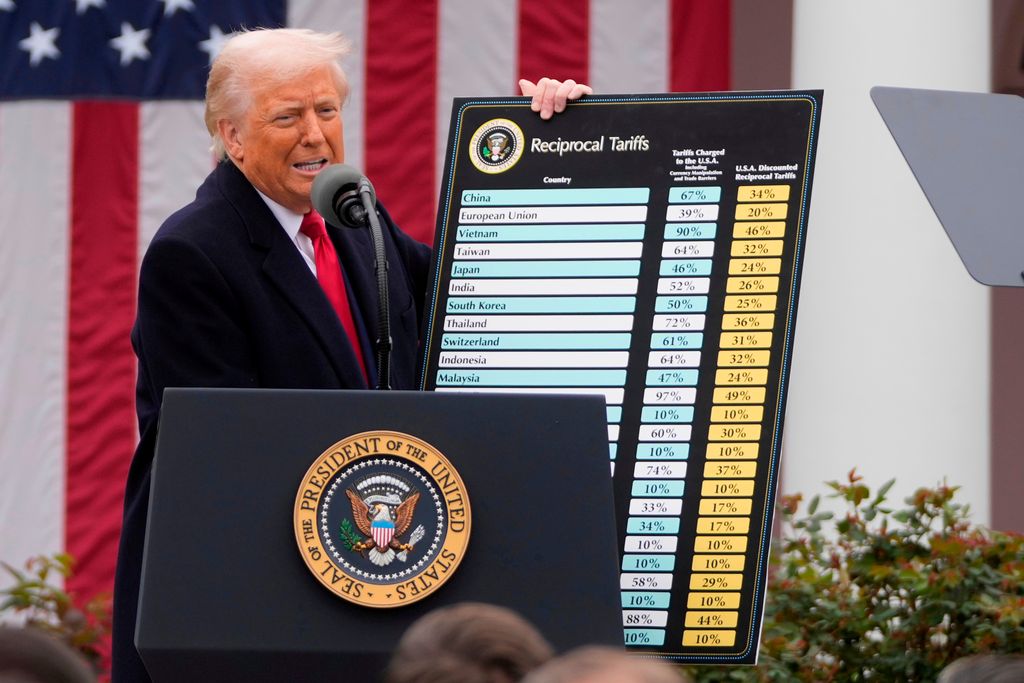

U.S. President Donald Trump’s latest set of tariffs drew objections Friday from America’s trading partners including China and Japan, with Australia’s trade minister slamming them as “completely unjustified.”
The administration announced tariffs of 10% to 12.5% on 60 economies late Thursday, saying the countries had failed to adequately enforce a ban on goods made with forced labor.
The new tariffs took effect just as stopgap levies Trump imposed after a stinging defeat at the Supreme Court expired at 12:01 a.m. Friday.
Countries object to what they call unfounded labor claims
Australian Trade Minister Don Farrell rejected claims linking Australia, a major exporter of beef, gold and copper, to modern slavery and raising the tariff on its exports to the U.S. to 12.5% from the 10% level imposed after Trump’s “Liberation Day” hikes last year.
“We believe that amongst all of the countries in the world Australia does take the issue of slavery, modern slavery, seriously, and will continue to do that,” Farrell told reporters in Adelaide.
Australia believes the higher tariffs are “completely unjustified and we will continue to lobby the United States Trade Representative to remove all tariffs on Australian goods,” Farrell said.
New Zealand Prime Minister Christopher Luxon said the tariffs on his country, also subject to a 12.5% import duty, were “extremely disappointing,” unjustified and harmful to trade.
A U.S. investigation serving as the basis for the tariffs did not provide meaningful evidence to support allegations of forced labor.
“Tariffs are not the way — they drive up costs and uncertainty for businesses,” he wrote on X.
European Union foreign policy chief Kaja Kallas questioned the U.S. stance in comments on Channel News Asia.
“If you compare our labor laws to the ones of the United States, I mean we have, people have paid vacations, we have very good conditions, labor conditions for our employees, so it’s not really grounded,” Kallas said.
Also facing a 12.5% tariff, Singapore’s Ministry of Trade and Industry, which reiterated its stance of not condoning the use of forced labor, said it would “continue to engage the USTR (United States Trade Representative) to explore options.”
Some hope to forestall the new tariffs
Japan likewise protested the 12.5% tariff imposed on its exports, noting Tokyo had been reassured by the Trump administration that there would be no more tariffs on top of an earlier agreement on a 10% U.S. import duty.
“Our understanding is both sides are still committed to that,” Chief Cabinet Secretary Minoru Kihara told a routine news conference.
“It is regrettable that the measure imposes tariffs on the grounds of non-existence of measures banning imports of goods made by forced labor, even though Japan’s industry and trade are in line with international rules,” Kihara said.
South Korea said it will maintain close communication with the United States to preserve a mutual “balance of benefits.”
South Korea’s trade ministry said the announcement eased some uncertainty over U.S. trade policy, but noted that a Section 301 investigation into alleged Korean excess production continues.
The combined duties on South Korean exports should not exceed 15%, the ministry said in a statement.
Thailand noted it is subject to the new 12.5% tariff by the U.S. under the forced labor provision, but the measure exempts around 2,120 items, representing more than half the value of Thai goods exported to the U.S.
China opposes unilateral tariffs in ‘all forms’
China’s Ministry of Foreign Affairs said it “opposes all forms of unilateral tariffs” in response to the new 12.5% tariffs, reiterating a longstanding statement by Beijing.
“Tariff wars and trade wars do not serve any parties’ interests,” ministry spokesman Lin Jian told a regular press conference.
Trade tensions have clouded relations between China and the U.S., two of the world’s biggest economies, as Trump’s hefty “Liberation Day” tariffs resulted in a sharp drop in Chinese exports to the U.S.
Trump and Chinese leader Xi Jinping, who agreed to set up new boards of trade and investment at their mid-May meeting in Beijing, are expected to meet again in September.
Some Chinese exporters say, however, the impacts are so far limited as the latest U.S. tariffs on China are still at lower levels than last year’s rates, which were initially 34%.
“Of course it’d be best if they (tariffs) are not there,” said Richard Chan, manager of Golden Arts Gifts & Decor, which manufactures Christmas trees and decorations in the southern Chinese city of Dongguan and supplies globally to those including Walmart.
Golden Arts’ share of sales to the U.S., however, already have fallen to approximately 10% to 20% as U.S. tariffs added more uncertainty over the past months. They have pivoted more to Europe, which now accounts for roughly 70% of their sales, Chan said.
The latest import duties might stick
Wendy Cutler, a former senior U.S. trade official, said the latest round of tariffs involved “few surprises” since they range just between 10% and 12.5%.
The U.S. Trade Representative’s office spent four months investigating the basis for those tariffs to meet legal requirements under Section 301 of the U.S. Trade Act of 1974.
“Time will tell whether the third attempt to impose tariffs is the charm and this action stands up to legal challenges,” said Cutler, senior vice president of the Asia Society Policy Institute.
These duties are less likely than earlier ones to be overruled by U.S. courts, she said.
Further tariffs may be coming in the fall related to alleged structural excess capacity of trading partners, she noted.
Experts say these tariffs may be less disruptive than others
Washington is generally tending to engage in increased trade friction, William Bratton of BNP Paribas said in a research note Friday.
“On the positive side, however, these tariffs are lower than the earlier (Emergency Powers Act) ‘reciprocal’ tariffs and appear to exempt a substantial proportion of Asia’s current trade flows with the U.S.,” he said.
The Trump administration included many exclusions of products from the tariffs, including for goods the U.S. does not produce, Cutler noted.
“This should reduce the impact of these duties. Nevertheless, they will contribute to higher prices both for end consumers and businesses importing inputs and machinery,” she said. —BANGKOK (AP)
__________
Story by ELAINE KURTENBACH and CHAN HO-HIM | Associated Press
Chan Ho-Him reported from Hong Kong. Associated Press writers Tong-hyung Kim in Seoul, South Korea, Mari Yamaguchi in Tokyo and Eileen Ng in Kuala Lumpur, Malaysia, Grant Peck in Bangkok and Ken Moritsugu in Beijing contributed to this report.