
Dareece Polo
Senior Reporter
dareece.po[email protected]
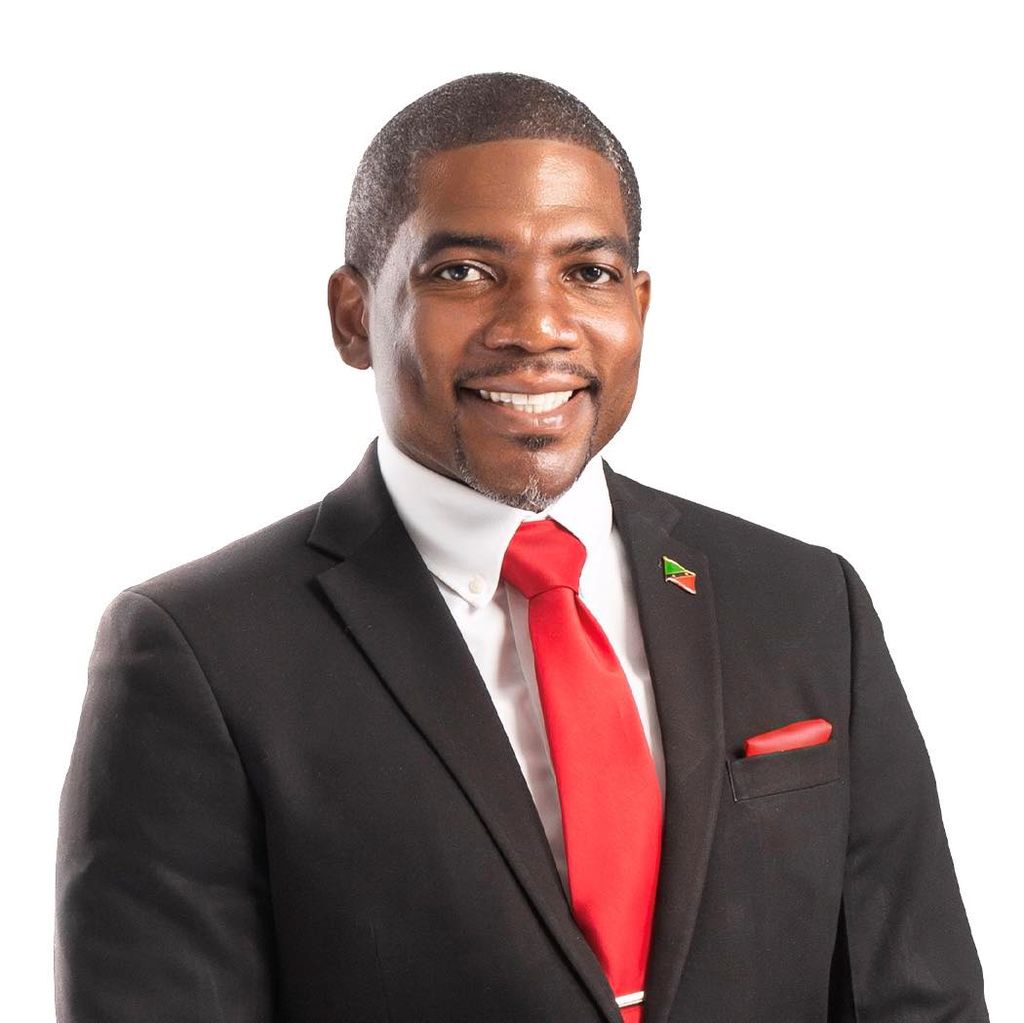
As he begins his tenure as Caricom chair through to June 30, St Kitts and Nevis Prime Minister Dr Terrance Drew has acknowledged that he assumes the role at a moment of acute pressure, shaped by geopolitical uncertainty and growing questions about the bloc’s unity and relevance.
Drew said “unity” sits at the forefront of his agenda, noting that he has already held face-to-face discussions with the prime ministers of St Vincent and the Grenadines and Antigua and Barbuda to gather candid feedback on Caricom’s direction. He also confirmed that he formally expressed his willingness to meet with Trinidad and Tobago Prime Minister Kamla Persad-Bissessar, though he did not say whether she has responded.
“What I’m doing here is a strategy of talking as much as possible, face-to-face, eyeball-to-eyeball with our leaders, asking the difficult questions so that, in a sense, everything can be put on the table and the best position reached,” Drew said.
“So, yes, I would love to come and have a conversation with her over some doubles.”
In an exclusive interview with Guardian Media, Drew said he hopes all regional leaders, including Persad-Bissessar, will attend Caricom’s 50th regular meeting from February 24 to 27 in Basseterre, St Kitts. He said any participation by the Trinidad and Tobago prime minister would be met with full decorum, emphasising that discussions held in caucus are strictly confidential. Persad-Bissessar has not physically attended a Caricom meeting since her election victory on April 28 last year.
On Washington’s recent ban on immigrant visas affecting 12 Caribbean countries — 11 of them Caricom members — Drew said the bloc hopes to preserve stable relations with the United States, particularly on immigration. Trinidad and Tobago was not included on the list, but Drew said the issue is expected to be raised at upcoming meetings.
“We have members who were not put on the list, and we are hoping that all members will be off that list so that, in a sense, the region can continue its very good relations with the United States of America, especially in the specific area of immigration,” he said.
Drew also acknowledged that several Caricom countries, including St Kitts and Nevis, Antigua and Barbuda, Dominica, Saint Lucia, Grenada and Guyana, have been asked to accept third-country deportees from the United States. While acknowledging each state’s sovereignty, he said coordinated regional responses remain preferable.
“We continue to seek, as far as possible, to be united in our responses to geopolitical matters,” he said.
Turning to Haiti, Drew acknowledged the scale and complexity of the crisis confronting the region’s most fragile state, particularly the limits of Caricom’s capacity to intervene militarily.
“There are countries with no military at all within Caricom. And those that have military, the military is extremely small, right? And so, it is very challenging,” he said.
“But the bloc will continue to work. It is not easy work. It is difficult work. We are not prescribing to Haiti what Haiti should do. We want to help to facilitate, because this has to be Haiti. Haiti has to lead this. Haiti has to decide what is best for it. We are here to support and to facilitate as far as possible.”