
Lead Editor-Politics
akash.sama[email protected]
As pressure mounts on Prime Minister Kamla Persad-Bissessar to identify the independent senators she claims attempted to trade their votes for personal favours, the Integrity Commission says it cannot act without specifics.
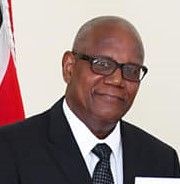
Commission chairman Hadyn Gittens said any investigation into alleged misconduct in the Senate requires the identities of those accused and clear details of the favours allegedly sought, stressing that the commission cannot proceed on “unsupported allegations.”
On Wednesday, Persad-Bissessar, in a social media post, claimed that during debate on the Zones of Special Operations (ZOSO) legislation, two independent senators approached a senior government senator seeking personal favours in exchange for securing support and the remaining votes needed for the bill’s passage. A request, the Prime Minister said, that was immediately rejected.
Since making the allegation, Guardian Media has on more than one occasion asked the Prime Minister to identify the independent senators or the government senator who was allegedly approached. However, she has so far declined to do so.
Several independent senators have also forcefully rejected that claim, with both senators Anthony Vieira and Francis Lewis calling on the Prime Minister to name the alleged offenders.
If proven, any attempt by a senator to seek personal favours in exchange for a vote could breach several laws in Trinidad and Tobago.
When Guardian Media reached out to the Integrity Commission chairman to ascertain if there is enough evidence in the public domain that can trigger the commission to take action, he said, “It doesn’t appear to be. And again, as I said, I don’t know if, while we speak, something more, let’s say comprehensive, has come into the commission on this matter. It doesn’t appear to be on the face of it because essentially the commission and any body similar to the commission has to take action if it’s investigating a specific person for a specific act. So in the absence of that, it creates a difficulty in terms of any action by the commission or any similar body.”
Asked what the role of the Integrity Commission is when an allegation of that nature is made, Gittens said, “So for an allegation to be useful and probative, there has to be specifics. So, someone, certainly the Integrity Commission, can’t be expected to act on an unsupported allegation. So, if someone specifically says X, a public figure did Y, and the Integrity Commission finds that falls within its ambit, because the law is very specific about the areas in which the Integrity Commission has oversight, then the Integrity Commission acts on that basis.”
Up to yesterday afternoon, Gittens said he had no word that any official complaint was submitted with respect to the Prime Minister’s claim, but he also admitted that complaints do not come directly to the chairman.
Meanwhile, Patriotic Front leader Mickela Panday is calling on Persad-Bissessar to either name the independent senators or withdraw the allegation entirely.
The Patriotic Front leader added, “That is a serious claim and one that cannot responsibly be left vague. If the Prime Minister is asserting that public officials sought inducements in exchange for votes, then she must explain precisely what was requested and name those involved so the matter can be properly assessed by the relevant authorities.”
She stressed that if the Prime Minister has evidence, it must be placed before the relevant authorities rather than left as commentary on social media.
“Until the Prime Minister provides specifics of what was requested, by whom and when, this allegation remains unresolved and deeply troubling. Claims of corruption cannot live in social media posts. They belong in the light of accountability, evidence and the rule of law.”
Panday said the country was awaiting disclosure or clarification from the Prime Minister.
“Name them or withdraw the allegation,” she added.
Former United National Congress (UNC) government minister Vasant Bharath warned that making such serious claims publicly without triggering a formal investigation risks undermining public confidence in national institutions.
“To level such a charge publicly and then retreat from the legal and institutional consequences is not courageous; it is corrosive. It poisons public trust, smears individuals without due process, and leaves the country to wonder whether the allegation is truthful or merely a deflection from the failure of her Government to deal with the issue of crime,” he stated.
Bharath also questioned what he described as an apparent inconsistency in the Prime Minister’s approach to transparency and accountability.
“The Prime Minister was quick to reveal the names of holders of bus route passes, yet she fails to act on these scurrilous allegations that strike at the heart of our democracy and our independent institutions,” he said.
Guardian Media sought comment from President Christine Kangaloo on the allegations made against the independent senators, over whom she has constitutional authority. Questions were submitted to the Office of the President, and receipt was acknowledged. However, no response was received up to late yesterday.
Under the Prevention of Corruption Act (Chap. 11:11), it is a criminal offence for any “agent”, including members of the Senate, to corruptly solicit or receive any “advantage” as an inducement or reward for performing, or refraining from performing, an official act. An “advantage” is broadly defined and includes money, gifts, favours, offices, or influence. On conviction, offenders can face fines of up to $500,000 and imprisonment of up to 10 years.
Under the Integrity in Public Life Act (Chap. 22:01), senators are classified as “persons in public life” and are bound by a strict Code of Conduct that prohibits using public office for private gain or seeking any benefit that could influence official duties. The Integrity Commission is empowered to investigate complaints and refer any criminal findings to the Director of Public Prosecutions.
Separately, under the common law offence of misbehaviour in public office, a public official who abuses their position in a way that breaches public trust, including seeking inducements for official action, may also face criminal prosecution.
Related News
Trump set to meet Venezuelan opposition leader after cozying up to Maduro’s successor
PM’s energy conference snub raises concerns for energy sector

Restaurant owner found bound and beaten to death in Ste Madeleine