
Senior Reporter
otto.carring[email protected]
Another group of workers is being offered a 10 per cent wage increase.
This, after chief personnel officer (CPO) Dr Daryl Dindial confirmed that he, yesterday, made a proposed wage settlement offer valued at $2.6 billion to the National Union of Government and Federated Workers (NUGFW), structured through a combination of cash and non-cash benefits to manage the State’s fiscal burden.
Dindial said the offer, which spans a 12-year period, carries a recurrent annual cost of approximately $250 million, making fiscal responsibility and payment flexibility central to the negotiations.
“The offer includes a mix of cash and non-cash,” Dindial said.
“That is important because the Government must act responsibly. There is a deficit we have to treat with, and the State must maintain the ability to meet its other commitments while settling outstanding wage disputes.”
The proposal mirrors agreements already accepted by other public sector unions and is structured as one per cent increases annually from 2014 to 2018, followed by five per cent in the final year, 2019, along with the consolidation of the Cost-of-Living Allowance (COLA) on two occasions, increasing COLA from $9 to $11 by the end of collective agreement period being negotiated.
According to the NUGFW, when COLA consolidation is factored in, the average increase across grades for its 17,000 members will be approximately 13.5 per cent, rising to 14.5 to 15 per cent in some categories.
Dindial said arrears under the agreement are estimated at approximately $1 billion in cash, and the CPO’s Office has proposed spreading payments over two financial years—about $500 million per year—to reduce the immediate impact on public finances.
“This approach minimises cash outflow while allowing Government to continue addressing other national priorities and strengthening revenue collection,” he said.
If the agreement is signed this week, Dindial confirmed that new salary rates would be implemented after the mid-year fiscal review, with the support of the Minister of Finance, as the adjustments were not previously budgeted.
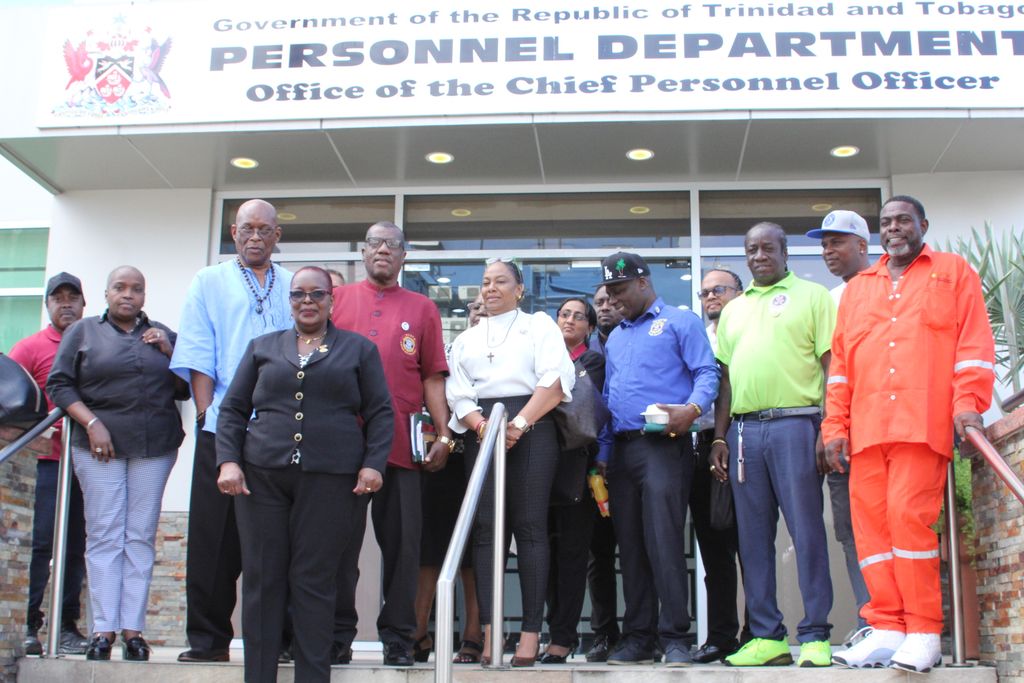
Responding to the offer, NUGFW president general Christopher Street yesterday said the union was encouraged by the scale of the proposal, particularly after years of economic strain on daily-rated workers.
“I am elated and excited, especially for workers who have suffered for the last 12 years,” Street said.
“I want to thank our members for their patience and for not forcing this union into accepting four per cent. That patience has been rewarded.”
Street said while the union welcomed the 10 per cent offer, minor issues remain and would be reviewed internally before any agreement is finalised. He emphasised that the union’s leadership at all levels participated directly in the talks.
“This is a democratic union,” he said.
“All the presidents of our sections, divisions and branches were present. They heard, they questioned, they contributed—and we will now return to our membership.”
Describing the negotiations as a necessary exercise in compromise, Street said the proposed increase represents “a new chapter” for daily-rated workers, many of whom last received minimal wage adjustments in ??/.
Dindial also praised the union’s leadership, noting the importance of experienced representation in reaching sustainable agreements.
“They are the blue-collar workers of the State—often unseen and unheard, but essential to national development,” he said.
Both sides acknowledged that the NUGFW is the final outstanding public sector union for the 2014-2019 negotiation period, with Cabinet having already ratified agreements for other unions.
“Once the NUGFW signs off, there will be no outstanding public service negotiations. The intent is to sign this week,” Dindial said.
Street echoed that expectation, while stopping short of pre-empting the union’s internal decision-making.
“When our members are satisfied, we will sign,” he said.
“And when that happens, the country will know this matter has finally been brought to a close.”
Responding to the negotiations with the State and the union, Finance Minister Davendranath Tancoo said, “I await the finalisation of the negotiations. However, I expect that all negotiations will include discussions about a mixture of cash and non-cash components as part of the payment structure.”
The minister will be the one to pilot the increase in the mid-year fiscal review later this year.
The NUGFW was the second major trade union to be offered a 10 per cent wage hike by the Government.
In November last year, the Public Services Association secured a 10 per cent wage settlement that will cost the Government approximately $3.8 billion in backpay. Public servants received an initial payout of their backpay in December following that agreement. In addition to the backpay, the agreement carries an ongoing annual cost of around $214 million, which is added to Government’s recurrent expenditure once fully implemented.
Despite the agreement, reports indicate that about $730 million in arrears remain outstanding, suggesting that the Government still has significant payments to make to fulfil the full terms of the PSA deal.