
KEVON FELMINE
Senior Reporter
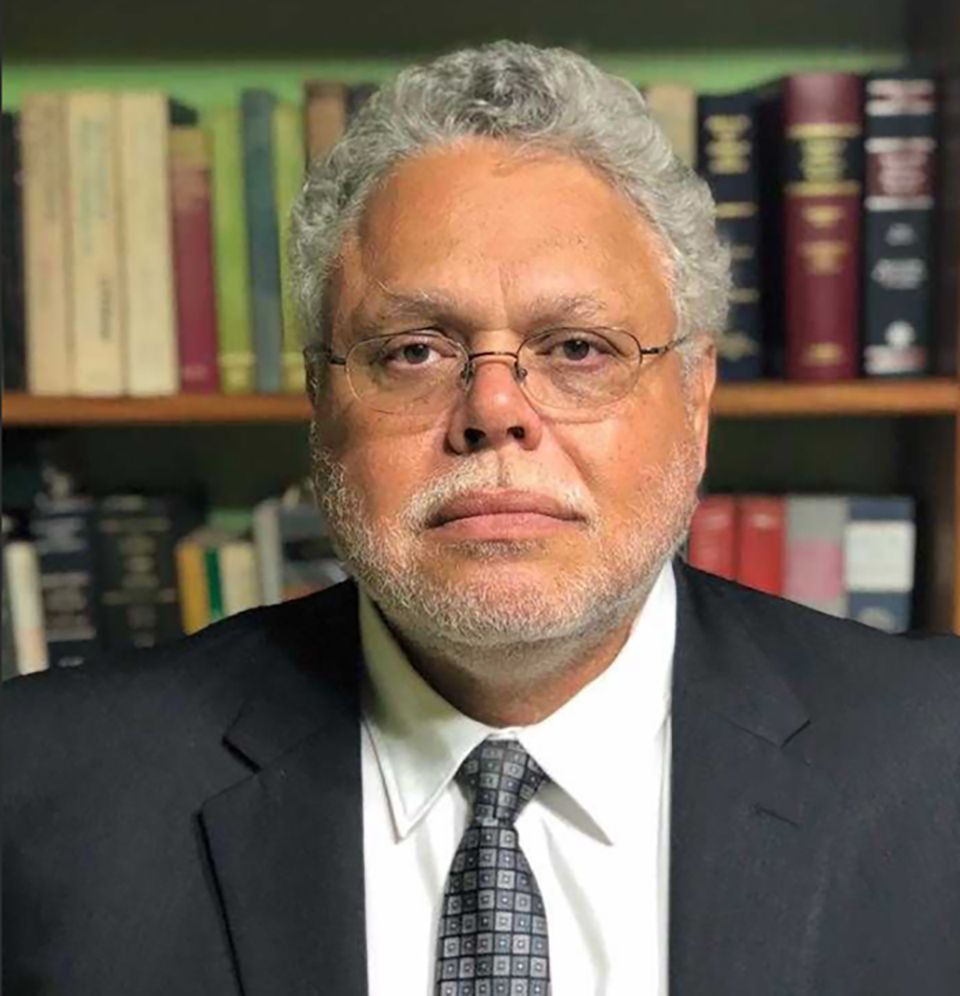
Constitutional attorney Gregory Delzin has warned that “behaviour” cannot be used as the legal basis for declaring another State of Emergency (SoE), as debate intensifies over Prime Minister Kamla Persad-Bissessar’s threat to reimpose emergency powers if violence resumes.
While Persad-Bissessar retains the constitutional authority to proclaim another SoE, Delzin said the law requires the existence of an emergency situation and does not permit declarations based solely on whether criminals “behave themselves.”
Speaking to Guardian Media yesterday, Delzin said the Constitution does not prohibit successive States of Emergency but insisted that each must be justified by fresh circumstances that endanger public safety.
Hours before the SoE ended on January 31, Persad-Bissessar issued a Facebook statement warning gangs and recently released detainees that she would not hesitate to act again if violence returned.
She pledged to use every legal means to protect law-abiding citizens and said the SoE, preventive detention orders and international border assistance resulted in 257 fewer murders in 2025 than the year before.
The number of detainees released following the expiration of the State of Emergency (SoE) at midnight yesterday remains at 117.
Police Commissioner Allister Guevarro confirmed on Friday that, of the 36 individuals for whom the police have sufficient evidence, 16 have already been charged but have not yet appeared in court.
The remaining 20 are expected to be charged following the revocation of their Preventive Detention Orders (PDOs).
The offences they face include firearm-related crimes, gang-related activity and motor-vehicle larceny.
Delzin said the justification for the previous SoE was the Government’s claim that conditions in Trinidad and Tobago were likely to endanger public safety.
He warned that proclaiming another one so soon after would create a credibility problem for the State.
“If that was in fact the purpose of the last States of Emergency, if you declare a new one so close after, what you are in effect saying is that the last one failed and the question would then be for the public, what would be the purpose of the new State of Emergency if whatever you did under the previous State of Emergency has worked,” Delzin said.
He noted that the Government’s simple majority in Parliament allows an SoE to be enacted but does not prevent detainees from challenging their detention.
He also criticised Persad-Bissessar’s comments about imprisoning friends and family who allegedly aid criminality and doing everything legally possible to terrorise criminals and their families.
Delzin said the powers of arrest and detention under an SoE must be exercised for specific reasons backed by evidence before being placed before the Minister of Homeland Security.
“Detention and threatening people’s families and friends and so on has no place in powers to be exercised by any minister in relation to a State of Emergency. That would be unlawful, and those persons will have a claim against the state for breach of their constitutional rights.”
He added that if another SoE were declared and former detainees were arrested again, they would be entitled to question what new facts justified their detention.
He said old evidence could not be reused because it had become spent once the previous SoE ended.
Criminologist Dr Randy Seepersad said the Prime Minister’s strong statements could still have a deterrent effect by signalling that the police retained the ability to detain those suspected of criminal activity and incarcerate gang leaders and members.
“It means that the State of Emergency works through well-established mechanisms that we know, and if the threat of that exists or could be brought back to bear, then the criminal elements will more than likely think twice,” Seepersad said.
He said if statistics showed crime was rising, the Prime Minister would be within her rights to declare another SoE in the absence of other crime prevention measures.
Seepersad urged the Government to return with the Zones of Special Operations Bill, describing it as a potential game-changer.
He said it would allow tight control of high-crime geographic areas supported by data and create calm while introducing interventions such as social workers, psychologists and educators.
Seventh Day Adventist Pastor Clive Dottin also backed the ZOSO framework, saying he was concerned about what would follow the end of the SoE.
He described it as a bridge between emergency rule and normal policing.
“I have been informed by sources I have learned to trust that the criminal element does not plan to sit down. They do not plan to stop. They plan to continue to create the mayhem and what have you, so that when the Prime Minister issues a warning to them, that is what she had to do because you do not have a bridge between the State of Emergency and operating normally out of a State of Emergency,” Dottin said.
Meanwhile, the Movement for Social Justice condemned Persad-Bissessar’s remarks, questioning how the State could justify terrorising the families of criminals who were not themselves involved in crime.
At a virtual media conference yesterday, political leader David Abdulah said the Prime Minister could not take action against individuals, as that was the responsibility of the police.
The MSJ also criticised Persad-Bissessar’s dismissal of what she called “tired, outdated woke, race-baiting, and bigoted propaganda,” saying citizens’ rights were protected by the Constitution and that she was sworn to uphold the law.
When can a State of Emergency be proclaimed?
A State of Emergency (SoE) can be proclaimed by the President on the advice of the Prime Minister whenever there is a threat to public safety, essential services or national security.
This includes situations such as widespread crime, civil unrest, war or natural disasters.
An SoE initially lasts 15 days unless revoked, but Parliament may extend it for up to three months at a time through a resolution supported by a simple majority in the House of Representatives.
Successive extensions are permitted, but no extension may exceed three months, and collectively they cannot exceed six months.
Legally, there is no minimum waiting period before a new SoE can be declared, as the Constitution allows the Prime Minister to advise the President whenever circumstances warrant, even if a previous SoE has just ended.
Related News
Transport ministry refuses request for clear breakdown of new traffic fines
Experts question AG’s claim US strikes did not violate international law

Financial services professional dies at Carnival fete