


Prime Minister Kamla Persad-Bissessar has moved to clarify Trinidad and Tobago’s position amid Venezuela’s deepening political crisis, insisting her Government will not back any individual leader but supports a democratic transition anchored in free and fair elections.
“I have no issue with whoever is selected to run a transition government as long as free and fair democratic elections are the end result in the near future,” Persad-Bissessar said in a WhatsApp exchange with Guardian Media yesterday.
“I want to make it clear, I support free and fair democratic elections, I do not support any specific person or organisation. The Venezuelan people must choose their leaders, if they choose Delcy Rodriguez or Maria Machado, or anyone else through fair elections, my Government will work with them.”
Persad-Bissessar also addressed long-standing United States claims that its military presence in the Caribbean is aimed at drug interdiction rather than regime change.
“Everyone will have their opinion on the presence of the US military in the region. I support any initiative or action that improves the lives of the people of Trinidad and Tobago.”
She further rejected claims that T&T played any role in Saturday’s kinetic strike in Venezuela, which resulted in the arrest of President Nicolás Maduro and his wife Cilia Flores.
“Today, just like yesterday, was an ordinary day in Trinidad and Tobago. The extraordinary event that you refer to happened in Venezuela, and Trinidad and Tobago was not a participant in it. Citizens just like myself went about our usual business. Some persons, for political reasons or commercial reasons, may be desperate to manufacture a crisis where there is none, but to each his own.”
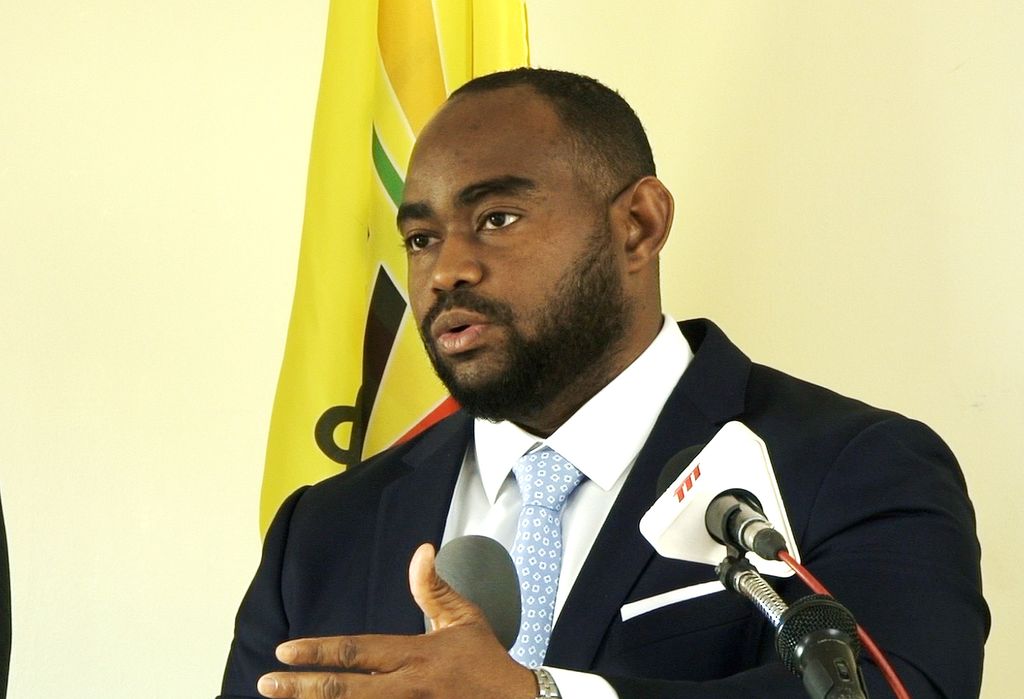
Foreign Affairs Minister Sean Sobers echoed the Prime Minister’s position hours earlier, saying Government remains focused on stability and due process, even as questions intensify over the United States’ dramatic removal of President Maduro.
As Venezuela enters a volatile transition period, Sobers sought to draw a clear distinction between T&T and the unfolding crisis.
“Trinidad and Tobago made its position quite clear, very, very pellucid that we did not participate in any of the kinetic activities that took place in Venezuela or in Caracas yesterday,” Sobers said at a UNC media conference.
Sobers was the sole member of the National Security Council to address the nation at a live media briefing since the military action in Venezuela. He noted that while precautionary measures had been taken in Port-of- Spain, there was no indication of any imminent threat to the country.
“I don’t know at all, respectfully, that Venezuela considers Trinidad and Tobago complicit in anything.”
Pressed on how Government views Venezuela’s new political reality, particularly with Vice President Delcy Rodríguez now widely regarded as holding power, Sobers said: “We stand on the side of a safe, secure, transparent, democratic transition.”
While US President Donald Trump has spoken openly about Venezuela’s oil sector following Maduro’s removal, remarks that appeared to suggest regime change rather than drug interdiction, Sobers maintained Washington’s military posture in the region remains focused on transnational crime.
“Our position still stands as it was before. The military intervention within the Caribbean region was based upon transnational crime. That has never changed. The US’s position on that, as far as we are aware, has never changed.”
He said the PM had deliberately avoided inflammatory language, even as criticism emerged from Caracas. But when asked directly who the Government recognises as Venezuela’s leader, he declined to name anyone.
Questions surrounding videos circulating online, which purported to show recent military movements near Chaguaramas, were brushed aside, with Sobers citing national security sensitivities. He noted that both national security ministers were in meetings with the prime minister and therefore unavailable to address the public.
However, political scientist Dr Bishnu Ragoonath yesterday criticised Government’s communication strategy.
“There should have been a more definitive statement coming from the Government, especially since Trinidad and Tobago was threatened on many occasions by the Venezuelan government.”
Maduro and his wife are currently being held at a detention centre in New York on drugs and weapons charges. Despite his arrest, elements of his administration continue to assert control in Caracas.
Defence Minister Vladimir Padrino López has condemned Maduro’s detention as an act of kidnapping and declared support for Rodríguez as acting president.
In a statement issued by the Ministry of People’s Power for Defence, Padrino López said the military remains loyal to Maduro.
“The National Bolivarian Armed Forces forcefully reject the cowardly kidnapping of citizen Nicolás Maduro Moros, constitutional President of the Bolivarian Republic of Venezuela, our Commander in Chief, and of his wife, the First Lady Dr. Cilia Flores de Maduro; an act perpetrated yesterday, Saturday, January 3rd of this year, after the cold-blooded murder of a large part of his security team, soldiers, and innocent citizens.”
The military leadership also expressed support for Rodríguez, signalling no immediate internal power struggle.
Related News
CAL ends buy-on-board programme

Manchester United coach Amorim out one day after provocative comments about club structure
Kidnapped firefighter dead; body found down precipice near Arima home