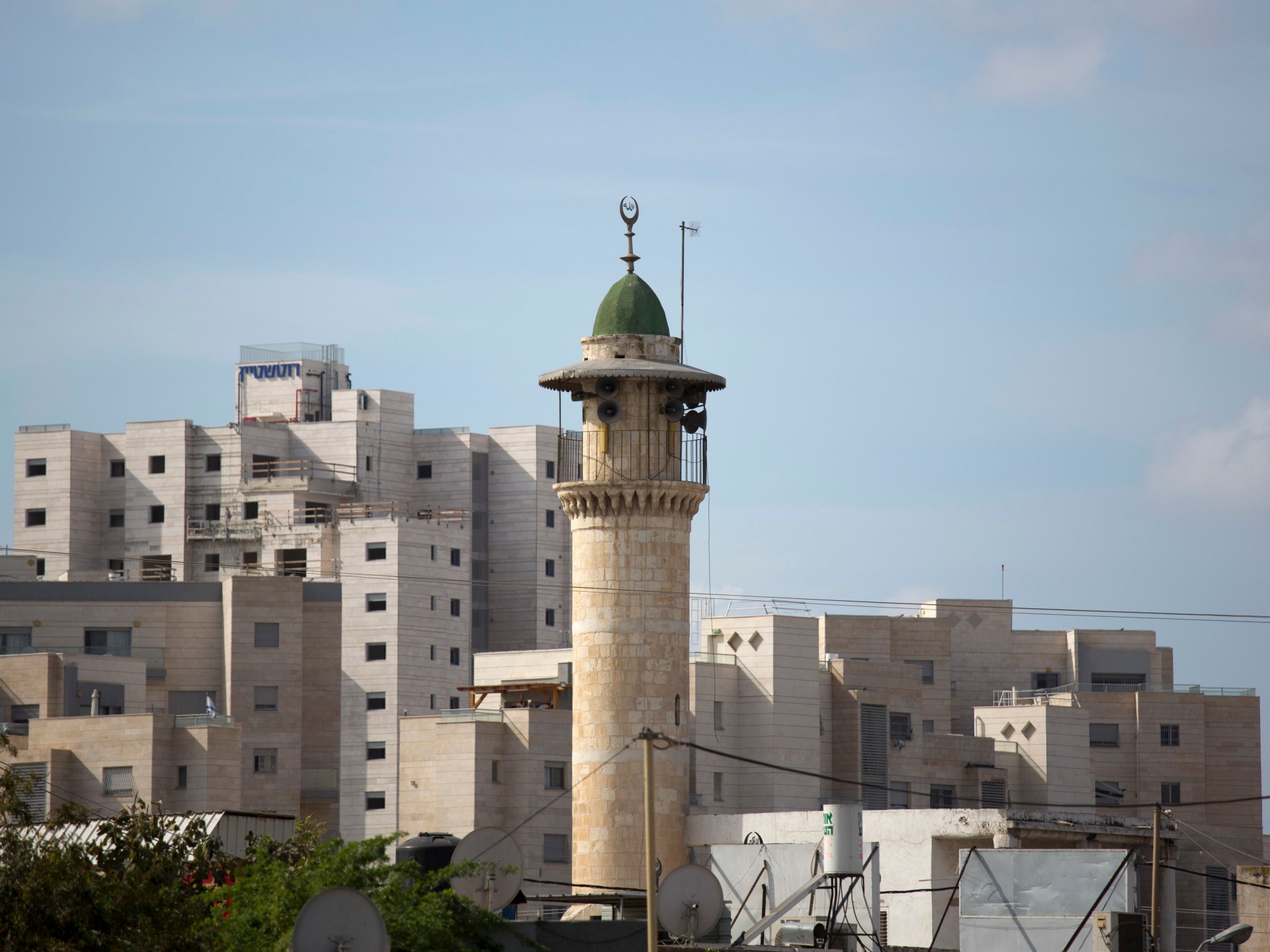

The recent confiscation of loudspeakers at two mosques in southern Israel is the latest example of an attempt by National Security Minister Itamar Ben-Gvir to “ignite a religious war”, parliamentarian Ahmad Tibi has told Al Jazeera.
Tibi said that Ben-Gvir, who oversees Israel’s police, was “exploiting the atmosphere of war” after he ordered the removal of the loudspeakers, which are used to broadcast the Islamic call to prayer.
Recommended Stories
list of 3 items
- list 1 of 3Worshippers in West Bank tear-gassed as Israeli attacks on mosques surge
- list 2 of 3Palestine Weekly: A night of arson sees Israel ‘Jewish terrorism’ reckoning
- list 3 of 3As homes seized, Jericho’s Palestinian residents fear settler takeover
end of list
Israeli police disconnected the speakers at a mosque in the Bedouin town of Hura and removed its sound equipment on Sunday.
Days earlier, police had seized the sound system at al-Dawa Mosque in nearby Tel al-Saba, known in Hebrew as Tel Sheva. Police said they had received repeated noise complaints about both mosques.
Ben-Gvir, a far-right figure known for making anti-Palestinian and anti-Arab statements and celebrating harsh treatment inflicted on Palestinian prisoners, defended the removals, saying that noise levels had been too high.
Tibi, a leader of the Ta’al Party – a member of the Joint List – accused caretaker Prime Minister Benjamin Netanyahu of leading a campaign of incitement against Palestinian citizens of Israel. Netanyahu has attempted to delegitimise any attempt by the opposition to form a government with the backing of Arab-led parties, accusing the latter of supporting “terrorism”.
Critics – including Palestinian citizens of Israel and Israeli opposition leaders – have linked the comments by Netanyahu and other right-wing politicians, as well as their policies, to recent attacks targeting a mosque and an Arab city in Israel.
Advertisement
Repeated seizures
Ibrahim al-Asam, a Tel al-Saba resident and activist, disputed the police account, writing on social media that the speaker at al-Dawa Mosque was not loud. He said officers damaged the mosque during the raid and took the recorder connected to its security cameras.
Police said they had issued fines and warned those responsible for the sound system at Tel al-Saba before seizing it. In Hura, they said officers checked the volume at the mosque and found it exceeded the legal limit.
“The mosque is far away and doesn’t bother anyone,” said Atiya al-Asam, who heads the regional council representing Bedouin villages in al-Naqab (Negev) that Israel does not recognise. He called the seizure “an assault on people’s faith, on Islam and Muslims”, and said that police had acted without a court order, calling for the speakers to be returned.
The seizures are a continuation of an ongoing policy.
Israeli authorities took loudspeakers from a mosque in the al-Naqab village of Bir al-Hammam in April and from another in Majd al-Krum, in the northern Galilee region, in June. Authorities also summoned several muezzins – who give the call to prayer – for questioning and had warned mosques they could face fines.
The Palestinian monitoring group Mo’ta recorded at least 38 cases in 2026 in which Israeli authorities invoked noise regulations against mosques, imams, or muezzins in Arab and mixed Arab-Jewish communities in Israel.
But they are also taking place in the occupied West Bank. For example, in December 2025, the Israeli military ordered mosques in Ras Tira, near Qalqilya, to lower the volume of the call to prayer. The army distributed notices saying the sound disturbed nearby illegal Israeli settlements.
Mo’ta has reported attacks on 50 mosques in the occupied West Bank, including 13 cases of arson. In Hebron, the Palestinian Ministry of Endowments and Religious Affairs said Israeli authorities had prevented the call to prayer at the Ibrahimi Mosque 1,009 times since the start of 2026.
On July 1, Israel’s parliament, the Knesset, voted 50 to 36 in a preliminary reading for a bill that would prohibit mosques from using loudspeakers to broadcast the call to prayer without government permission. The legislation, sponsored by Zvika Fogel of Ben-Gvir’s far-right Jewish Power party, did not become law.
Jewish Power said on Monday that it would bring a new version of the bill for a parliamentary vote on Wednesday.
Related News

USS Roosevelt arrives in Middle East: Is the US-Iran war about to resume?
Tens of thousands join Poland’s nationalist Independence Day march
Algeria’s president orders troop deployment to neighbouring Niger