Israel carries out military incursion into Syria’s Quneitra in the Golan
 26 February 2026
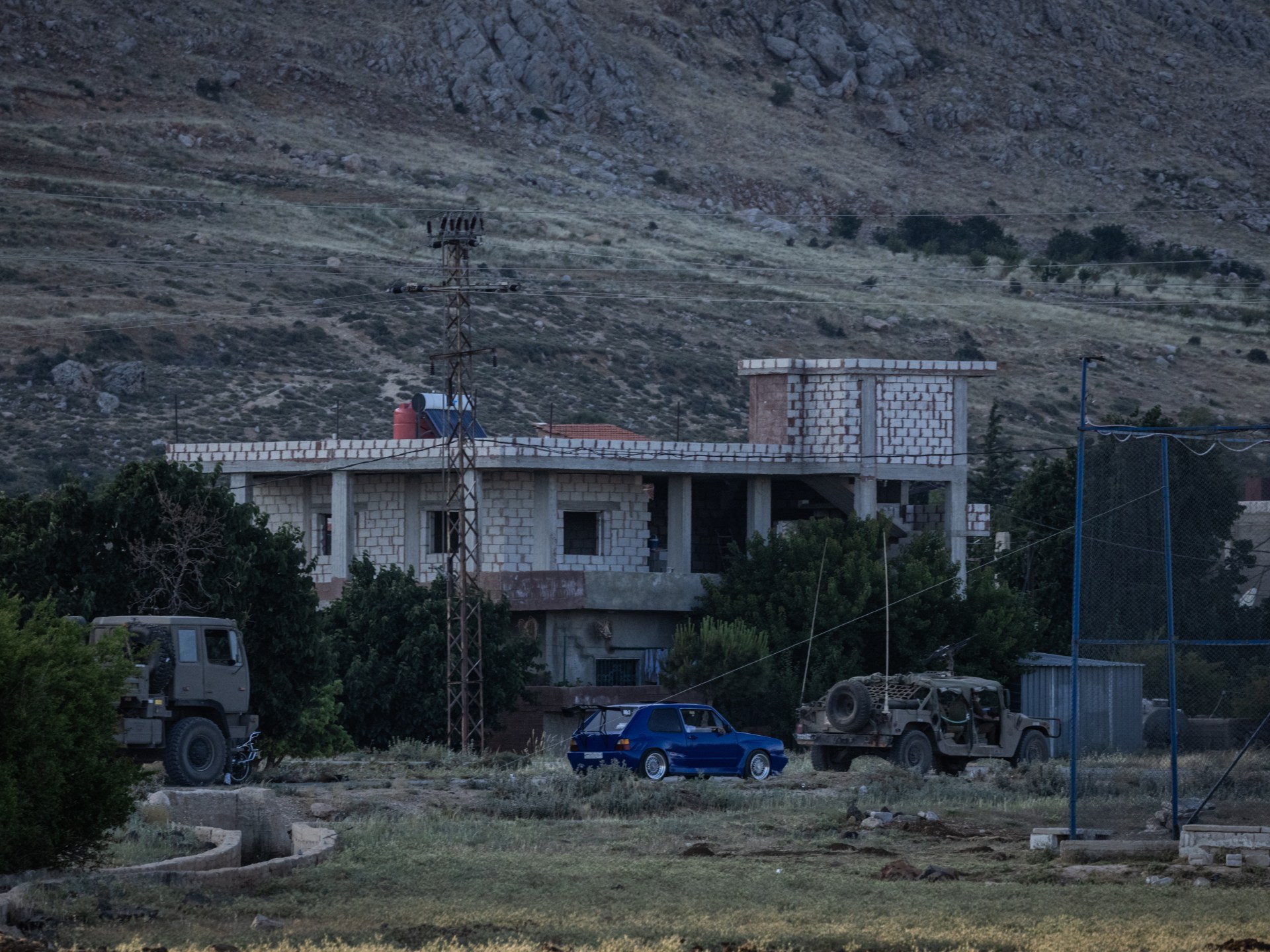

Dozens of Israeli military vehicles have staged an incursion into Syria’s southwestern Quneitra province in the Golan Heights, local media have reported, in yet another breach of the country’s sovereignty.
Al-Ikhbariah TV said on Wednesday that a convoy of 30 vehicles entered the eastern Tel al-Ahmar area near the village of Ain Ziwan in Quneitra, where the Israeli army conducted a search operation.
- list 1 of 3Syria moves out last residents of ISIL-linked desert camp
- list 2 of 3US begins withdrawing from its largest military base in Syria
- list 3 of 3What’s Netanyahu’s planned ‘hexagon’ alliance – and can it work?
end of list
Separately on Wednesday, the Sana news agency reported that Israeli forces reached near Bariqa village, also in Quneitra, and abducted a young Syrian man while he was tending his sheep. In another incident, the report added, three Israeli military vehicles temporarily penetrated the Abu Madharah farm.
Syria’s southern regions, including Quneitra, have long witnessed Israeli territorial violations, sowing fear, detaining civilians, erecting checkpoints and gates and destroying farmland.
But since the toppling of longtime leader Bashar al-Assad in December 2024, those have become more brazen, violent and frequent. Israel has launched multiple bombing raids on the country and also intervened last summer in an eruption of violence in Syria’s Suwayda, attacking Syrian forces under the pretext of protecting the Druze, and bombing Damascus.
According to a tally by the Armed Conflict Location and Event Data (ACLED), Israel launched an average of two attacks a day for a total of more than 600 air, drone or artillery attacks across Syria throughout 2025.
Quneitra is located in the Golan Heights, which the UN recognises as part of Syria. Israel seized 1,200sq km (463sq miles) of the western part of that region in the Six-Day War in 1967. During the 1973 Arab-Israeli War, Syria attempted to take back the Golan Heights but failed.
Advertisement
The conflict ended with a disengagement agreement in 1974 that saw the establishment of a UN buffer zone, which separates Israeli-occupied territory from the remaining part that is still under Syria’s control. Part of the Quneitra province lies inside the buffer zone.
Once the al-Assad regime fell, Israel pushed deeper into Syrian territory, occupying the buffer zone and saying the 1974 deal with Syria had collapsed. It also advanced into the Quneitra area, setting up two military checkpoints last year in the villages of Ain Ziwan and al-Ajraf.
The government in Damascus has repeatedly affirmed its commitment to the agreement, saying that continued Israeli violations hinder efforts to restore stability in the region.
Syria and Israel have been conducting intermittent talks to reach a security agreement. That culminated in early January with the two countries agreeing to set up a joint mechanism for sharing intelligence and coordinating military de-escalation under US supervision.
Still, Syrian officials maintain that any durable deal will be difficult until Israel produces a clear and enforceable timeline for the pullout of its troops from Syrian territory.
Related News

Indian university faces backlash for presenting Chinese robot as its own

‘Like Eid’: Bangladeshis hail landmark election, many vote after 17 years
Lebanon says four months needed for second phase of Hezbollah disarmament