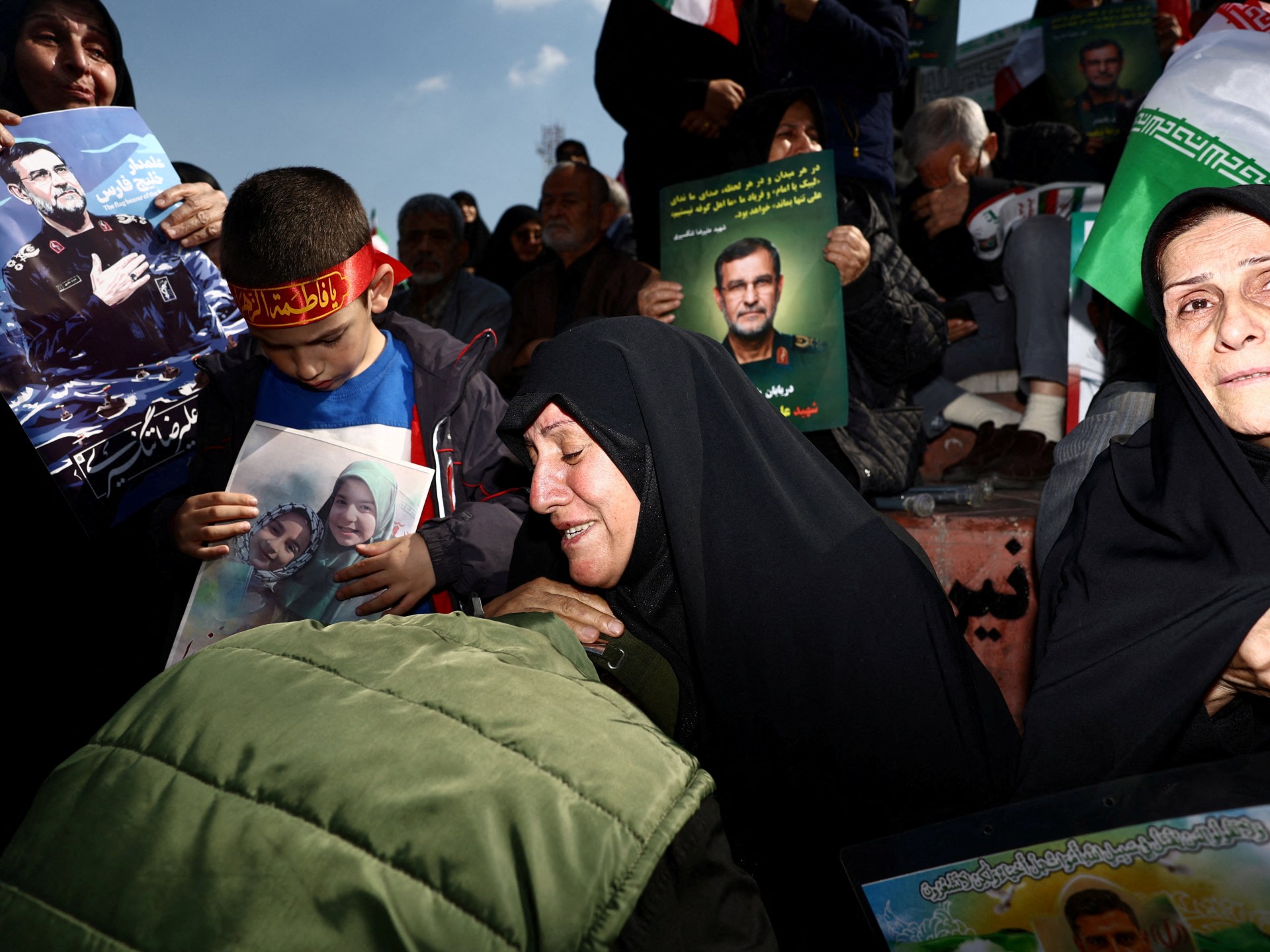

United States President Donald Trump has warned that Washington “hasn’t even started destroying what’s left in Iran”, threatening a potential expansion of attacks on the country’s infrastructure, which would violate international law.
Posting on social media late on Thursday, Trump threatened to attack “Bridges next, then Electric Power Plants”, adding that Iran’s leadership “knows what has to be done, and has to be done, FAST!”
- list 1 of 3How war on Iran turned Pakistan’s LNG surplus into a looming shortage
- list 2 of 3How China’s ‘teapot’ refineries are cushioning it from Iran war oil crisis
- list 3 of 3Iran war: What is happening on day 35 of US-Israeli attacks?
end of list
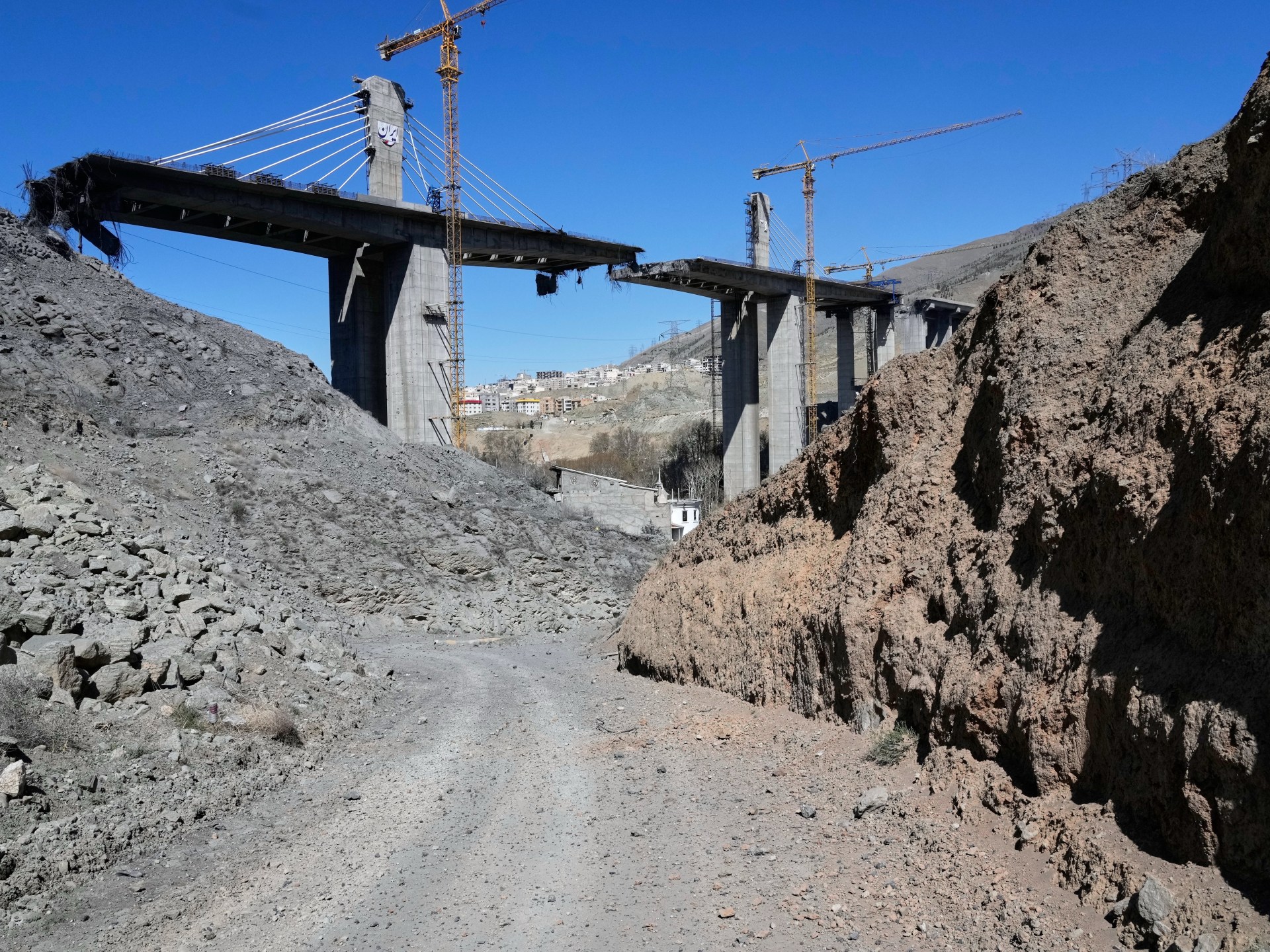
His remarks came after he shared footage of a US strike on a newly built bridge linking Tehran to Karaj, and said: “The biggest bridge in Iran comes tumbling down, never to be used again – Much more to follow!”
The B1 bridge, which had been due to open this year, was hit in an attack that killed eight people and wounded 95 others, Iran said.
Iran’s Foreign Minister Abbas Araghchi condemned the targeting of civilian infrastructure.
“Striking civilian structures, including unfinished bridges, will not compel Iranians to surrender,” he said in a statement posted on X, adding that such actions “convey the defeat and moral collapse of an enemy in disarray”.
War widens and markets react
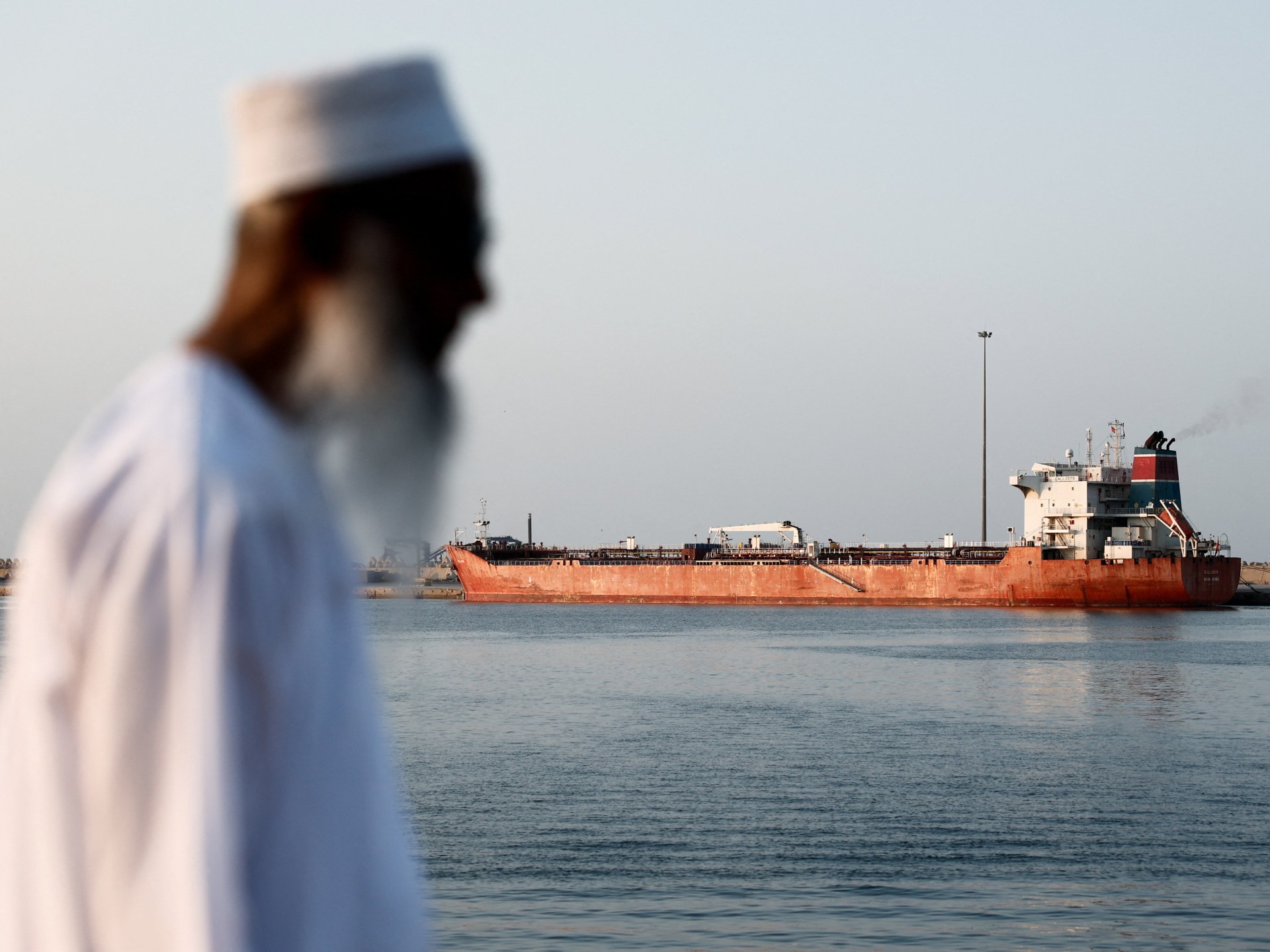
Nearly five weeks since the war began with a joint US-Israeli attack, instability has spread across the region and shaken global energy markets. Countries have scrambled to restore shipments through the Strait of Hormuz, a critical artery for oil and gas flows.
Satellite imagery this week showed smoke rising from Iran’s Qeshm island, which sits near the strategic waterway, underscoring the growing risks to regional infrastructure.
Advertisement
Trump has intensified his rhetoric as indirect negotiations with Iran’s new leadership show little progress and domestic criticism of the war mounts.
Araghchi warned against any “provocative action”, including at the United Nations Security Council, ahead of this weekend’s vote on a proposed resolution that, if it passes, would authorise UN member states to use “defensive means” to open the waterway.
“Any provocative action by the aggressors and their supporters, including in the UN Security Council regarding the situation in the Strait of Hormuz, will only complicate the situation,” Araghchi said.
Tit-for-tat threats and regional fallout
Iranian media has already signalled potential retaliation for attacks against it, publishing a list of major regional bridges that could be targeted following the Karaj strike.
The semiofficial Fars News Agency reported that key crossings in Kuwait, Saudi Arabia, the United Arab Emirates and Jordan could be at risk.
The Islamic Revolutionary Guard Corps (IRGC) said it has already struck US-linked industrial sites in the Gulf, including steel facilities in Abu Dhabi and aluminium installations in Bahrain.
“These attacks are a warning, and if the attack on Iranian industries is repeated, the next response will be much more painful by attacking the main infrastructure of the occupation regime and the American economic industries in the region,” the IRGC said.
Health and energy infrastructure hit
Meanwhile, Iran’s health ministry said US and Israeli strikes on Thursday had severely damaged the Pasteur Institute of Iran, a major research centre involved in combating diseases such as cholera and COVID-19.
Hossein Kermanpour, a ministry spokesperson, described the attack as “a direct assault on international health security” and called it “a century-old pillar of global health”.
He urged international organisations, including the World Health Organization (WHO) and the Red Cross, to assess the damage and support reconstruction efforts.
WHO Director-General Tedros Adhanom Ghebreyesus said on X on Friday that the strike on Pasteur Institute left it “rendered unable to continue delivering health services”. He also condemned attacks on the Delaram Sina Psychiatric Hospital on March 29, and the Tofigh Daru pharmaceutical facility on March 31.
The WHO has verified more than 20 attacks on healthcare facilities in Iran since March 1.
Separately, Iranian officials claimed on Friday that air defences shot down a second US F-35 fighter jet over central Iran, adding that the pilot’s survival was unlikely. The US has not commented on the claim.
Advertisement
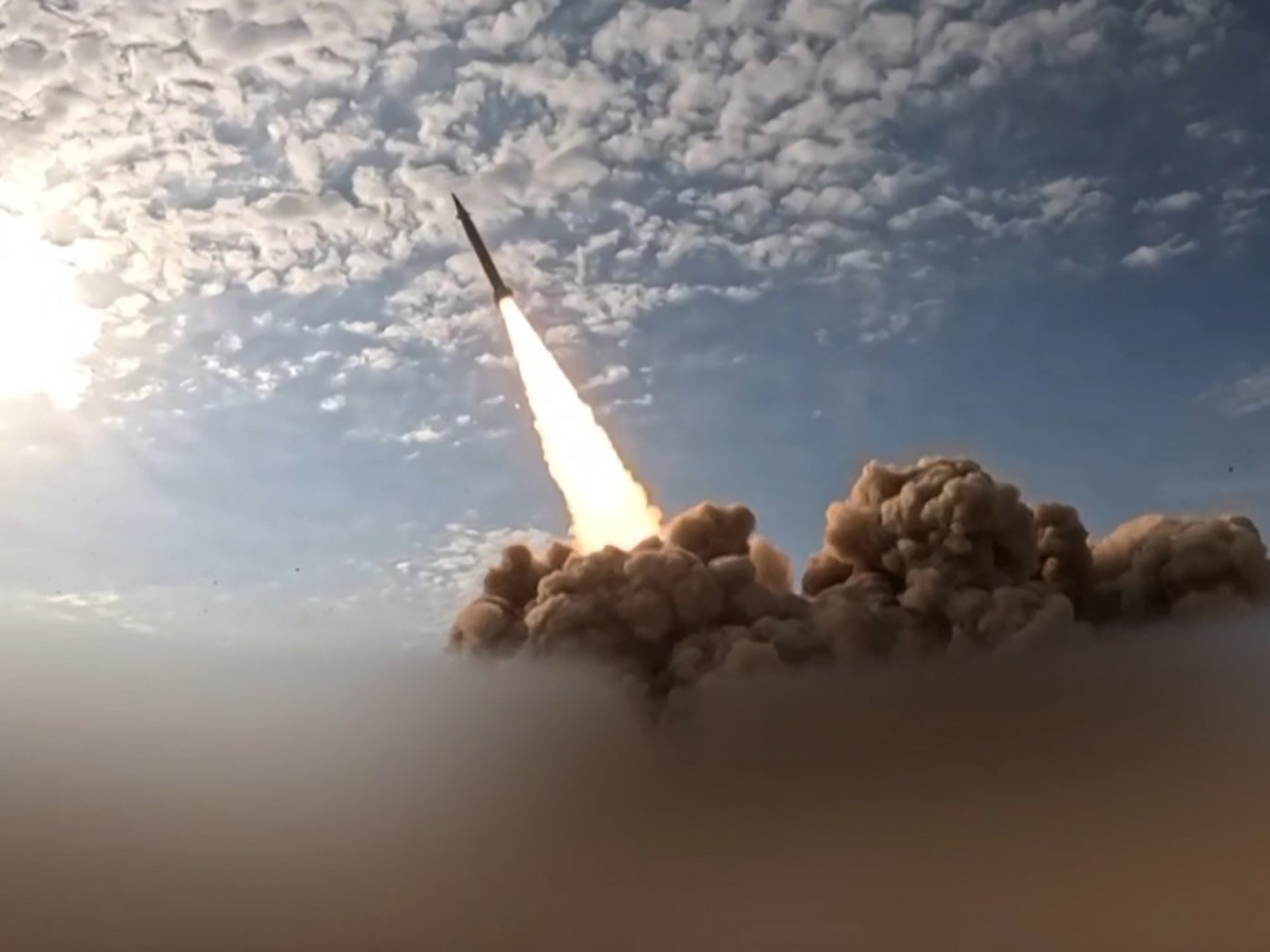
Elsewhere, Israel’s military reported a fresh barrage of Iranian missiles, with its air defences activated.
Emergency services said some homes and vehicles were damaged, while military radio reported shrapnel damage to a train station in Tel Aviv.
Related News
Iranian attack damages Kuwait power and desalination plant, kills worker
Tehran’s’tollbooth’: How Iran picks who to let through Strait of Hormuz
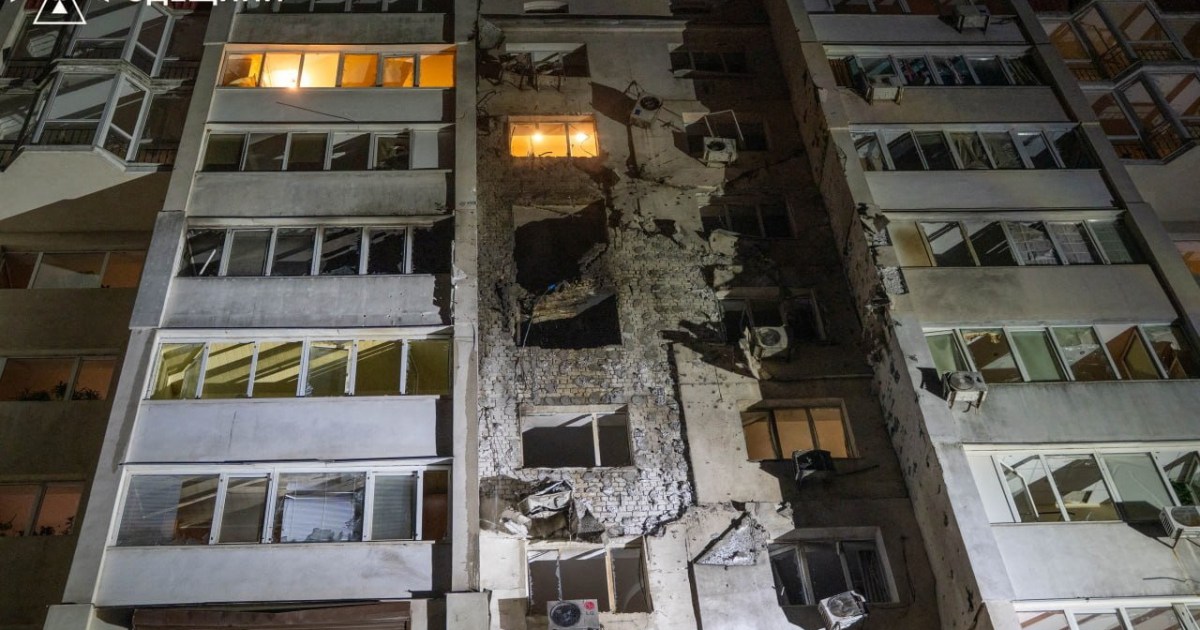
Russian strikes on Ukraine kill 4 as deal to end war dims