
Port-of-Spain has recorded the most significant increase in inflation in Trinidad at the start of 2026, with its rate doubling from 0.6 per cent in December 2025 to 1.2 per cent in January 2026.
This was detailed in the Central Bank’s Inflation Report (January 2026) which was obtained by the Business Guardian.
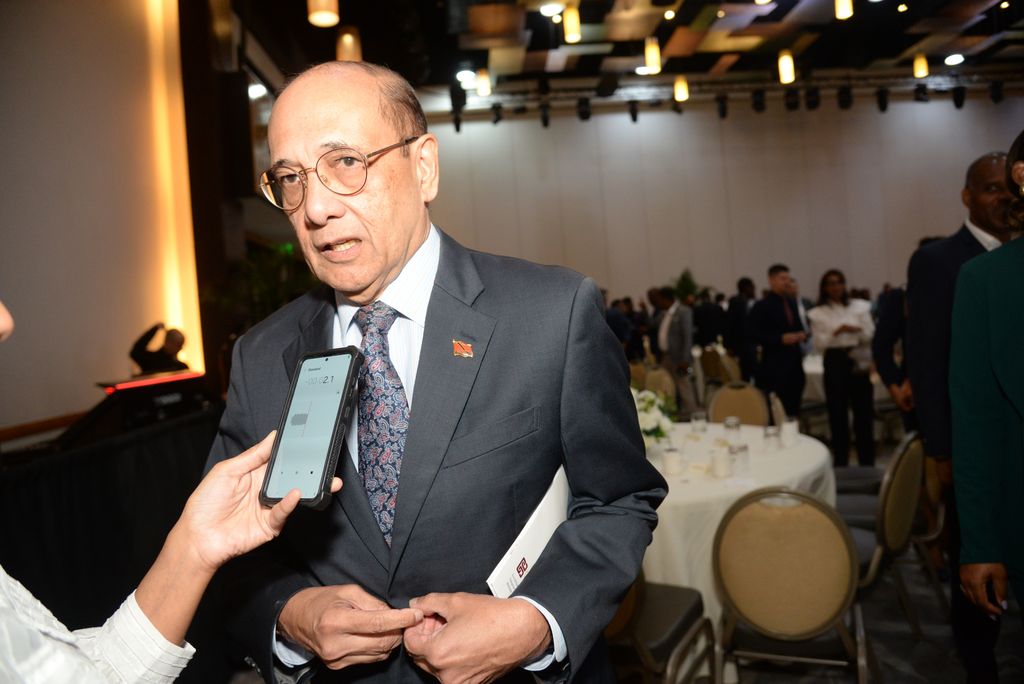
Central Bank Governor Larry Howai stated the bank is still investigating the specific causes, stating, “That we are trying to figure out ourselves.”
The source of the data for the production of the report is the Central Statistical Office (CSO).
This 100 per cent month-over-month acceleration however, could perhaps identify the capital as the primary driver of price growth in the country, signalling a sharp rise in the cost of urban services and retail operations.
Port-of-Spain is not the only area experiencing upward pressure; across the waters, the sister isle is seeing even sharper spikes.
Beyond the capital, Tobago continues to function as the highest inflationary outlier in the Republic.
Headline inflation on the sister isle climbed to 2.9 per cent in January 2026, up from 2.3 per cent in the previous month.
This surge was primarily fuelled by core inflation, which excludes increases in the price of food, rose to 3.1 per cent from 2.2 per cent in December.
This persistent increase in the cost of non-volatile goods and services occurred even as food inflation in Tobago decelerated significantly, dropping from 3.1 per cent to 1.4 per cent, the report showed.
While the islands’ major hubs show growth, the trend in Trinidad’s regional municipalities is far more varied, with some areas finding relief.
In the regional municipalities of Trinidad, the data reflects a stabilisation of previous price pressures through notable declines.
Arima, which recorded a high of 1.6 per cent in December 2025, saw its inflation rate fall by 0.9 percentage points to 0.7 per cent in January 2026.
San Juan experienced a 0.3 percentage point decrease, moving from 1.6 per cent to 1.3 per cent, while Rio Claro reported a 0.6 percentage point decline from 2.0 per cent to 1.4 per cent.
However, this cooling trend was not universal, as other regions began to align with the capital’s rising costs.
Conversely, Sangre Grande and Debe mirrored the capital’s upward movement; Sangre Grande rose by 0.8 percentage points from 0.5 per cent to 1.3 per cent, and Debe increased by 0.6 percentage points from 0.8 per cent to 1.4 per cent.
The report further indicated that a significant portion of the country remains in a deflationary cycle, contrasting the growth seen in Port-of-Spain and Tobago.
Chaguanas recorded a negative inflation rate of -0.9 per cent, a slight movement from the -1.1 per cent seen in December.
Princes Town recorded -1.1 per cent, up from -1.4 per cent the previous month.
Siparia showed the most aggressive downward pressure, with deflation deepening from -1.0 per cent to -1.3 per cent in January 2026.
Meanwhile, the report showed national headline inflation edged up to 0.7 per cent (year-on-year) in January 2026 from 0.4 per cent in December 2025.
This was attributed to an increase in core inflation to 0.8 per cent in January 2026 from 0.5 per cent in December 2025.
This domestic uptick is being watched closely by the Central Bank, especially as international tensions threaten to spill over into the local economy.
Howai confirmed that the bank is closely monitoring geopolitical developments in Iran due to their potential impact on the national economy.
“It is something that we are also looking at very closely because with what is happening in Iran and the logistical issues that could arise from there we see the potential for some upward movement. It’s under control at the moment,” he explained.
While global logistics pose a future threat, current data shows that food costs are currently providing a buffer for consumers.
Food inflation slowed to 0.1 per cent (year-on-year) in January 2026.
The report further indicated that core inflation accelerated to 0.8 (year-on-year) in January 2026.
The acceleration in core inflation was driven largely by specific consumer sectors, most notably those impacted by recent fiscal policy.
A faster price increase was recorded in the alcoholic beverages and tobacco category (24.4 per cent in January 2026 compared to 23.6 per cent in December 2025) due to higher prices for brandy, vodka, shandy and local rum. The increase in prices was primarily driven by higher excise and custom duties for alcoholic beverages and tobacco as announced in the FY2026 national budget.
Beyond “sin taxes,” the cost of maintaining personal health and wellness also contributed to the rising index.
Higher prices for pain relievers, tonics, vitamins and mineral supplements and spectacles were responsible for the stronger price increase for the health sub-index (1.5 per cent in January 2026 compared to 1.2 per cent in December 2025).
The leisure sector saw an even more dramatic swing, fueled by the seasonal demand of the national festival.
A price increase was recorded for the recreation and culture sub-index (4.0 per cent in January 2026 compared to -0.8 per cent in December 2025) due to higher prices for pre-recorded soca and calypso music, package tours and foreign vacations, cinema, Carnival shows and fetes.
Despite these spikes, some essential services remained fixed, while others actually provided cost savings.
A few sub-indices remained steady (housing, water, electricity, gas and other fuels, education and hotels, cafes and restaurants).
Price declines were recorded in several categories (clothing and footwear, furnishings, household equipment and routine maintenance, transport and communication).
Nevertheless, these scattered declines offer little comfort to the Central Bank if the broader trend of global instability continues.
The Central Bank Governor added that if the persistent volatility remains unchanged, meaning beyond domestic control, this is worrying.
“That is a concern we have and that is something we are going to move very early on to try to address as far as possible. We may have to tighten up demand a little bit. But it is something that we need to work on immediately,” he cautioned.