
Independent senators are sharply divided over the Government’s decision to impose a second State of Emergency (SoE) just 10 months into office, deepening debate over crime policy and constitutional limits.
The latest proclamation follows the Government’s failed attempt to pass its proposed Zones of Special Operations (ZOSO) legislation in the Senate. On January 27, the administration was unable to secure the required three-fifths majority, after neither Opposition nor independent senators supported the bill.
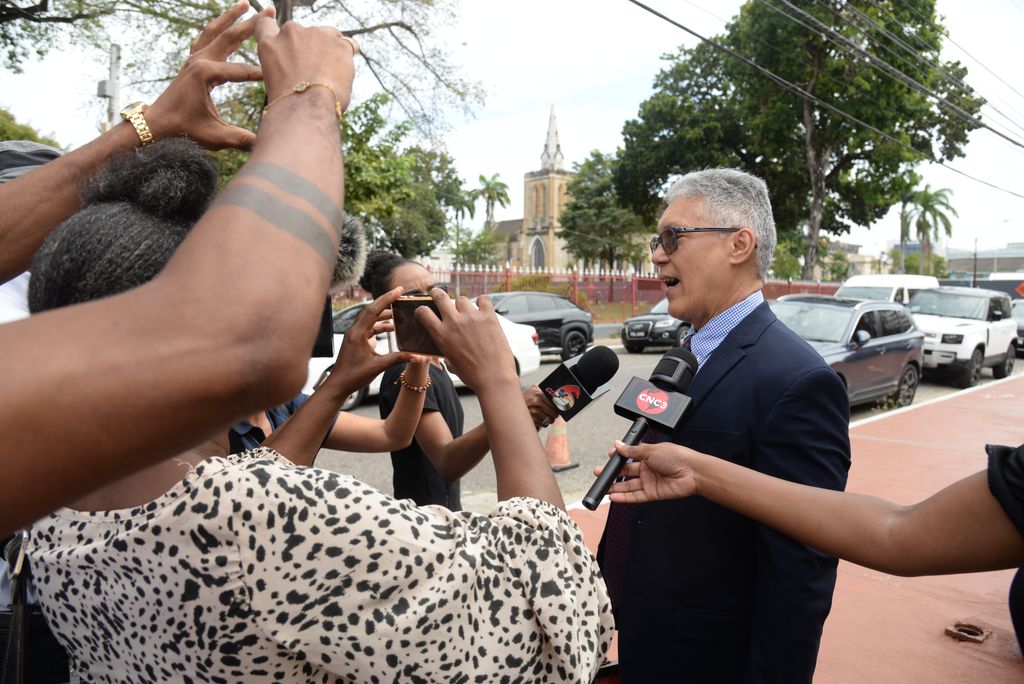
Speaking outside Parliament yesterday, Independent Senator Anthony Vieira criticised the renewed SoE, saying he remains unconvinced that emergency powers address the structural drivers of crime.
While questioning the necessity of sweeping measures, Vieira maintained that he voted against ZOSO because Government declined to accept amendments proposed during debate in the Upper House.
He nevertheless described the SoE as the lesser of the two options.
“I really am not persuaded that there’s a need for an SoE. I thought that there had been a decrease in crime? And I thought on the last occasion the Prime Minister, when she was in opposition, had decried having SoEs in place of a proper crime plan—so, that’s number one. And the second point I’ll make is that having said that, I prefer the SoE than of having had the ZOSO bill as it had been presented. I think we’re probably better off with an SoE.”
In contrast, Independent Senator Courtney Mc Nish, the lone independent to abstain from voting on the ZOSO while eight others rejected it, said his decision was guided by conscience.
Mc Nish endorsed the SoE, arguing that it may be the only immediate tool available to confront rising violent crime, including murders.
He also dismissed concerns about regulations introduced under the SoE that prohibit statements, oral or otherwise, deemed capable of influencing public opinion in a manner prejudicial to public safety. The provisions extend to posts, videos and messages shared online.
“I think what this provision is trying to do is make it very abundantly clear that the Government will not be tolerating remarks and comments that is subversive in nature. They can do that. There is no right that is absolute.
“Your freedom of speech is not absolute. You just can’t come out there in the public and say whatever you want, however you want, against anybody. There is the law of tort, there’s defamation. You can’t do it. So, is it encroaching (freedom of expression)? Maybe, but it is a State of Emergency,” Mc Nish said.
Meanwhile, Independent Senator Michael Victor De La Bastide said he had no immediate reason to doubt the Government’s justification for declaring another SoE. However, he cautioned that the manner in which it was implemented could invite constitutional scrutiny.
“The Government has to be careful that there may be a constitutional challenge to this State of Emergency, on the basis that it may be said that what the Government tried to do—and I’m not saying that they did this—but it may be challenged on the grounds that they simply avoided the procedure of seeking to extend that State of Emergency by going to parliament; by terminating it and then declaring another one soon thereafter.”
De La Bastide pointed to a May 16 ruling last year by Jamaica’s Constitutional Court, which found that multiple states of emergency declared on 15 separate occasions were not made for a constitutionally valid purpose and were not demonstrably justified in a free and democratic society.
In that case, the court ruled in favour of opposition People’s National Party general secretary Dr Dayton Campbell. The judges determined that three so-called “rolling proclamations” in late 2022 breached the separation of powers by effectively bypassing Parliament’s constitutional role in extending emergency powers beyond 14 days.
The Jamaican court found that the government had allowed SoEs to expire after the Governor General’s 14-day limit rather than seeking parliamentary approval for extension, only to immediately declare new ones. The ruling described the approach as an attempt to circumvent debate and legislative oversight.
Independent Senator Dr Desiree Murray declined to comment.