
Senior Reporter
dareece.po[email protected]
Independent senators are standing firm on their decision to reject the Zones of Special Operations Bill, insisting their support would only be given if crucial amendments are undertaken.
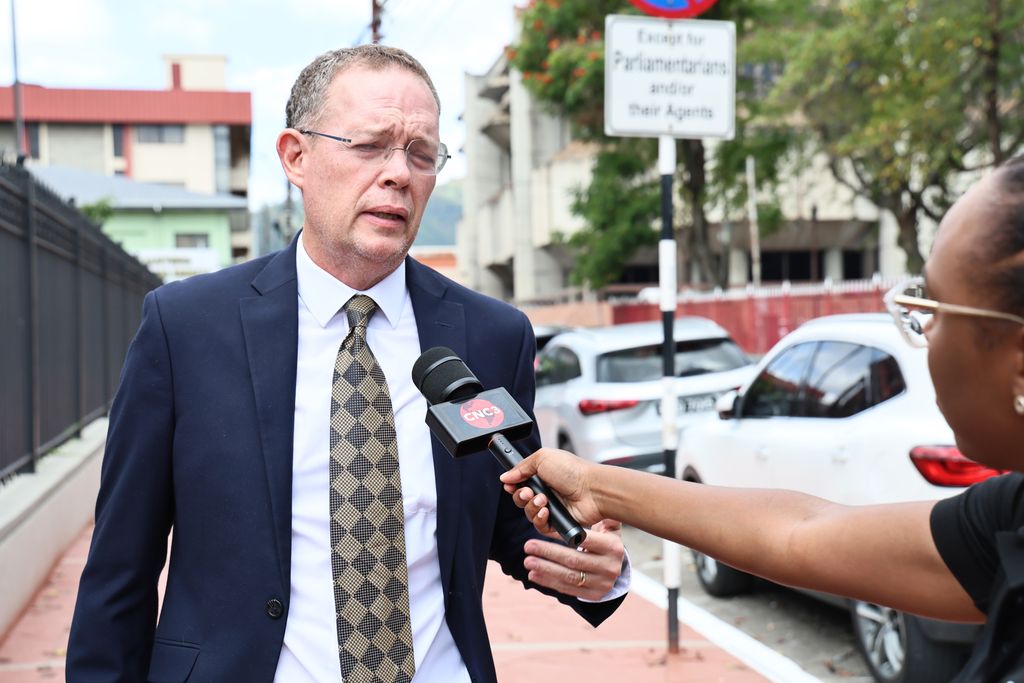
Senior counsels Anthony Vieira and Michael de la Bastide, as well as Dr Desiree Murray, made their positions clear while speaking outside the Red House ahead of the Senate session yesterday.
In separate interviews, the three independents told Guardian Media they support ZOSO in principle, but they remain adamant that Government should consider their amendments if they plan to reintroduce the legislation.
One such recommendation was a sunset clause, which Defence Minister Wayne Sturge dismissed as a non-issue during a recent television interview. Sturge indicated that the legislation would be reviewed no later than three years after the date of declaration of the first Zone. However, de la Bastide said this was not sufficient.
“That is not a sunset clause, okay. That does not bring the legislation to an end. That clause provided for a review... So, there was no commitment to bringing the act to an end, so that is not a sunset clause.”
He added that the sunset clause is non-negotiable.
“My position stands as it pertains to the important amendment of the sunset clause, some kind of sunset clause that would bring the legislation to an end, as it were—maybe after three, four years. Unless, because if we don’t have that, then what we are saying is that we can’t control the crime problem unless we have a kind of state of emergency situation permanently. And I don’t think we should concede that as yet.”
Questions about the ZOSO’s possible reintroduction to Parliament arose as murders continued despite the ongoing State of Emergency.
Vieira agreed that the Government could obtain his support in the future should they consider proposed amendments.
“I have some concerns about ZOSO and the way it was brought. But in principle, as I had indicated, I would support it once those concerns were addressed.”
However, he suggested that the Government should not use the emergency powers as its main crime-fighting strategy.
“The problem with an SoE is that it really should be used for emergency situations. It’s really not acceptable to have a prolonged state of emergency as a crime-fighting measure. We have to be careful about creep on the constitutional rights of citizens. And when you get accustomed to having those rights suspended, I don’t think that’s a good thing.”
Meanwhile, Murray said she considered supporting ZOSO the first time it was introduced, but recalled the Government’s refusal to accept amendments. She said she will scrutinise any new legislation that is proposed by the Government before taking a definitive position.
While both Murray and de la Bastide declined to publicly declare their views on the possible imposition of a curfew to further quell violent crimes, Vieira outrightly rejected it.
“You need a mix of both hard and soft measures,” he said, adding, “coming down with the big stick is not the only way of treating with crime. It involves education, it involves social nets. There’s a whole raft of things that need to be done.”
The ZOSO bill collapsed in the Upper House on January 26 with 15 Government senators voting in its favour and 14 against, including six Opposition and eight Independent senators. Courtney Mc Nish was the sole independent senator to abstain.
The bill required a three-fifths majority to be passed.
During the debate on the SoE extension earlier this month, the Defence Minister insisted ZOSO would be reintroduced to parliament and passed, with or without opposition support.