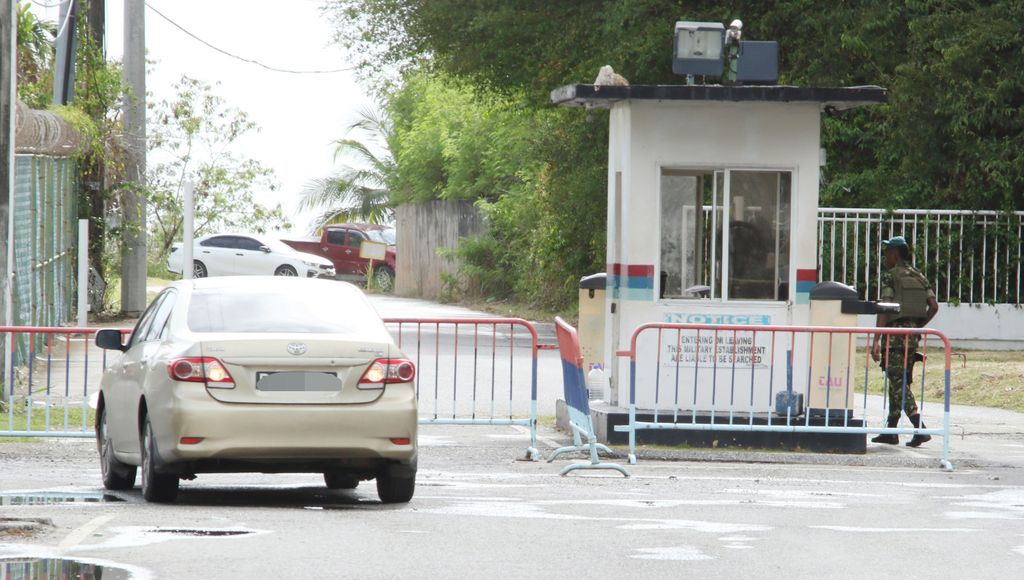

Prisoners detained at Teteron Barracks and Staubles Bay in Chaguaramas embarked on a hunger strike yesterday and have vowed to keep it up until they are removed from the facilities, which they say are unfit for human occupation.
Accusing prison and police officials of employing “psychological warfare tactics” to break them, the 11 inmates said, “We want the Government to return us to regular detention and remove us from military detention.”
The hunger strike began with the prisoners refusing breakfast and continued throughout the day with refusals of lunch and dinner.
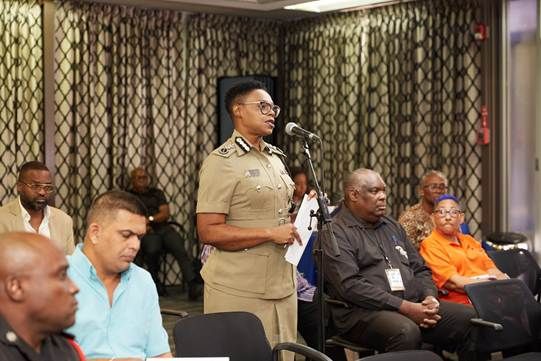
While Prison Commissioner Carlos Corraspe did not respond to calls, Commissioner of Police (CoP) Allister Guevarro declared, “Jail is jail.”
Pressed on the calls by the inmates, he fired back, “Persons in lawful custody do not get to pick and choose where they are housed. The next thing we will hear is that they will be asking to be transferred to Port-of-Spain Prison to take in the Carnival vibes.”
The CoP further explained, “The Prison Service assigns inmates based on security needs and available accommodation, not personal preference. Teteron and Staubles Bay were designated as prisons and all facilities meet the standards for lawful detention.”
However, the prisoners, speaking through one of their attorneys, who did not want to be identified, insisted that their constitutional rights continue to be breached – and that they have an entitlement under the 1943 Prison Rules and the Prisons Act of T&T.
“We want to be removed from Teteron and Staubles Bay because these places were not designed to be prisons,” they told Guardian Media.
The prisoners, who were transferred to the two prison facilities via a Preventive Detention Order (PDO) during the State of Emergency (SoE), which expired at midnight on January 31, claimed many of them have been deliberately subjected to physical and mental anguish at the hands of authorities.
Teteron and Staubles Bay were listed as prison facilities following legislative amendments made by Government at the start of the recently concluded SoE. The prisoners transferred to Chaguaramas were deemed to be a security threat to the operations at the Maximum Security Prison in Arouca. The authorities determined that their transfer to the move secure army base would have allowed them to bring an untenable situation at MSP under control.
Several attorneys representing some of the prisoners who remain incarcerated in Chaguaramas, noting continued prevented access to legal counsel, have called on Homeland Security Minister Roger Alexander and Corraspe to recognise their clients’ right to legal counsel.
The prisoners also said they have not been able to see their families for months, having not been allowed any contact with the outside world since July 18, 2025.
“We have had no airing, so we have not seen the outside of a cell since then,” they said.
Adding that their physical health has been declining, at least one inmate spoke of the being afflicted by skin rashes.
“We have been denied bedsheets and the mattresses we have to sleep on are filthy and mouldy. We have not been allowed any grooming products, and many of us still have to use buckets to defecate in, which is a hazard to us.”
Revealing they have also been denied any reading material, the inmates said, “We are also not being given access to any documents for our criminal matters. There are some of us from whom defence statements were taken, and that is now in police possession. We don’t know what has become of them, as we have had no contact with our attorneys.”
The prisoners claimed they were also being denied medical attention and medication.
“One prisoner has been suffering seizures on a regular basis and most times, we as inmates have to care for him because the authorities will just leave him,” they claimed.
Adding that any opposition or attempt to stand up for themselves had led to beatings and assaults, they claimed, “There are recordings which will confirm this. There are reports of multiple assaults on prisoners where serious injuries were sustained. Masked officers abusing their power...strip searching us and then confining us to cells continuously.”
The men underscored that no one has been cautioned, interviewed, or charged relative to any allegation Government had made against prisoners at the start of the SoE.
POA: Incarceration must never become punishment
Prison Officers’ Association (POA) president Gerard Gordon issued a measured response to the hunger strike yesterday.
“Incarceration is the punishment imposed by the courts—it must never become punishment in itself,” Gordon said, pointing out that this principle is firmly grounded in the United Nations Standard Minimum Rules for the Treatment of Prisoners, known as the Mandela Rules, to which T&T is guided.
“These rules make it clear that all persons deprived of their liberty must be treated with dignity and humanity, regardless of the offence they are alleged to have committed.”
Like the prisoners, Gordon underscored, “It is important for the public to understand that many of the individuals held at Teteron Barracks have not been found guilty of any offence. They are on remand, awaiting the determination of their matters before the courts.
“Justice delayed is justice denied, and when people are subjected to conditions that fall below basic human standards while still legally innocent, it undermines the very foundation of our justice system.”
He said reports of inadequate ventilation, limited access to family visits, deplorable sanitary conditions, skin rashes, and individuals being forced to relieve themselves in buckets were “deeply troubling.”
“These are not luxuries being asked for—they are basic human rights and minimum standards of care,” Gordon said.
“The Mandela Rules are explicit on matters of accommodation, sanitation, health, contact with family, and humane treatment.”
Gordon added, “When justice is not seen to be done, and when the conditions of detention become degrading, the consequences extend far beyond the prison walls. It erodes public confidence in the justice system, fuels anger and resentment, and ultimately negatively affects the entire society. A system that mistreats those in its custody today can just as easily fail law-abiding citizens tomorrow.”
Defending his members against the public perception that prison officers were responsible, he said, “They are not the authors of these conditions. Our officers work under extremely difficult circumstances, often in facilities that are themselves unfit for human habitation. They too are affected—physically, mentally, and morally—by having to operate in environments that fall short of acceptable standards.”
The POA head renewed the call for a serious, coordinated response involving the relevant authorities to address infrastructural deficiencies, improve conditions of detention, and accelerate the administration of justice.
“Ensuring humane treatment is not about being soft on crime; it is about being firm on justice, the rule of law, and respect for human dignity. How we treat the most powerless among us is a true measure of who we are as a society,” Gordon said.
Related News

Paria Fuel tragedy survivor still wants justice after collecting $1M ex-gratia payout
Family demands justice after video shows man surrendering before police killing

PM: I’m not surprised bill was defeated