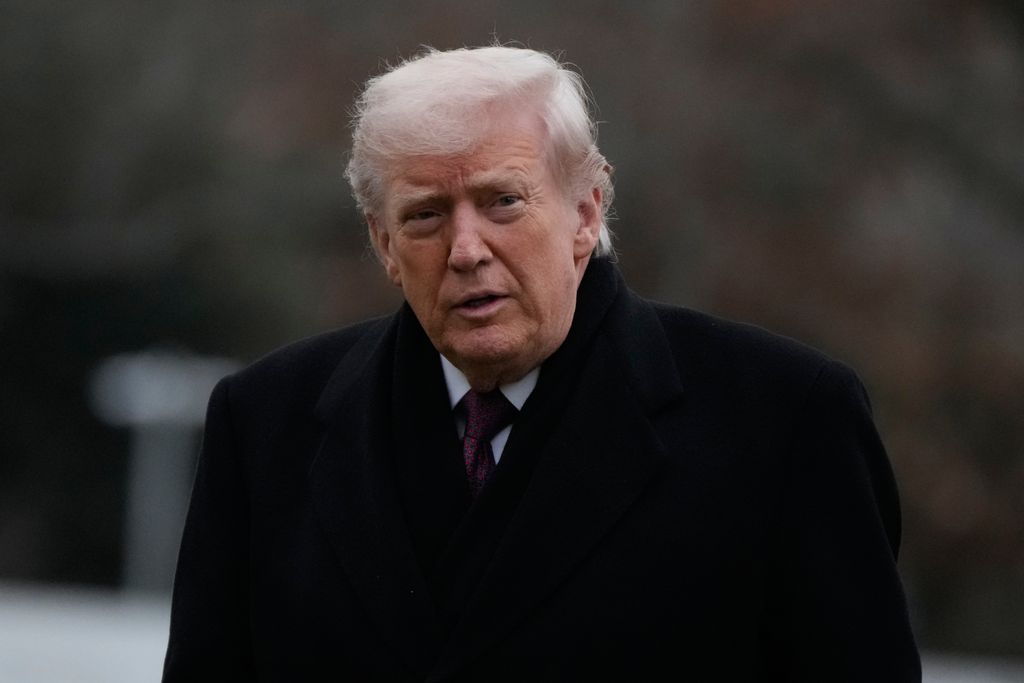

WASHINGTON — House Republicans rejected a pair of Democratic-backed resolutions yesterday that would have put a check on President Donald Trump’s power to use military force against drug cartels and the nation of Venezuela.
Democrats forced the votes using war powers resolutions, as Trump has stepped up his threats against the South American nation and Congress has questioned how the US military is conducting a campaign that has destroyed 25 vessels allegedly carrying drugs and killed at least 95 people.
The legislation would have forced the Trump administration to seek authorisation from Congress before continuing attacks against cartels that it deems to be terrorist organisations in the Western Hemisphere or launching an attack on Venezuela itself.
Rep. Gregory Meeks, the top Democrat on the House Foreign Affairs Committee, argued that Trump’s aggressions in the region were really because “the president is coveting Venezuelan oil.”
They were the first votes in the House on Trump’s military campaign in Central and South America. A majority of Republicans in the Senate had previously voted against similar resolutions, and Trump would almost certainly veto them if they were to pass Congress. But Democrats forced the votes as a way to bring up a debate about the military campaign and force Republicans to go on the record about supporting it.
Republican leaders have increasingly expressed support for Trump’s campaign, even as it potentially escalates into a direct confrontation with Venezuelan President Nicolás Maduro.
Senate Majority Leader John Thune said earlier yesterday that he didn’t know whether the Trump administration had “publicly stated” that they wanted regime change, but “I would certainly not have a problem if that was their position.”
“Maduro is a cancer on that continent,” added Thune.
Still, the Trump administration has not sought congressional authorisation for its recent actions in the Caribbean, arguing instead that it can destroy drug-carrying boats just as it would handle terrorist threats against the US. That rationale, however, has led to deep scrutiny of the strikes, especially after it was revealed that a September 2 operation killed two people who had survived an initial attack.
Secretary of State Marco Rubio, Defence Secretary Pete Hegseth and other top national security officials briefed members of Congress on Tuesday. They defended the campaign as a successful counter-narcotic effort that has cut into the drug supply entering the US, but did not clue in Congress about its ultimate goals when it comes to Venezuela. (AP)
Related News
Unregistered landlords face $250,000 fine, three years’ jail

Minor Tobago boundary changes unlikely to sway THA election, analysts say
CWU secures 11% wage hike for Hilton workers