Home Invasion Bill passes in Lower House; analysts differ on race concerns
 28 November 2025

Senior Reporter
dareece.po[email protected]
As Trinidad and Tobago edges closer to adopting stand-your-ground legislation, debate is intensifying over how the law will be enforced and whether race, policing culture, and access to firearms will shape its impact.
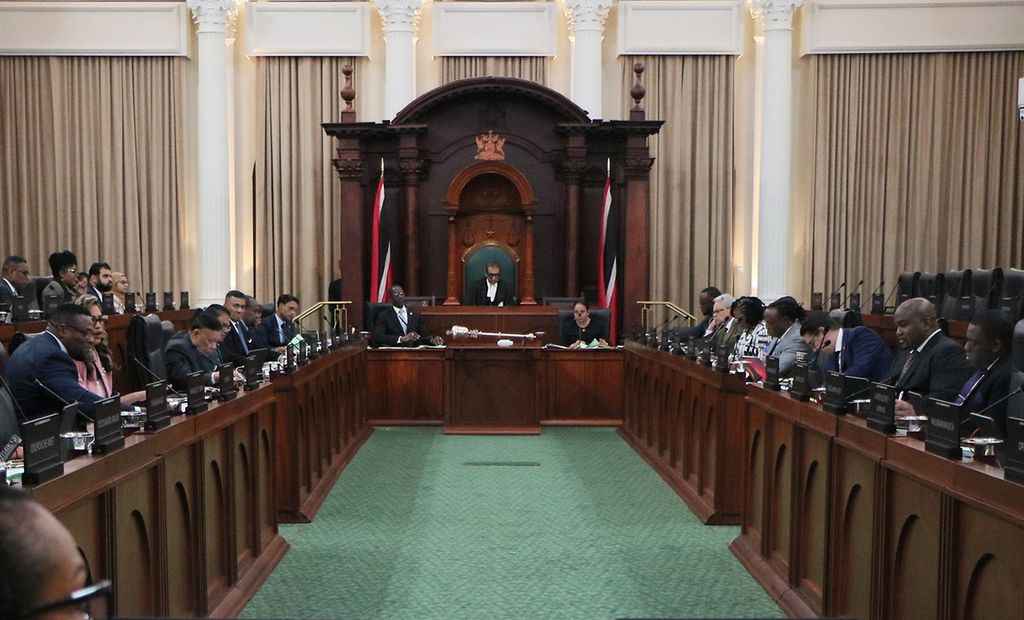
The Home Invasion (Self-Defence and Defence of Property) Bill, 2025, now heads to the Senate, the final hurdle before presidential proclamation. The Government will need at least three Opposition or Independent senators to secure the required three-fifths majority: 19 votes in a chamber comprising 16 government, six opposition, and nine independent members.
Shortly before midnight Wednesday, debate on the legislation concluded and was put to a vote after a division was called by Opposition MP Colm Imbert.
The vote ended with 23 in favour, including the 21 Government MPs in the House and the two elected members of the Tobago People’s Party. The ten Opposition MPs voted against the Bill.
Its passage in the Lower House has already reopened national anxieties not only around violent crime, but also around who will be protected, who could be harmed, and how much force citizens should be legally allowed to use.
The Bill introduces a standalone offence of home invasion and expands the legal rights of occupants to defend themselves and their property, including under a “no duty to retreat” provision. Penalties start at 20 years’ imprisonment and a $500,000 fine, rising to 25 years and $750,000 for aggravated cases linked to gangs or vulnerable victims.
Criminologist Dr Randy Seepersad dismissed claims that the legislation could target any particular racial group, fears amplified by comparisons to controversial US cases.
“That is completely unfounded, and it’s very unfortunate that sometimes politicians do not bother at all to look at the evidence, and they comment in a way that tries to put down, you know, something which actually has the potential for a lot of benefit in the country,” he said.
“When you look at court cases, whether you disaggregate those findings and you look at murders alone, or robberies alone, or other kinds of offences, you see a wide cross-section of people in the prisons, a wide cross-section of persons of different demographics being prosecuted. So I do not at all think that a bill like this is going to result in targeting a particular demographic or a particular ethnicity.”
Political analyst Dr Bishnu Ragoonath said the racial dimension cannot be ignored, but warned against drawing parallels with the United States.
“We can’t get away from the fact that there is a race dimension that we have to take into consideration at all times. And we cannot simply close our eyes to that. But I will not compare what is happening in the US with what is happening in Trinidad.”
Yet concerns stretch beyond race. The Bill’s real-world effectiveness hinges on whether ordinary citizens can lawfully obtain firearms, an area where former police commissioner Gary Griffith said the system is failing.
“For this home invasion bill to be effective and for it to have maximum productivity, we have to get out of this outdated system that has gone on for decades in this country by police commissioners and by the State, based on the laws that make it virtually impossible for a law-abiding citizen to get a firearm.”
Firearms trainer and attorney Nyree Alfonso also supports reform of the firearm licensing process, rejecting the idea that any one racial group dominates applications.
“I do not see any disproportionate number of persons of any particular race applying. People who had no interest in obtaining a firearm 20 years ago have an interest now because of the state of crime in Trinidad. I am six different mixtures in me. I don’t know which one of me would gravitate more towards a firearm if I didn’t have one.”