
Senior Reporter
dareece.po[email protected]
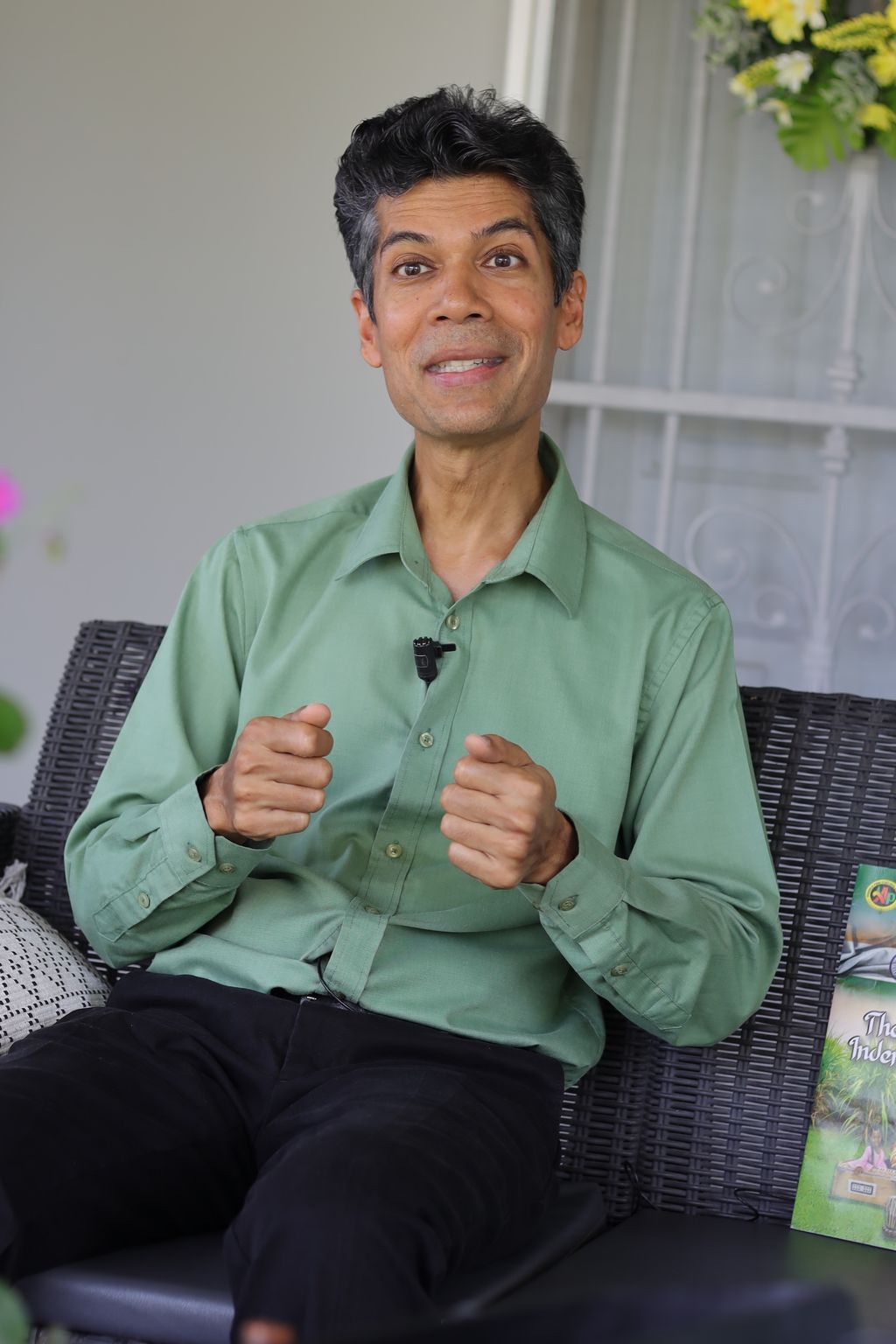
A historian feels Trinidad and Tobago must consider withdrawing from the Commonwealth and imposing economic pressure on countries that refuse to pay reparations for the trans-Atlantic slave trade.
Dr Jerome Teelucksingh’s comment follows British Prime Minister Andy Burnham’s indication that Britain is prepared to apologise for its role in the transatlantic slave trade but will not consider financial reparations.
Burnham’s comment came as King Charles III is scheduled to meet with Caribbean leaders at this week’s Commonwealth Heads of Government Meeting (CHOGM) in Antigua and Barbuda.
Several Caribbean leaders have also indicated that they intend to raise the issue of reparations at the summit.
Teelucksingh told Guardian Media yesterday that Caribbean countries must be prepared to take a stronger position, rather than remaining within institutions where their historical grievances continue to be dismissed.
“What we should consider is withdrawing from the Commonwealth. It’s as extreme as that. Once you withdraw from the Commonwealth, you are sending a message. We cannot stay within the Commonwealth family and be treated in this manner,” he said.
He also called for visa restrictions on British nationals visiting Trinidad and Tobago and a halt to trade with European countries refusing to pay reparations, including Britain and France.
However, Teelucksingh argued that the Caribbean must first address its continued political and economic dependence on former colonial powers before demanding reparatory justice.
“We cannot truly be Caribbean, or we cannot truly be West Indian, if we still are shackled. Some of our Caribbean islands, some of our Caribbean territories, are still shackled to the United States and to Europe. So, we need to break those shackles first, and then put out our hands for reparations. We cannot be still in Massa’s house and begging Massa,” he said.
He argued that reparations should not be limited to financial payments but should also address the lingering effects of colonialism and the region’s relationship with former colonial powers.
However, Caricom Reparations Commission chairman Sir Hilary Beckles has described Burnham’s willingness to engage in discussions as a significant development in the decades-long campaign.
“At least now, there is a prime minister who has said let us talk about it. Let’s have a dialogue of decency about it. He must therefore be commended for taking this historic step,” Beckles said.
He maintained that the absence of reparations from the official agenda of discussions between Caribbean and British leaders at this week’s CHOGM did not diminish the importance of the issue.
“What our governments will be taking into the conference is the will and the desire of the people. The people have spoken and their governments are in full support. So, we have no difficulty with the matter not being officially on the agenda,” Beckles said.
“But importantly, the prime minister of Britain has said ‘I will have that conversation. I will have that conversation.’ And he is responding to what we have been calling for, a dialogue of decency. The end to the disrespect that we have had to experience from British prime ministers over the many, many decades. Mr Burnham is therefore already an historic figure. We welcome him.”
Beckles has also argued that discussions must not begin and end with an apology or exclude financial reparations from consideration.
He pointed to the compensation paid to enslavers following the abolition of slavery in 1833, while formerly enslaved people received no compensation for generations of stolen labour.
Locally, Emancipation Support Committee chair Zakiya Uzoma-Wadada welcomed the possibility of a British apology, saying it could strengthen the region’s case for reparations.
“I do think that by apologising, he is accepting responsibility and therefore that gives us even a lot more currency in order to continue to demand that reparations are due and should be paid,” she said.
However, she said an apology must be accompanied by accountability and called on T&T to demonstrate its own commitment to reparatory justice.
“We cannot be calling for reparations and asking other countries to assist us to do their duty. You understand? And grant us the justice that is deserving. And we have a member of Caricom, Haiti, having to get visas to travel within its own region. You understand?
“So we have to begin to show that we are serious about repairing because reparatory justice is about self-repair and also atonement and compensation by those who have harmed us. But there are things that we can do for ourselves to assist in that repair,” she said.
Uzoma-Wadada also criticised the failure to reinstate T&T’s national reparations committee following its disbandment in 2025.
She said the country was not formally represented at a recent Caricom Reparations Commission conference in Barbados and called for greater involvement in regional discussions, including at the CHOGM.
She argued that reparatory justice must involve both compensation from former colonial powers and efforts by Caribbean countries to address inequalities and divisions that persist within the region.