
Elizabeth Gonzales
Senior Reporter
elizabeth.gonza[email protected]
International hotelier Hilton is preparing to withdraw its brand from the State-owned property after the Government failed to undertake extensive capital upgrades—estimated to be over US$600,000 —required to maintain the facility to international operating standards, according to lease agreements, registered records, procurement documents, union correspondence and industry analysis reviewed by Guardian Media Investigations.
Guardian Media has been reliably informed that the hotel chain has already begun steps to exit the arrangement that has governed operations at the Port-of-Spain landmark for more than two decades.
The development, while not yet finalised, follows a pattern of financial underperformance, delayed capital works, and contractual signals.
Investigations by Guardian Media show that what is emerging is not a sudden decision, but the culmination of structural weaknesses that have been documented for years.
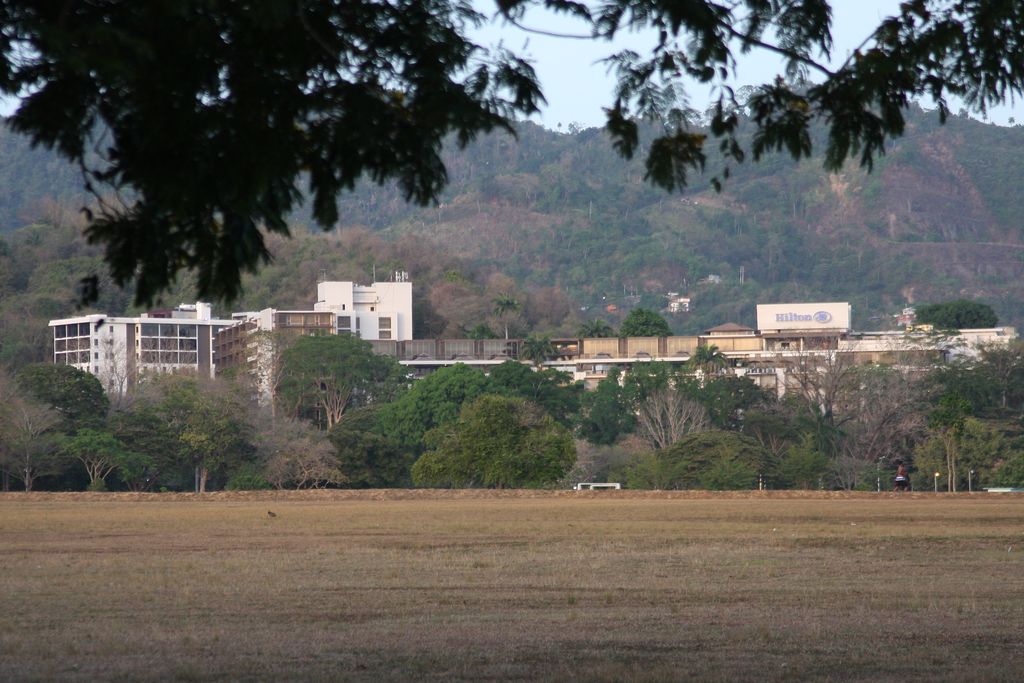
The Hilton Trinidad was constructed between 1961 and 1962 as a flagship development under the government of Dr Eric Williams, opening in the same year the country gained Independence. Built on the former Governor General’s residence site overlooking the Queen’s Park Savannah, the hotel was conceived as both a symbol of national pride and a critical piece of tourism infrastructure.
Architecturally distinctive, with its “upside-down” design and expansive use of timber and glass, the property was regarded as one of the most ambitious public construction projects of its time. It was also expensive—not only to build, but to maintain.
From its inception, the hotel was a State asset.
That ownership has remained, now held through the Estate Management and Business Development Company Limited (eTecK), even as operational control has shifted through various arrangements.
Property analyst Afra Raymond observed that Hilton’s global operating model further explains the development.
The company typically operates hotels without owning them. Property owners finance construction and capital works, while Hilton provides branding, standards and management.
“They don’t put out any capital,” he said.
Under this model, Hilton can enter or exit arrangements based on commercial conditions.
“When you want to go, you go. When you want to stay, you stay.”
If a property fails to meet required standards or becomes commercially unviable, the operator has the flexibility to withdraw.
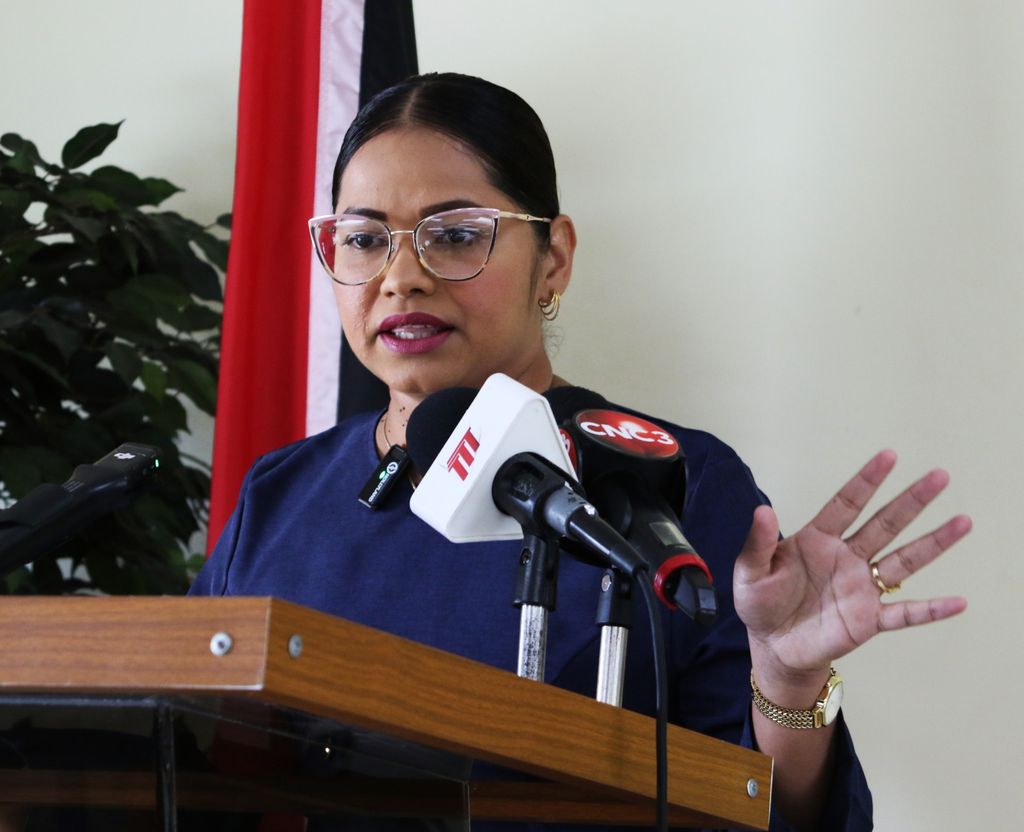
Yesterday, Minister of Trade, Investment and Tourism Kama Maharaj told Guardian Media: “There are ongoing discussions with Hilton, and it would be inappropriate for me to comment at this time.”
The present agreement governing the hotel is rooted in a Lease Operatorship Agreement dated October 1, 2003, between eTecK and Hilton International Trinidad Limited.
That agreement granted Hilton a 20-year lease to operate the property, but it did not transfer ownership. The State retained the asset and, critically, responsibility for capital expenditure and major structural works.
The agreement established a profit-based commercial model. Instead of paying a fixed rent, Hilton’s payments to the State were tied to performance, calculated as six per cent of gross operating profit (GOP).
This meant that if the hotel underperformed, returns to the State would decline correspondingly.
The agreement also embedded operational standards. The hotel was required to meet Hilton’s global brand requirements, which include specific standards for rooms, infrastructure, mechanical systems, and guest facilities. Maintaining those standards, however, depended on capital investment—an obligation that remained with the State.
The structure created a conditional relationship: Hilton would operate the hotel, but only so long as the asset remained commercially viable and physically capable of meeting international standards.
The 2003 agreement expired in 2023, marking the end of the 20-year lease period.
A Deed of Variation—obtained by Guardian Media— dated May 24, 2023 and registered on August 4, 2023, under the Registration of Deeds Act, shows the agreement was not renewed on a long-term basis but instead extended to September 30, 2024, with provision for a further short-term continuation.
This limited extension is central to understanding what followed.
Raymond said such a move is highly unusual in the hotel industry.
In an interview, Raymond said that long-term hotel operations typically require multi-year certainty, particularly for international brands managing large properties.
“Why in heaven’s name would you want to renew for one year… if the terms and conditions were satisfactory?” he said.
He noted that a one-year renewal suggests the parties were either unable to agree to longer terms or were preparing to exit the arrangement altogether.
“You don’t negotiate for one year. One year tells you you’re wrapping up.”
Raymond’s analysis of the Hilton Trinidad points to persistent financial underperformance.
Using figures derived from the lease arrangement and publicly available data, he estimated returns in the range of 0.24 per cent to 0.76 per cent on an asset valued in excess of TT$600 million.
Such returns, he argued, are significantly below what would be expected from a commercial hospitality asset of that scale.
“Trinidad Hilton has been on its knees,” he said.
The profit-based lease structure amplified the impact of this underperformance. Because payments to the State were tied to gross operating profit, low profitability translated directly into reduced returns.
At the same time, the cost of maintaining the property—particularly given its age and design—remained high.
Raymond traced part of the hotel’s decline to structural changes in the Port-of-Spain hotel market following the opening of the Hyatt Regency in 2008, a State-backed development.
He said the introduction of the Hyatt, combined with the concentration of government events and official functions at that property, significantly altered demand patterns.
“Hilton comes like an orphan,” he said.
According to Raymond, industry feedback indicated that some hotels experienced revenue declines of approximately 40 per cent following Hyatt’s entry into the market.
The impact was not limited to Hilton. Other properties struggled to maintain occupancy and profitability:
· Sections of the Cascadia Hotel were converted from guest rooms to office space
· The Marriott was sold by its developer to a corporate entity
· Other hotels reduced operations or repositioned their business models
The result, he said, was a market in which demand was concentrated in newer, State-supported facilities, leaving older properties at a disadvantage.
Against this backdrop, the need for capital upgrades at the Hilton Trinidad became increasingly apparent.
A Request for Proposals (RFP) issued by the Urban Development Corporation of Trinidad and Tobago (Udecott) in August 2023 formally sought contractors to undertake a comprehensive refurbishment of the property.
The RFP, named “Hilton Trinidad and Conference Centre Refurbishment Project,” outlined a wide-ranging scope of works, including structural repairs and civil infrastructure upgrades.
Technical specifications detailed the extent of intervention required. These included:
· Rehabilitation of reinforced concrete elements and structural components
· Replacement and strengthening of reinforcing steel
· Repairs to foundations and substructures
· Drainage works, including culverts, channels and water management systems
· Roadworks and pavement reconstruction using bituminous materials
· Traffic management works, including markings and surface treatments
The specifications referenced multiple engineering standards, including AASHTO testing methods for soils, aggregates, concrete and bituminous materials, indicating a project of significant technical complexity.
The scale and nature of the works point to a facility requiring major structural and infrastructural rehabilitation rather than routine maintenance.
Sources familiar with the project said the total cost of required upgrades to meet Hilton’s standards was estimated at approximately US$600,000.
However, Guardian Media was told no money was budgeted for the upgrades in this fiscal year.
Despite the formal identification of these works, the refurbishment has not been executed.
In a letter dated March 16, 2026, the Communication Workers’ Union (CWU) warned of “prolonged delay in the commencement and execution of the proposed refurbishment”.
The union stated that discussions about renovation had been ongoing for more than three years, but no substantive work had begun.
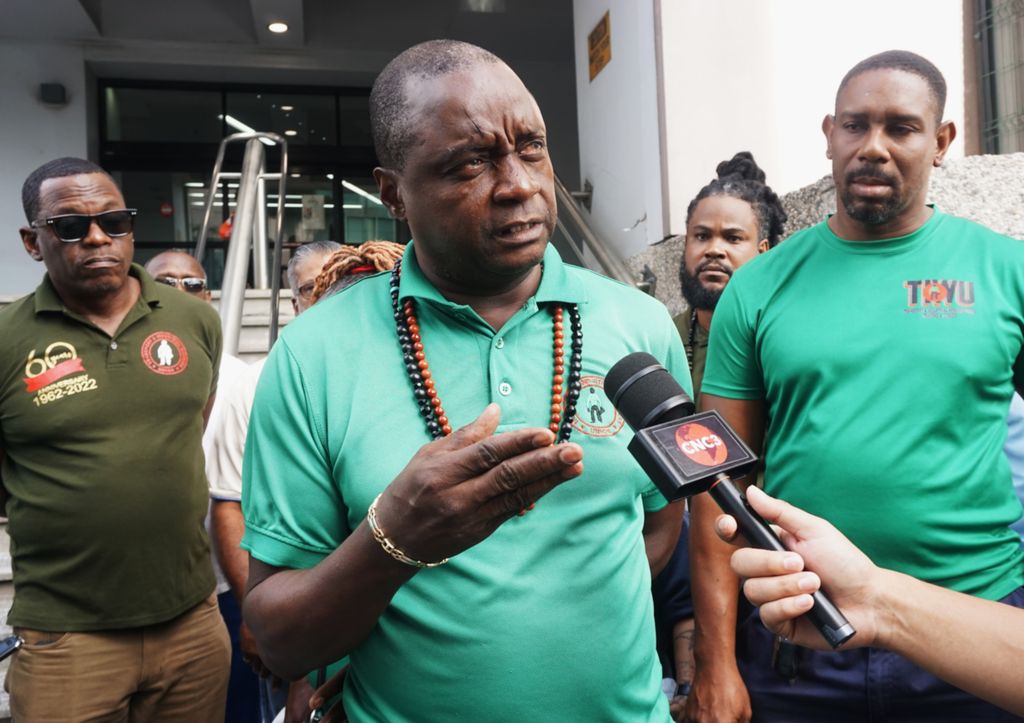
In follow-up comments provided to Guardian Media, the CWU Secretary General, Joanne Ogeer, described the operational consequences of those delays.
According to the union, the hotel is currently operating at low occupancy levels, affecting both revenue and staffing. Some employees are receiving as little as one day of work per week, reflecting reduced demand and constrained operations.
“CWU is concerned about the lengthy delay in conveying information about the renovation of the hotel…The hotel is also operating at low occupancy levels, and this is adversely affecting staff and, by extension, management. While the union understands that management’s hands may be tied, it is also instructive to note that talks about renovation have been in the pipeline.
“The Union is hopeful that a total closure is not on the heels of this delay,” the letter said.
“The delay further exacerbates the rostering of employees,” she said, adding that uncertainty surrounding the hotel’s future is increasing.
The matter has been escalated to the Government. A letter was sent to the line minister, and an acknowledgement was issued by the Office of the Prime Minister on March 17, 2026.
The emerging situation contrasts with recent developments involving workers at the hotel.
Last December, the CWU secured an 11 per cent wage increase for Hilton employees, covering two periods: June 1, 2019, to May 31, 2022, and June 1, 2022, to May 31, 2025.
That agreement suggested operational continuity at a time when multiple indicators pointed in the opposite direction:
· The lease had been reduced to a short-term extension
· Occupancy levels were declining
· Workers were already experiencing reduced hours.
Raymond said the focus must now shift to the future of the property.
“We have put so much money into it… the question really would be what are we going to do with that property,” he said.
Government and official records show that refurbishment works at the Hilton Trinidad and Conference Centre were done in phases over the past two decades, starting with a major upgrade in 2005, according to eTecK archives.
Works continued between 2007 and 2010. A December 5, 2017, release from eTecK announced a separate $8.5 million upgrade to the pool and pool deck, which was later confirmed in Parliament in March 2018.
Parliamentary oversight records from a 2016 Public Accounts Enterprises Committee also show that earlier Hilton renovation projects saw costs increase from $484 million to $634 million. The report noted a contractor was terminated due to performance issues, contributing to delays and cost overruns.
Hilton’s internal brand standards make clear that the obligation to maintain and upgrade a property rests with the owner, not the operator.
A confidential 2018 Hilton design and renovation manual states owners must “strictly adhere” to all system requirements and maintain the property at a level “equal to or greater than” brand standards. It warns that any breach “shall constitute default of Owner’s Agreement,” allowing the brand to act to protect its system.
The standards apply to existing hotels during renovation and renewal of agreements, and explicitly state that “reduction of scope below these standards will not be permitted”.