

News Americas, GEORGETOWN, Guyana, Tues. April 28, 2026: Guyana’s President, Irfaan Ali, has expressed “grave concern” over what he described as a provocative display by Venezuela during recent engagements with Caribbean leaders, as tensions continue over the long-running Essequibo territorial dispute.
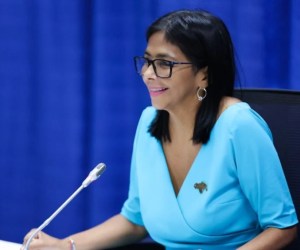
In a letter to Caribbean Community (CARICOM) Chairman Terrance Drew, Ali criticized the public display of a brooch worn by Acting President of Venezuela, Delcy Rodríguez, that depicted a map of Venezuela, including Guyana’s Essequibo region. The Guyanese president said that while Georgetown respects the right of CARICOM member states to engage with Venezuela, it was “deeply regrettable” that such meetings were accompanied by symbols asserting a territorial claim against Guyana.
Rodríguez recently met with Grenada’s Prime Minister Dickon Mitchell and Barbados Prime Minister Mia Mottley during visits aimed at strengthening Venezuela’s ties with the Caribbean.
Ali warned that the use of regional platforms to promote claims currently before the International Court of Justice could be interpreted as tolerance or acquiescence. “This is not a matter of symbolism alone,” Ali said, describing the display as a “calculated and provocative assertion” of Venezuela’s claim to the resource-rich Essequibo region.
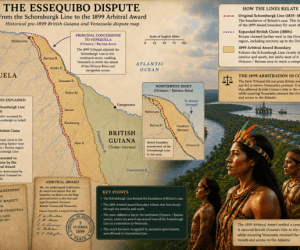
The dispute between the two South American nations dates back more than a century and is currently before the ICJ, which is set to begin oral hearings in early May. Guyana is seeking affirmation of the 1899 Arbitral Award that established the boundary between the two countries.
The court has already ruled that it has jurisdiction over the matter, paving the way for a full hearing on the merits. Ali reiterated that Guyana remains committed to a peaceful resolution under international law but expects all parties to respect the judicial process and refrain from actions that could escalate tensions.
“Guyana expects all states… to act consistently with the principles of the United Nations Charter, refrain from provocation, and respect the ongoing judicial process,” he said.
Rodríguez arrived in Barbados late Sunday, marking her second official visit to a Caribbean island in recent weeks after visiting Grenada on April 9.
Mottley and Rodríguez met in the capital of Bridgetown for bilateral talks that centered on topics including energy sector cooperation, according to the two leaders who held a joint press conference but did not take questions. Venezuela invited Barbados to invest in oil and gas exploration, Rodríguez said, adding via a translator: “To join strengths, to increase the production of hydrocarbons in Venezuela.”
The partnership also would help Venezuela provide energy security for the people of Barbados, Rodríguez asserted. She has been acting as Venezuela’s president after the U.S. military captured and removed former President Nicolás Maduro in early January.
CARICOM for its part has drawn a clear line against any use of its platforms to advance or legitimize Venezuela’s claim to Guyana’s Essequibo region, stressing that the controversy remains before the International Court of Justice (ICJ)
In a statement issued on Tuesday, the regional bloc said it had taken note of recent official engagements within the Community where material asserting Venezuela’s claim to Essequibo was publicly displayed, as well as President Dr Mohamed Irfaan Ali’s April 28 letter expressing Guyana’s grave concern.
“In this regard, CARICOM underscores that Community platforms and engagements should not be used, whether directly or indirectly, to advance or appear to legitimise claims that are the subject of ongoing judicial proceedings before the International Court of Justice,” the statement said.
While reaffirming that each Member State retains the sovereign right to conduct bilateral relations with external partners, CARICOM stressed that such engagements must remain consistent with the shared obligations and collective commitments of the Community.
It pointed to the Revised Treaty of Chaguaramas, the binding legal instrument governing CARICOM, which commits member states to preserving the Community’s integrity and cohesion in their external relations.
Member states, CARICOM added, must remain mindful of their collective responsibilities to uphold international law, respect judicial processes and maintain good neighbourly relations.
Related News
King Charles III Makes History With Sovereign Visit To Bermuda
Guyana-Venezuela Border Battle: The Battle For Global Narrative

Jeffrey Epstein Caribbean Island Back In The Spotlight – And A Trump Cabinet Member Is A...