Guatemalan judge clears deputy minister, three leaders of terrorism charges
 12 September 2026
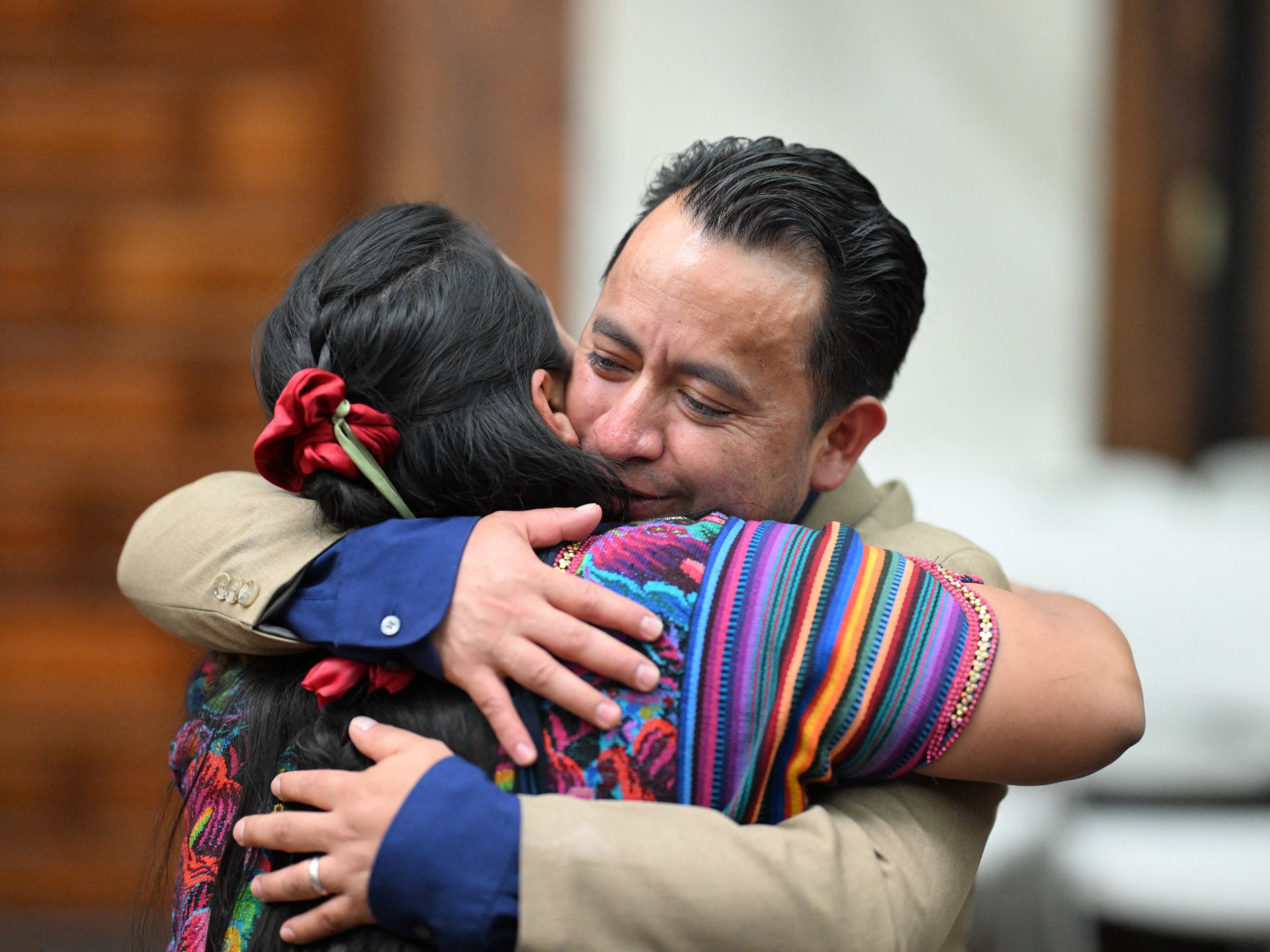

A Guatemalan court has cleared a deputy minister and three other Indigenous leaders of terrorism charges, brought over their role in leading protests against a prosecutor accused of trying to block President Bernardo Arevalo from taking office.
The Third Criminal Court judge, Mynor Moto, dismissed the case on Friday at the request of prosecutors, who concluded after their own investigation that the four had not broken any laws by organising the protests in October 2023.
- list 1 of 2Trump plans largest mass visa cancellation in history: Who will it affect?
- list 2 of 2US deports nearly 2,300 Mexicans to Guatemala over Mexico’s objections
end of list
The decision adds to the collapse of a prosecution built under former Attorney General Consuelo Porras, who was sanctioned by the United States, the European Union, Canada and other governments over corruption allegations, the persecution of human rights advocates, and efforts to undermine Arevalo’s 2023 election win.
She lost her bid for a third term as attorney general in April, after a judicial commission left her off its shortlist of candidates.
The minister, Luis Pacheco, is deputy minister of sustainable development at Guatemala’s Ministry of Energy and Mines and previously led the 48 Cantones of Totonicapan, a Maya Indigenous authority in the western highlands known for organising protests.
He was prosecuted alongside Hector Chaclan, the group’s former treasurer, Basilio Puac, its former vice president, and Esteban Toc, a former deputy mayor of the Indigenous municipality of Solola, a separate traditional authority that operates alongside the town’s official council.
Prosecutors had accused the four of illicit association, terrorism and obstructing justice, with Puac and Toc also facing sedition charges, over protests demanding Porras resign after she was accused of trying to block Arevalo’s inauguration.
Advertisement
Pacheco had been suspended from his post during the case, and the ministry said it welcomed the ruling and expected him back at work shortly.
The United Nations human rights office said the ruling “reaffirms the freedoms of expression and assembly” and recognises legitimate forms of Indigenous organising, adding that it has documented a wider pattern of criminalising Indigenous leaders in Guatemala.
Arevalo, who took office in 2024 after months of legal challenges from Porras’s office, has made unwinding those prosecutions a priority, appointing a new attorney general who pledged to review cases seen as arbitrarily brought under his predecessor.
Related News

Can the Houthis close the Red Sea after seizing the Yemen coast?

Iran war live: IRGC attacks US unmanned vessel in Hormuz; two ships hit
Saudi Arabia allies line up support as Houthi attacks mount