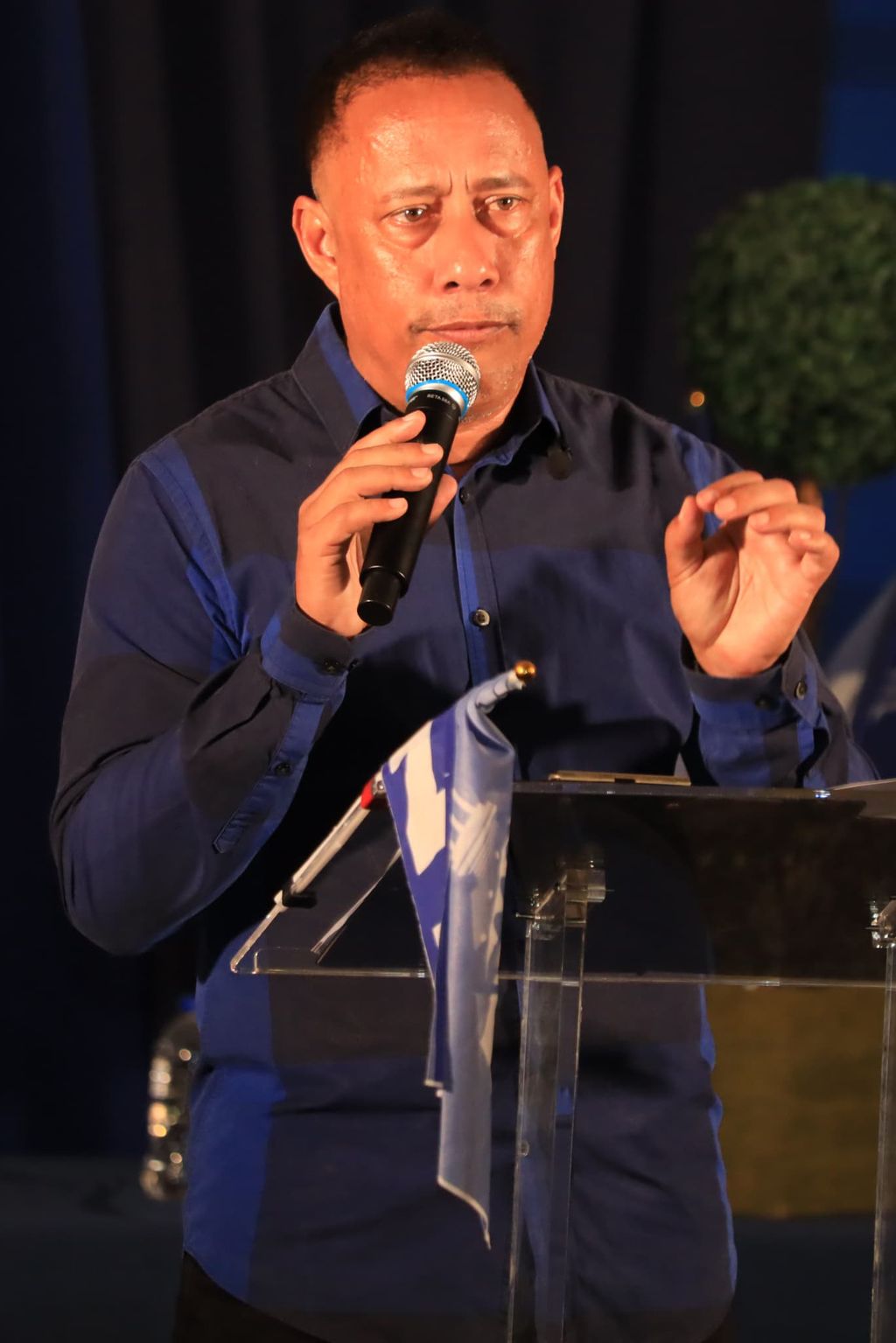

JESSE RAMDEO
Senior Reporter
Former police commissioner Gary Griffith has urged lawmakers not to abandon the proposed Zones of Special Operations (ZOSOs), warning that the decision risks giving criminals “the upper hand” and undermining public safety.
He addressed the country, including Opposition and Independent Senators, in a media release in which he described the rejection of ZOSO as “a grave and deeply consequential error in judgement”.
Griffith said he was not speaking as a politician or advancing any party agenda, but drawing on “decades of experience, training, and service in law enforcement and national security at the highest levels”.
He pointed to the country’s experience under a nationwide State of Emergency over the past fourteen months, implemented under both PNM and UNC administrations, which granted authorities powers broader than those proposed under ZOSO.
“That State of Emergency applied nationally, not selectively, and yet throughout that entire period there were no substantiated reports of systemic police abuse, no wave of extrajudicial killings, no political victimisation, and no widespread misuse of authority attributed to the SOE itself,” Griffith said.
He questioned the rejection of a more limited and targeted mechanism, asking:
“If a nationwide SOE did not produce the abuses now being suggested, how can a diminished version, confined to specific high-risk areas, suddenly be deemed unacceptable?”
Griffith acknowledged concerns raised about a recent police shooting and comments made by the Commissioner of Police, describing them as legitimate but addressable. He said safeguards such as mandatory body-worn cameras for officers operating within ZOSO areas and the compulsory use of less-lethal options including tasers and pepper spray could have reduced or eliminated fears of abuse.
“Instead of strengthening oversight and refining implementation, the decision was taken to abandon the measure altogether,” he said.
He argued that sustainable crime reduction depended on policy implementation rather than political posturing, recalling that past reductions in violent crime followed the introduction of new strategies, specialised units, improved equipment, technology, and systems, without reliance on prolonged States of Emergency that allowed indefinite detention.
Griffith said there had been a “noticeable absence of new policies, units, technologies, or operational innovations” from the current police leadership over the past year. In that context, he described ZOSO as “a critical frontline tool to peg back criminal activity”, warning that without such measures the country risked a return to escalating violence and murder figures exceeding 600 annually.
The comments follow the failure of the Law Reform (Zones of Special Operations) Special Security and Community Development 2026 Bill in the Senate last night. The legislation required a three-fifths majority for passage but did not receive support from a single Independent Senator.
After four sittings of the Upper House, the 15 Government Senators voted in favour, while 14 Senators voted against, including eight of the nine Independent Senators and six Opposition Senators. Independent Senator Courtney Mc Nish abstained.
The Government required the support of at least four Independent Senators for the Bill to pass.
Griffith said the operational elements of ZOSO could have been adjusted but warned that abandoning the initiative had clear consequences.
“The balance has once again been tipped in favour of criminal elements,” he said, adding that the decision sent “the wrong signal to criminals, to law-abiding citizens, and to the frontline officers tasked with protecting our communities.”
He added: “This outcome is not a victory for civil liberties, nor is it a triumph of principle. It is a setback for public safety.”