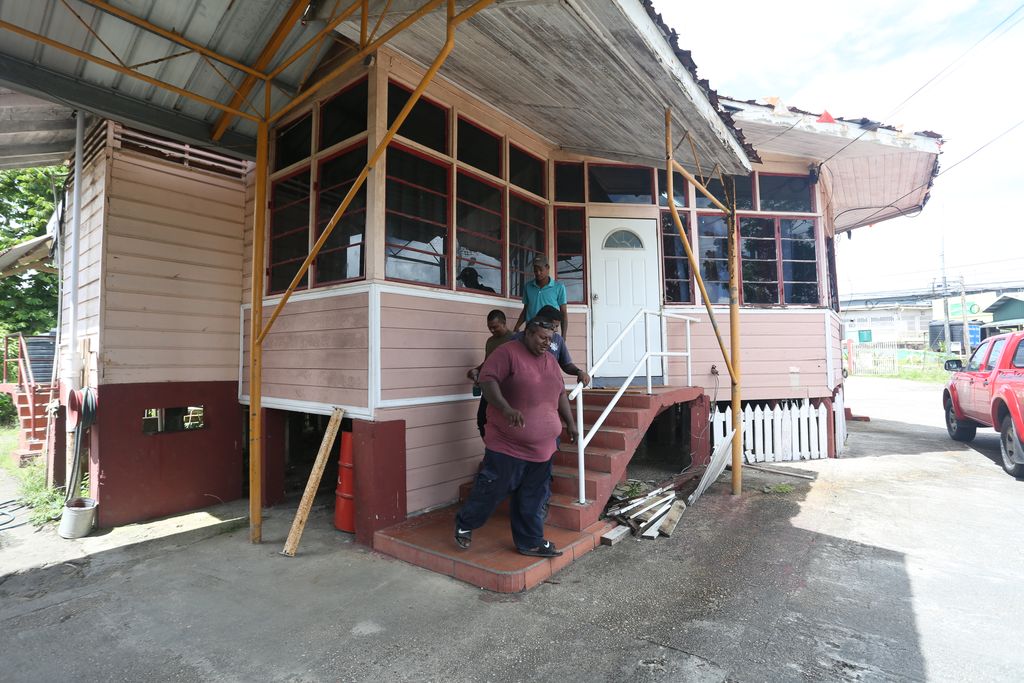

Former Police Commissioner Gary Griffith has defended the Government’s decision to establish a Special Operations Zone in Maloney, arguing that restrictions on movement can be justified when necessary to protect lives and combat violent crime.
In a statement issued this morning, Griffith accused critics of the operation of political hypocrisy, pointing to movement restrictions imposed under the previous People’s National Movement (PNM) administration during the COVID-19 pandemic.
Griffith said that, while serving as Commissioner of Police, he personally authorised approximately 25,000 permits for essential personnel to move during the public health restrictions.
These included members of the protective services, healthcare workers, transport operators, energy sector employees, utility workers and bakery employees.
He argued that the principle behind those restrictions was no different from the objective of the current operation in Maloney.
“Then, the threat was a virus. Now, the threat is violent crime. In both circumstances, the objective is to save lives,” Griffith said.
However, he acknowledged that constitutional rights must be protected and said authorities must establish clear arrangements to ensure residents, workers, students and other legitimate persons can move without unnecessary hardship.
Griffith also defended the use of intelligence rather than murder statistics to determine where Special Operations Zones should be established.
He said an area with fewer recent murders could present a greater immediate threat if intelligence suggested serious criminal activity was being planned.
“Policing is not a numbers game. It is an intelligence-driven operation,” he said.
Griffith argued that the legislation allows police to respond quickly to intelligence about illegal firearms, drugs and planned criminal activity, without delays that could allow suspects to move weapons, drugs or themselves before officers arrive.
However, he cautioned that the powers must not be used to justify arbitrary searches, indiscriminate stop-and-frisk exercises or abuses of authority.
He said operations must be conducted professionally, lawfully and based on credible intelligence.
Griffith also criticised what he described as the failure of the National Operations Centre (NOC), which he said was established at a cost of approximately US$80 million to facilitate the conversion of intelligence into coordinated operations.
He claimed that its capabilities had effectively been reduced to a 999 dispatch function, which he said was already being performed by the police.
Griffith said a properly functioning NOC should allow intelligence to be received, assessed and translated into immediate operational action.
He maintained that Special Operations Zones should be temporary, targeted and intelligence-led, with appropriate safeguards for law-abiding citizens.
“Ultimately, this is not about supporting the government or the opposition. It is about protecting innocent citizens, preventing murders and ensuring that law enforcement has the tools to confront serious criminal threats,” he said.
Griffith said the public deserved informed debate on national security rather than what he described as political opportunism.
Related News
Sobers assures T&T not leaving Commonwealth

Democrats win the US House and Senate as voters deliver a strong rebuke to Trump and Repub...

Six of 11 Central Bank governors failed to serve five-year terms