Dareece Polo
Senior Reporter
dareece.po[email protected]
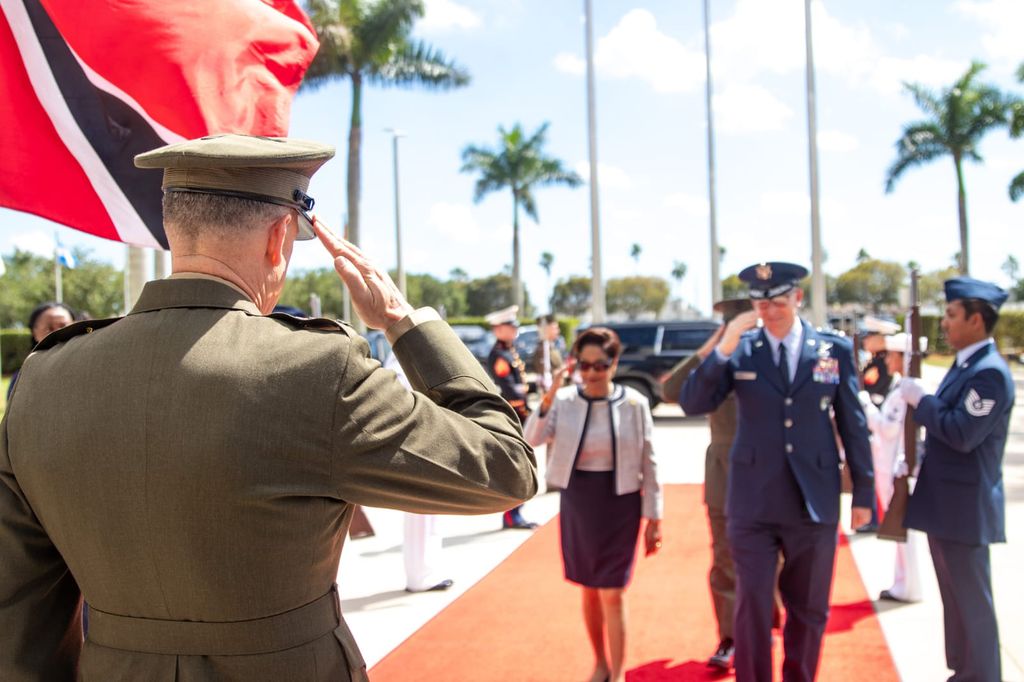
The Government has not disclosed the specific outcomes of Prime Minister Kamla Persad-Bissessar’s meeting with officials from the United States Southern Command earlier this week.
However, the Defence Minister, in praising the Prime Minister for her efforts to boost this country’s national security apparatus, blamed the previous government’s close ties to Venezuela for the degradation of the country’s security capacity.
Guardian Media was previously told that the recent discussions had activated the second phase of the administration’s crime suppression strategy, shifting focus to tackling criminal activity on the ground. The Prime Minister stated that several projects had been identified for implementation, but no further details were provided.
Yesterday, questions were sent to the Prime Minister and Defence Minister Wayne Sturge, who recently appeared at a counter-cartel conference hosted by the US command. Guardian Media asked what concrete steps would follow the talks, including the rules of engagement for Trinidad and Tobago troops operating alongside US assets and whether local personnel could be authorised to use lethal force under US command. The Doral Charter, signed at the Shield of the Americas Summit, explicitly commits signatories to using “lethal military force” against narco-traffickers.
Further questions were raised about what equipment or hardware could be provided to support the country’s crime fight, after Sturge indicated interest in accessing greater US military assets. The Prime Minister and her Defence Minister were also asked whether any such support would be used to intervene in domestic gang violence during the ongoing State of Emergency in T&T, or remain limited to border and maritime security.
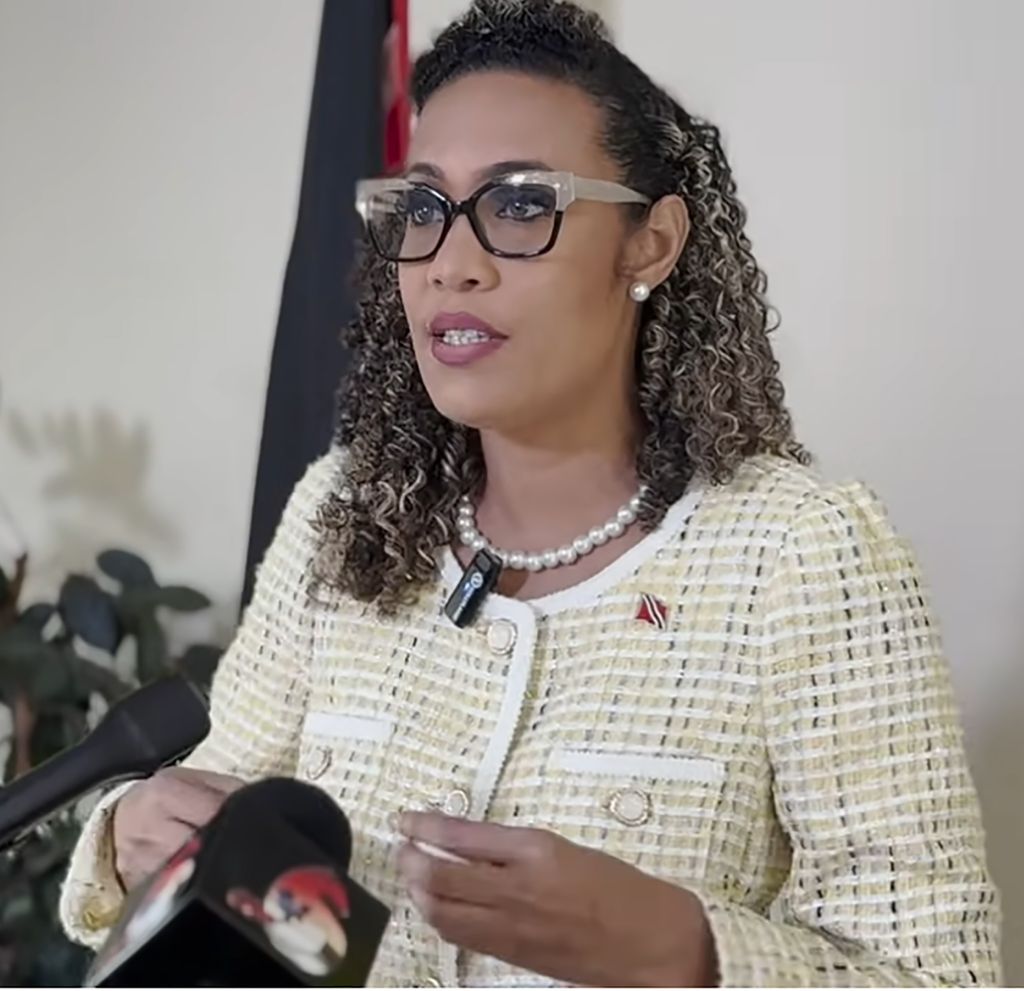
Neither the Prime Minister nor the Defence Minister responded directly. However, Sturge issued a statement praising Persad-Bissessar’s leadership in restoring what he described as the country’s place in hemispheric security discussions.
He also pushed back against critics questioning the country’s sovereignty for signing the charter, saying “a prerequisite for any credible claim to sovereignty is the ability to define and secure one’s border.”
Sturge argued that the country’s border security capacity began declining around 2017, during the strengthening of ties between the previous administration and Nicolás Maduro’s government in Venezuela, which he said coincided with increased migration pressures and the degradation of naval and surveillance assets.
“It therefore cannot be gainsaid, that the sudden and steady decline in our country’s ability to secure its borders started circa 2017, around the same time of the strengthening of the relationship between the last regime and the Maduro led regime, which later culminated in mass migration from Venezuela from 2019 onwards, a period which accelerated and exacerbated severe economic pressure on our country’s economy and intensified the pressure on our national security apparatus,” he said.
“Perhaps by coincidence or possibly by design, this period also witnessed a degradation of our naval and other assets necessary to surveil, secure and defend our borders,” he added.
He further stated that since June last year, the Prime Minister has been engaged in discussions with US counterparts aimed at strengthening bilateral cooperation on security and energy. According to Sturge, the meeting with US Southern Command focused on ensuring continued access to surveillance, enhanced intelligence sharing and the acquisition of “state-of-the-art equipment” to bolster border and national security.
“In her meeting with US SouthCom the Honourable Prime Minister engaged in planning discussions with a view to deepening our partnership with the Government of the United States, ensuring Trinidad and Tobago’s continued access to surveillance, enhanced intelligence sharing and henceforth, the acquisition of state-of-the-art equipment not previously available to us in our fight against those who seek to undermine our border security and national security.”
He said the initiatives place the country in a stronger position to undertake what he described as a national security reset.