
Jesse Ramdeo
Senior Reporter
The Government is seeking to reassure the public that environmental, technical and regulatory concerns surrounding its proposed artificial intelligence data centre projects will be thoroughly examined before any construction begins.
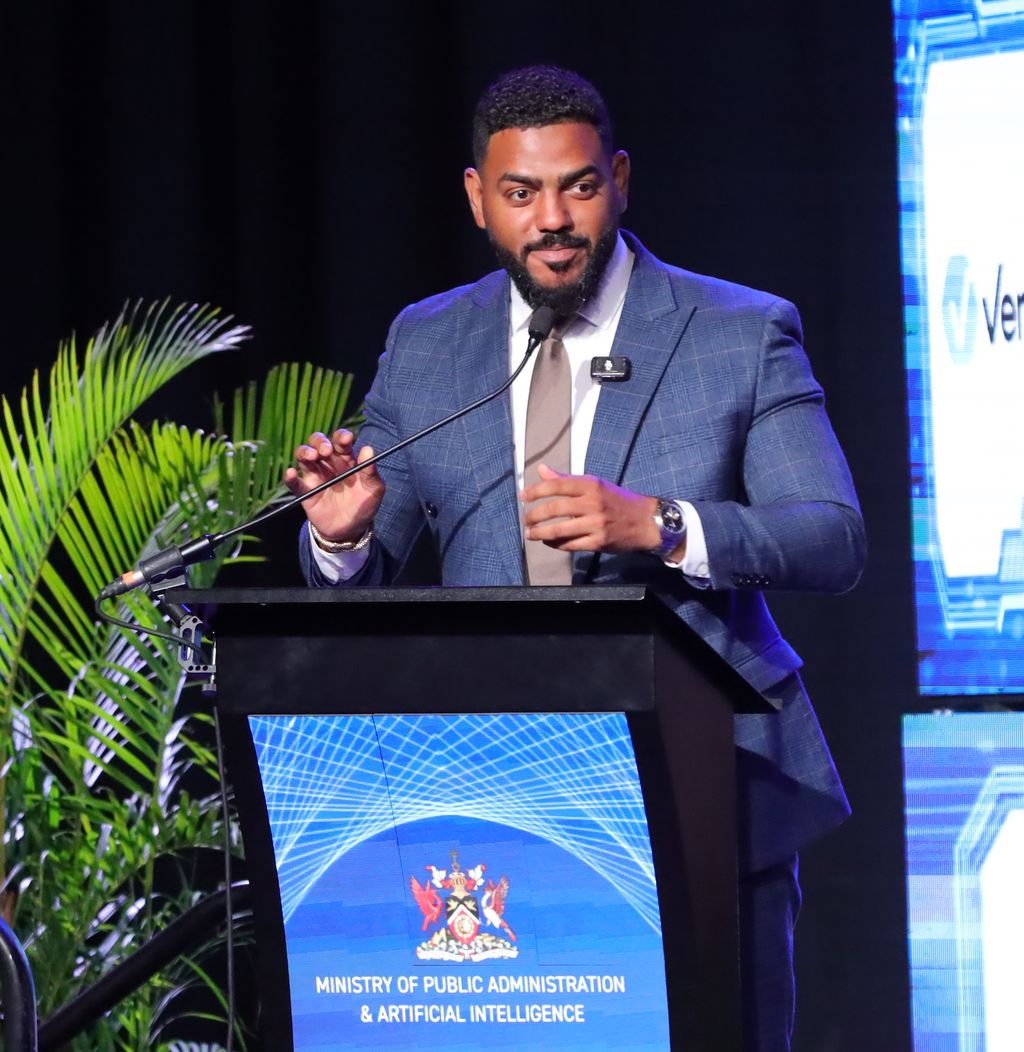
Responding to questions from Guardian Media on Sunday, Minister of Public Administration and Artificial Intelligence Dominic Smith stressed that the agreements signed with United States companies are memoranda of understanding (MOUs) and not approvals for development.
"It is important to remember that these are memoranda of understanding establishing a framework for collaboration and due diligence, not final project approvals," Smith said.
"Any project that advances will undergo the necessary technical, environmental and regulatory assessments. This first fact is crucial."
His comments follow Friday's announcement that Government signed three MOUs with American organisations, including two focused on developing artificial intelligence infrastructure and large-scale data centres in Trinidad and Tobago.
Under one agreement, Ernst & Young LLP intends to partner with third parties to develop a 300-megawatt data centre, while Hummingbird AI Holdings LLC has proposed a 150-megawatt AI infrastructure and data centre, with the potential to expand to 500 megawatts. Initial commercial operations are targeted for the first quarter of 2028, subject to the projects advancing beyond the due diligence stage.
Government has said the initiatives could attract billions of US dollars in investment and create thousands of skilled and semi-skilled jobs.
Studies conducted on communities across the US where data centres have been established have found concerns regarding their impact on local utility bills, water scarcity and environmental noise.
Facilities require massive amounts of electricity to run servers and water for cooling. This massive demand can strain the local power grid and increase competition for resources, potentially raising energy and water costs for nearby residents.
Additionally, continuous industrial cooling fans often produce a persistent, loud hum that degrades neighbourhood quality of life.
While acknowledging public concerns, Smith argued that the broader significance lies in Trinidad and Tobago's growing appeal as a destination for digital investment.
"The real story is the opportunity," he said.
Smith said the interest from global companies reflects Government's efforts to position Trinidad and Tobago as a regional leader in artificial intelligence and digital public infrastructure.
Environmental expert urges evidence-based approach
Deputy Dean of the Faculty of Food and Agriculture at The University of the West Indies, St Augustine, Dr Ronald Roopnarine, cautioned that many of the public concerns remain hypothetical because the projects are still in their infancy.
He noted that an MOU simply establishes a framework for discussions and does not represent a legally binding commitment to construct the facilities.
Speaking with Guardian Media on Sunday, Roopnarine said the concept is technically feasible but stressed that detailed feasibility studies and environmental assessments are essential before any conclusions can be drawn about the project's impact.
While acknowledging that data centres are energy-intensive and require significant cooling, he suggested there are practical ways to reduce environmental impacts.
Rather than relying exclusively on potable water, he said treated wastewater from existing treatment plants could potentially be repurposed for cooling operations, limiting pressure on the country's drinking water supply.
Roopnarine maintained that Trinidad and Tobago's primary water challenge is management rather than availability.
"On paper, Trinidad is not a water-scarce country," he explained. "Our principal challenge is really water management."
He identified electricity demand as the more significant concern but said Trinidad and Tobago's existing industrial infrastructure could provide an advantage if the necessary feasibility studies demonstrate the projects are viable.
Beyond the environmental considerations, Roopnarine said the development could support long-discussed efforts to diversify the country's economy beyond traditional oil and gas industries.
Consultant calls for cautious optimism
Data protection and AI governance consultant and Chief Executive Officer of Privicy Advisory Services, Rishi Maharaj, also urged cautious optimism.
In an interview with Guardian Media on Sunday, he noted that Trinidad and Tobago already operates several data centres, including facilities managed by Fujitsu, TSTT and Digicel, raising questions about how existing infrastructure is currently being utilised.
"I understand we need to go in this direction," Maharaj said, "but we also need to understand whether our existing data centres are being properly utilised before developing additional facilities."
He described a 300-megawatt facility as a substantial development requiring extensive land, significant electricity generation and considerable cooling capacity.
"You're looking at a lot of acres of land to build that kind of data centre to pull that kind of wattage. So you're looking at a pretty large data centre that is going to take up a lot of land space, exactly what land space we're going to be using, obviously, there are question marks around that."
Maharaj believes such facilities could position Trinidad and Tobago as a regional technology hub by strengthening data sovereignty, allowing Caribbean countries to store sensitive information closer to home rather than relying exclusively on overseas cloud providers.
He said the projects could also create opportunities to export digital services and generate foreign exchange.
However, Maharaj warned that those opportunities must be accompanied by robust safeguards.
He called for comprehensive environmental consultations, public engagement and legislative reforms covering data protection, cybersecurity, artificial intelligence governance and AI ethics before any project proceeds.
"The benefits are there," he said, "but we must also put the safeguards in place so people can trust that their information will be protected."
Environmentalist Kublalsingh questions economic viability
Environmentalist Dr Wayne Kublalsingh was far less convinced about the proposal, arguing that the economic case for the developments remains weak.
Speaking with Guardian Media yesterday, he questioned whether Trinidad and Tobago possesses sufficient natural gas resources to sustain another highly energy-intensive industry while existing manufacturers continue to face energy shortages.
"I think it's a bad decision in terms of economic correctness," Kublalsingh said.
"I don't think we have the gas for it."
He argued Government should instead focus on developing indigenous renewable energy industries, including battery manufacturing and solar technology, rather than subsidising foreign-owned data centres with inexpensive energy and water.
Kublalsingh also questioned the financial arrangements that would underpin any agreement, saying he would want to know the prices at which gas and water would be supplied before determining whether the projects represent value for taxpayers.
What is a Data Centre?
A data centre is a centralised physical facility that houses thousands of networked computers, servers, and data storage systems.
According to the International Energy Agency, it acts as the backbone of the internet, storing and processing the digital information required for cloud computing, video streaming, and modern digital applications. Data centres consume immense amounts of power primarily due to high-density computing hardware (like AI-focused GPUs) and the massive cooling infrastructure required to prevent them from overheating.
High-density computer chips generate intense heat. To maintain optimal performance and prevent equipment failure, facilities require massive, continuous cooling systems. Cooling can account for up to half of a data centre's total energy use.