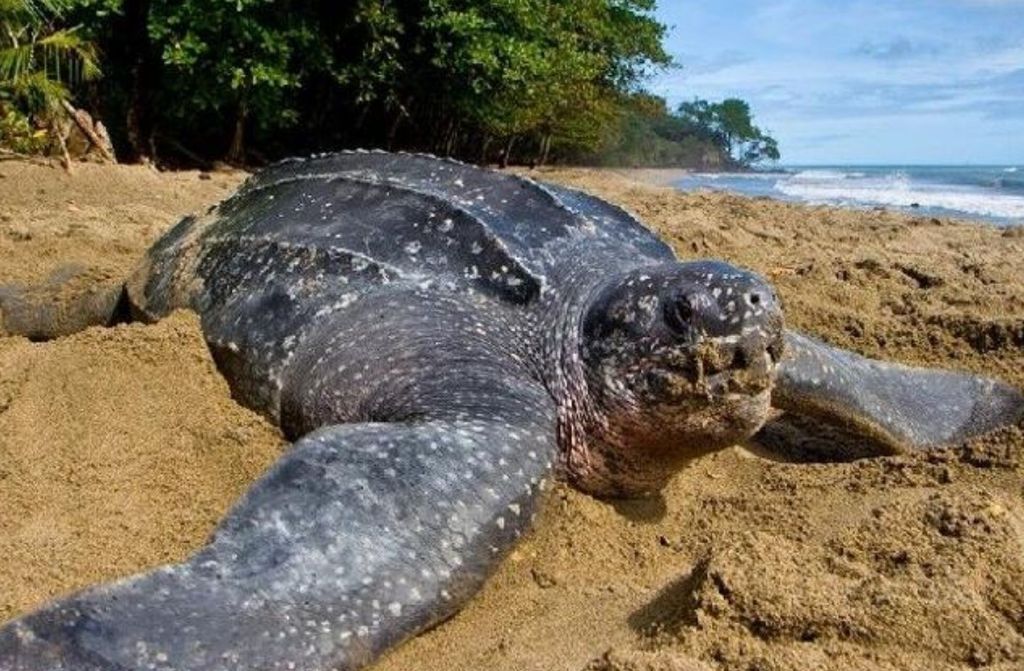

Leatherback turtles and all sea turtle species in Trinidad and Tobago are legally recognised as Environmentally Sensitive Species under national law, as officials report declines in nesting activity at several beaches.
Deputy Chairman of the Environmental Management Authority Neeala Mongroo said the return of leatherback turtles each year highlights the responsibility placed on Trinidad and Tobago to protect the species.
Mongroo said the Environmental Management Authority remains committed to protecting turtles and maintaining the nesting cycle.
Under the 2018 National Environmental Policy, the country continues measures aimed at protecting natural resources. Officials say sea turtles face threats including climate change, coastal development, accidental capture in fisheries and cultural practices.
Community groups, government agencies and non-governmental organisations continue work on nesting beach patrols, monitoring and ecotourism initiatives linked to turtle nesting sites.
Data from several nesting beaches show changes over time.
At Grande Riviere, nests increased from 2,985 in 2008 to 5,361 in 2018. Counts reached 6,113 in 2016 and 6,447 in 2017. In 2025, the number declined to 1,683.
At Matura, monitored by Nature Seekers, nesting numbers increased from 1,607 in 2008 to 3,545 in 2018, with a peak of 5,749 in 2017. Records show 5,219 nests in 2023 and 2,722 in 2025.
At Fishing Pond, nesting remained at similar levels after 2016, with fluctuations including 493 nests in 2010 and 3,779 in 2014.
The 2026 nesting season runs from March 1 to August 31. Five sea turtle species — leatherback, green, hawksbill, loggerhead and olive ridley — are protected under the Environmental Management Act.
Key nesting sites in Trinidad include Grande Riviere, Matura, Fishing Pond, Las Cuevas, Blanchisseuse, Yarra and Toco. Sites in Tobago include Stonehaven Bay at Grafton, Mount Irvine Bay and Englishman’s Bay.
Grande Riviere, Matura and Fishing Pond are designated prohibited areas under the Forests Act. Visitors must obtain permission from the Forestry Division of the Ministry of Agriculture, Land and Fisheries to access these beaches for turtle viewing.
The Environmental Management Authority is advising the use of trained guides and issued guidelines for turtle viewing.
These include avoiding driving on nesting beaches, keeping a distance of up to 20 metres from nesting turtles, wearing dark clothing, avoiding flash photography, not littering and not touching turtles or hatchlings.
Violations under the Environmental Management Act may result in fines of up to $100,000 and two years’ imprisonment. Breaches can be reported to the Trinidad and Tobago Police Service or the Environmental Management Authority hotline.
Related News

Cuba’s president pushes for ‘urgent’ changes to island’s economic and business model

Firearm, drugs and ammunition seized during SoE operations

Secretary of State urges Caricom to confront transnational crime with US help