


Lead Editor–Politics
akash.sama[email protected]
The National Union of Government and Federated Workers (NUGFW) has signed off on a ten per cent wage increase, a deal that will cost the State $2.6 billion in backpay and add $252 million annually to the national wage bill.
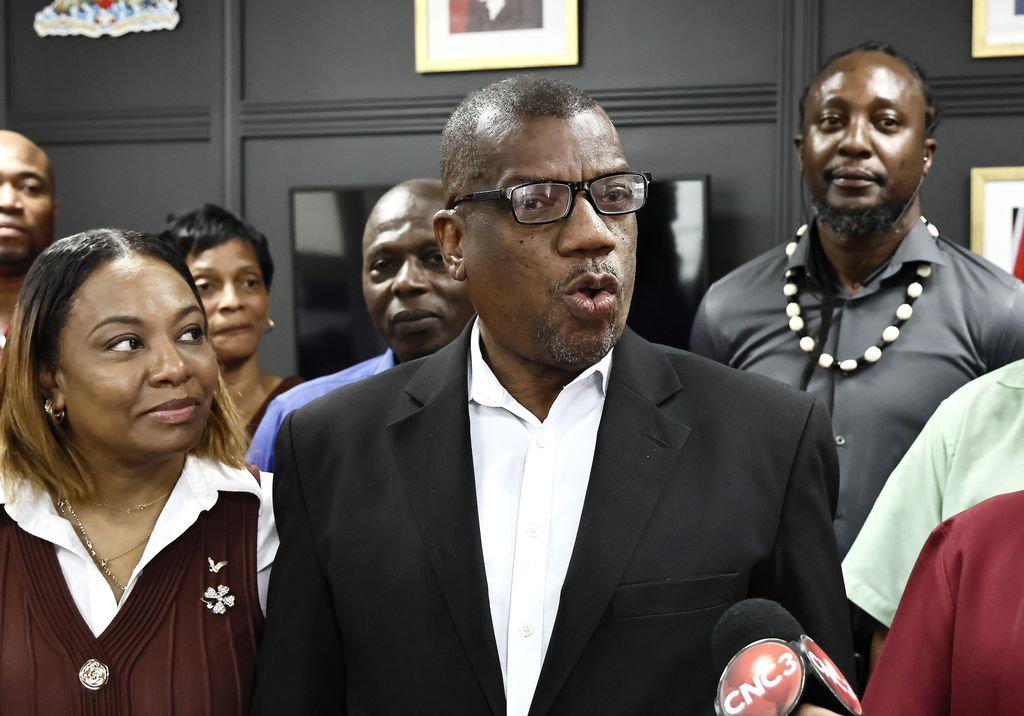
The agreement, which covers two bargaining periods ranging between 2014 and 2019, was signed between Chief Personnel Officer (CPO) Dr Daryl Dindial and NUGFW president general Christopher Streete yesterday at the CPO’s office in Port-of-Spain.
Speaking with Guardian Media after the agreement was signed, the CPO gave a breakdown on how the arrears would be paid to the 20,000 workers who fall under the NUGFW.
“What is going to occur is that part of the agreement has cash payment for arrears and non-cash payment for arrears. The cash payment is approximately 40 per cent of the arrears. The value of that is $1 billion TT, the non-cash is $1.56 billion TT. The next step in the process is for us to take a note to Cabinet to ratify the agreement.”
Dindial added, “We do expect the new salaries to come in June or July of this year, and we expect the first tranche of the arrears to be paid in this calendar year.”
The CPO said this cost was not budgeted for in the 2025/2026 fiscal package and the Finance Minister will have to find the money in the mid-year budget review. The backpay will be split into two tranches, one to be paid this year and then another at a date to be determined.
Explaining the non-cash options, the CPO said, “The non-cash item includes issues concerning offsetting arrears to income tax, HDC mortgage payments, getting vehicle loans exemption for taxes, and so on.”
Retirees will also benefit, but their arrears will be paid in cash alone.
The CPO said he is now pleased that there are no outstanding collective agreements for public service unions for the period 2014 to 2019.
He said the ten per cent increase for the NUGFW is essentially a 17 per cent addition.
“So for both trienniums, COLA (Cost of Living Allowance) was consolidated on two occasions. So when you consolidate COLA into salary, the net effect is the salary increases. So while it’s a ten per cent offer, the COLA has an effect on that. So in a sense, it’s really a 17 per cent increase on average from the existing salary in 2013 to the current salary that we will have in 2019,” the CPO explained.
Meanwhile, the NUGFW leader hailed the signing as a monumentous achievement for the union.
“The wait is over. This milestone that we have achieved here has been 13 years in the making. Daily rated workers who we represent have been patient, they have suffered in silence, and indeed we are happy that this moment has come where some measure of relief could come to them going forward.”
Asked exactly which categories of workers will benefit, Streete explained, “So a union has different bargaining units, and this bargaining unit is about 20,000 folks. So everyone, whether they are a member or not, they will benefit from this decision that we would have made here today. So no one will be left out.”
He added, “Whether you would have worked for the 13 years, whether you would have worked for six months, something will be coming to you.”
Asked if he was pleased with the terms agreed, Streete said the NUGFW understands the economy and it is still better than the four per cent previously offered by the People’s National Movement administration.
“When the offer of ten per cent was made, we are realists, you know, and we know in another period we wouldn’t have had any non-cash settlement. Cash is king, negotiations and wages are about dollars and cents, but we are very responsible and we understand what is taking place in Trinidad and Tobago and the economy.”
Streete said members of the NUGFW include skilled labourers, tradesmen and those he described as “blue collar” workers.
Related News

US launches deadly Caribbean strike; kills four in anti-cartel operation

Bodley calls for bold action at fossil fuel phase-out conference

Man charged with store breaking and larceny in Princes Town
