
Elizabeth Gonzales
Senior Reporter
elizabeth.gonza[email protected]
Seventeen people have been named in a mass detention order issued overnight under the Emergency Powers Regulations, the largest such use of the power since the start of the current State of Emergency (SoE).
The latest orders, signed by Minister of Homeland Security Roger Alexander, include two women and three Venezuelan nationals.
The orders state the individuals were identified through “confidential intelligence” and that detention is necessary to prevent acts “prejudicial to public safety.”
The notices list allegations including involvement in organised criminal groups, trafficking in firearms and narcotics, human trafficking, kidnapping, extortion, vehicle theft and planned retaliatory violence using high-powered weapons.
The latest batch forms part of a wider use of emergency detention powers.
During the previous SoE, Prime Minister Kamla Persad-Bissessar told Parliament on September 19, 2025, that 120 preventative detention orders (PDOs) had been issued, 78 people had been detained, 42 were still outstanding and 18 had been charged. By the end of that SoE in January, Guardian Media reported 117 detainees were released.
Last week, police reported that 39 people had been held under PDOs since the start of the current SoE, declared on March 3, with 16 approved at the time.
The newest set of 17, therefore, represents the largest number of detention orders issued at once during the current emergency period.
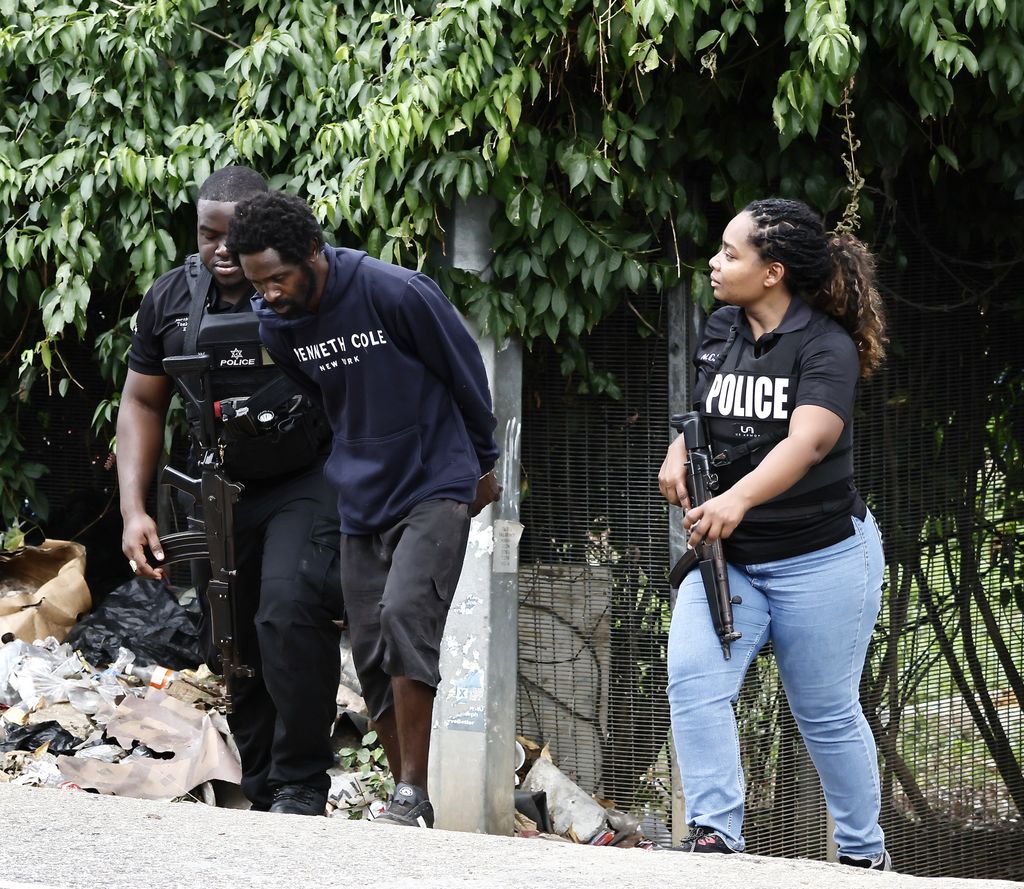
One of those detained is a 16-year-old boy, identified as Jaylon George, who was held under a PDO after being arrested on March 7 along with several other men at a house.
Police detained him after he was allegedly found at a house with others and a gun and ammunition were discovered during the operation.
His parents insist he is innocent and has no criminal record, claiming he was only liming with friends.
His parents said the detention has affected their son’s mental health and education, as he is now missing school exams.
Prison officials confirmed the teen is being housed at YTRC.
Criminologist Darius Figuera said the continued use of these powers raises concern.
“Under the concept of a state of exception, that is a dangerous precedent,” he said. “Because you don’t use a state of exception to fight crime on an ongoing basis.”
Figuera said a SoE is meant to respond to an imminent threat to the State, not to function as a long-term crime-fighting tool.
He warned that if the approach continues, the age of those being detained could shift further downward.
“The next day, he is 13 years old. Then ten, nine, eight and seven,” Figuera said.
He said the repeated use of detention without charge points to deeper issues within the national security system.
“What it points to is the inadequacy of the national security apparatus,” he said.
Youth development activist Mtima Solwazi also raised concerns, particularly about the detention of a minor.
“Seeing that the young man is literally a minor, I hope that his rights to education… are met,” Solwazi said.
He said the child should not be placed in the same environment as adult detainees.
“We have to ensure that he’s not mixed with adults,” he said.
Solwazi said the situation highlights the need for stronger intervention at the community level.
“We need more support within the school system from social workers, guidance counsellors,” he said.
He also called for greater use of youth programmes and community-based initiatives to address delinquency, rather than relying on detention under emergency powers.
The detention orders do not outline any criminal charges or court proceedings but state that the measures are necessary to prevent threats to public safety under the Emergency Powers Regulations.
Children’s Authority: Safeguards in place for detained children
Chairman of the Children’s Authority, Marsha Bailey, is reaffirming the agency’s position on the treatment and protection of minors detained during the ongoing State of Emergency, stressing that strict protocols are in place to safeguard children’s rights.
Responding to questions from Guardian Media yesterday, Bailey underscored that established procedures guide how such sensitive matters are handled, particularly when minors in state care are involved.
“It should be noted there is an established procedure for dealing with critical incidents,” Bailey said.
She explained that these protocols do not require the Authority’s board of management or its Operations Division to publicly disclose incidents involving minors, including cases where a child may have been detained or engaged in inappropriate behaviour.
Bailey emphasised that the guiding principle behind this approach is the protection of children’s fundamental rights, especially their right to privacy.
“As the child’s right must not and should not be disenfranchised. The protection of the minor is of utmost importance,” she added.