
Senior Reporter
One Chinese community is calling for greater national recognition of its contribution to T&T.
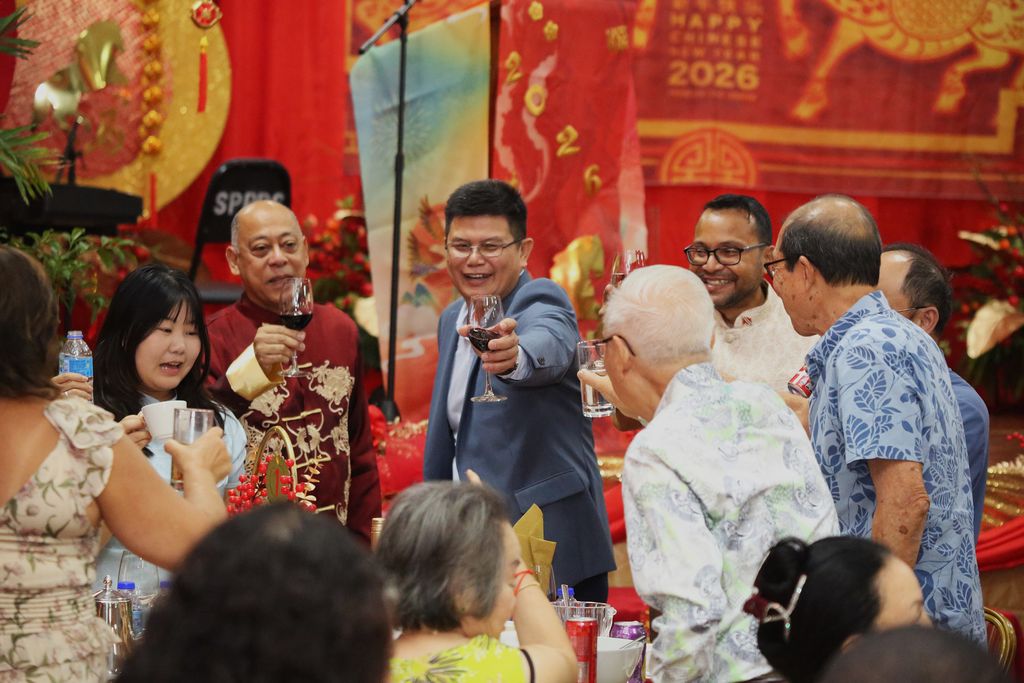
The appeal came from the Sun Wai Association as it marked the New Year at a cultural celebration in Point-a-Pierre yesterday. The association hosted its annual Chinese New Year and Spring Festival event at St Peter’s Private Primary School, where members said the country’s Chinese heritage deserved wider visibility and official acknowledgement.
Association committee member Candice Lee-Ha said the group was working to broaden public understanding of Chinese culture beyond food and commercial stereotypes.
“We are trying to see if we can get some lantern festivals and integrate other Chinese events, and we have had some conversations about that,” Lee-Ha told Guardian Media.
She added that elements of traditional Chinese culture had faded from public life in T&T and needed to be reintroduced through education and community events.
Although Chinese Arrival Day is officially recognised in T&T, it is not a public holiday. The observance takes place annually on October 12 and commemorates the arrival of the first Chinese migrants in 1806. Sun Wai Association president David Lee said this status showed the Chinese contribution to the country could be better.
“A certain recognition. If it is not a holiday, then maybe a Sunday or something, with a little involvement from the government of T&T, so there will be better recognition of our contribution to the country,” Lee said.
Lee-Ha echoed that view, noting that the Chinese community had become deeply rooted in national life.
“We do not really have an official holiday, and we are part of the culture and part of the financial stability of T&T,” she said.
Lee said the association was founded by descendants of migrants from Xinhua District in China’s Guangdong Province. While many returned to China in retirement, others fell in love with the country and settled permanently, building families and businesses in T&T.
He said the Xinhuinese first established communities in villages such as Mayaro and Moruga before gradually moving into urban areas. Among their early contributions, Lee cited businessman John Lee Lum, who identified oil seepages in Guayaguayare, leading to what was reported as Trinidad’s first oil field, as well as businessman and Hall of Fame inductee William Henry Scott.
Today, he said, Chinese descendants in T&T are represented across retail, banking, politics, commerce and business.
Also addressing the celebration was Parliamentary Secretary in the Ministry of Culture and Community Development, Dr Narendra Roopnarine, who described the Spring Festival as a time of unity, renewal and goodwill.
“Chinese New Year, also known as the Spring Festival, is more than the turning of a calendar. It is a sacred time of renewal, of honouring ancestors, of strengthening familial bonds and of setting intentions for the year ahead,” Roopnarine said.
He said the festival reflected the wider multicultural fabric of the nation.
“Trinidad and Tobago is truly blessed. Ours is a nation where cultures do not merely coexist; they flourish side by side. From Divali to Eid, from Christmas to Emancipation. From Carnival to the Chinese New Year. We celebrate the rich diversity of traditions that define who and what we are.”
Roopnarine said the Chinese community had played a vital role in national development for generations through commerce, education, cuisine, culture and community service.
He added that the country’s multicultural harmony was built deliberately through mutual respect and shared national values.
“When we celebrate the Chinese New Year, we are not celebrating one community alone. We are celebrating Trinidad and Tobago.”
Related News
K2K secures medium band hat-trick
Carnival 2026 hailed as major economic and cultural success
Helon Francis thankful for support; says probe into mic drop will help with transparency